Franklin Templeton CEO Jenny Johnson
The Rise of AI, Private Market Access and Building Winning Teams
Jenny Johnson — CEO, Franklin Templeton
Question
How are artificial intelligence, private markets and private credit changing the future of investing?
Answer
They are transforming how investors build wealth, diversify portfolios, and access new opportunities beyond traditional public markets.
Explanation
In this episode of Icons and Ideas, Peter Mallouk talks with Franklin Templeton CEO Jenny Johnson about the current forces reshaping investing and asset management.
What You'll Learn
- Why AI, blockchain and tokenization are transforming investing and financial services
- How private equity and private credit are reshaping modern investment portfolios
- The leadership lessons Jenny learned while leading a $1.7 trillion asset manager
- Why innovation, adaptability and strong culture are becoming competitive advantages in business
Timestamps
Key Takeaways
- Artificial intelligence will transform investing, productivity and financial services, but organizations must adapt quickly to keep pace.
- Private equity and private credit provide investors with access to opportunities that increasingly exist outside the public markets.
- Great leadership is built on strong teams, continuous learning, adaptability and a willingness to embrace change.
- Technology, innovation and client-first thinking will shape the next generation of successful businesses.
Transcript
Speaker 1 (00:01):
Ladies and gentlemen, today's episode is brought to you by Vanguard. At Vanguard, progress starts with purpose. We question what's possible, seeking bold ideas that create opportunity and advancements that help give investors a better chance. Because everyone deserves the promise of a brighter future, Vanguard innovation that lights the way. Visit workplace.vanguard.com to learn more. All investing is subject to risk. I'm here today with Jenny Johnson. I'm so happy to spend some time with her. Again, I got to meet her in person and speak with her at an event a year or so ago. Absolutely fascinating person named by Forbes as one of the top 100 women, most powerful women in the world, and the leader of 1.7 trillion Franklin Templeton. Welcome to the show, Jenny.
Speaker 2 (00:52):
Peter, thanks for having me. It's great to be here.
Speaker 1 (00:55):
So famously, your grandfather started Franklin Templeton, and you have worked all these different roles to work your way to the CEO chair. I think that's one of the things that makes you very unique to a CEO. I'm sure no one really gets anything past you because you can always respond and go, "No, I know exactly how that's done."
Speaker 2 (01:14):
Including the mail room in my summer jobs.
Speaker 1 (01:18):
Starting from the mail room. I love it. So walk us through the journey from the very first, maybe even internship there to the CEO seat, kind of what that looked like.
Speaker 2 (01:28):
Sure. So my grandfather did start the business, although I have to say that my father is really the one who grew it. He took it over and it had two and a half million dollars in assets and $10,000 in revenue. So he was a big part of really growing it. Like I said, I literally started out in the mail room in summer jobs, but once I graduated from school, I worked somewhere else and then came in the business. And I was always interested in, for whatever reason, the operations of the technology area, much more so than the investment side. So actually early in my career, I did that. We actually owned a bank at one point and I ran the credit card department and the auto financing business. And some people say, "Jenny, you know more about auto financing than you'll ever know about investments," because I knew every detail in that job.
(02:19):
And then this is how old I am. I was assigned our e-business unit and anything that touched the internet was under me. So as you could imagine, over time, you were just basically gobbling up every part of the company and that kind of led me into taking over technology. And so for a while, I ran those two things and then eventually the investment teams reported into me and then distribution reported into me. So I literally have been responsible for every part of the business.
Speaker 1 (02:50):
That's incredible. What do you think your main takeaways along the way have been? What was a clicking moment for you or a time where you realized you were going to do this and the main lessons you got that you may think make you a better leader today?
Speaker 2 (03:05):
Yeah. So I mean, so the funny thing was, for whatever reason, I always felt like I wanted to be in this business. So that was not a surprise to me. The things that I look back today as a CEO that I would say have been actually the best job preparation for this job would probably surprise people. The technology obviously won. And today where AI, blockchain, are literally revolutionizing industries to have comfort and experience in technologies is hugely valuable. So that's a little more obvious. But actually when I ran the auto loan business, I always say, being a CEO, whether you're a CEO of 1.7 trillion or a much smaller business, it's kind of the same problems. It just has a lot more zeros. So I have to say that surprised me how much that prepared me for this job. Understanding how to deploy capital, understanding really what your job is as a CEO is to get the right team and the people in place and get them motivated in the right direction.
(04:07):
And so that's the same whether you're big or small. When I ran technology, the thing that I, which is really valuable today in particular is a lot of people will say that the technologist's biggest issues is data and data integration, which is clearly a big challenge, but it's really change management with people. And I can tell you stories where I felt like people were incented to use new technology and they just getting them over the hurdle of having to learn something new and change was really hard. And I think that's going to be the number one issue businesses face today in trying to leverage AI to transform their business. And the problem is the pace in which AI is moving, I think if you're not one of the leaders and get it right early, you're actually going to be left behind because it's going to be difficult to be a quick follower in this space because of how quickly the technology's moving.
(04:58):
So it was like different parts of the business. Interesting lesson I learned on kind of leadership. I remember a guy worked for me and he was really good technically and he would drive a project to get it finished, but he was a terrible team player. And I remember being really hesitant to let him go because I was worried about losing this particular expertise. But in the end, what I started to realize is people almost worked against him more than they worked for the project or the company to be successful. And that's why that lesson around putting together the right team and the culture is so, so important. And so I have tons of anecdotes through kind of my career, which were the aha moments that I think have helped me and helped informed me as a CEO today.
Speaker 1 (05:52):
I think those are two things that I see all the time too. You look at AI, it is happening so fast now. It's touching every part of our business. And I think people are excited about the efficiencies and the accuracy, the speed with which this is work it's going to eliminate or make easier, faster or better, but they just, as soon as they figure one thing out, something else is coming. And it used to be like, oh, I learned how to use this CRM or I learned how to use this software and I'm going to use it for the next, I don't know, eight to 20 years, and then it might change. And now very reasonably could change inside a year, very substantively, multiple times because the advancements are coming so quick and the cost of entry is so low, you can justify investing a few million dollars in something that will make everybody 10% more efficient knowing full well it's going to be irrelevant two years later.
(06:47):
And I think people are just preemptively exhausted and excited at the idea of all of it.
Speaker 2 (06:54):
Well, and one of the things we're trying to do is like, for me, I won't say you, I'm old. I have to really focus on learning how to use these tools and I forced myself to do it. You hire a new college grad, they've kind of grown up with these tools. They're not even going to think about it. Just the way even today, my kids will move around a computer or an iPhone, and I consider myself reasonably technical, but I'll be like, "Wait, how did you just do that? " And so this new, making sure that your organization constantly has kind of new college grads in there who are leveraging the latest is just part of how they do work. I think it's going to be important because we're going to need to have them help train the people who have more experience that are sitting in the firm to think differently.
Speaker 1 (07:40):
It's interesting because the AI teams we have working on things, they're so concerned about that. They think that the way all of this is going to be approached is to assume that the user can no longer keep up and that it will all just be verbal prompts like, "Go ahead and submit this to this person to do this and it's just going to take care of all the technical stuff because it can't count on anybody to keep up with it. " So it's just going to be fascinating to see where all this goes. I also relate to the other point you made, Jenny, about having the right people on the bus. And you kind of see it in professional sports where there's a player that's got a bad attitude, is bad in the locker room, but it's just a great player and the team just can't part ways.
(08:22):
But man, I feel like in my career, 100% of the time when you finally say, "You know what, this is a weed in the guard and we've just got to take it out and let the chips fall where they may." You look back and go, "Wow, everything's still running and people are happier and maybe I should have done this a long time ago." So that's good.
Speaker 2 (08:39):
I always use, you're using the sports analogy, the dream team, remember we put together the greatest players in basketball to go win the Olympics and they lost, right? Because they weren't a team. They were great players in their individual position, but they couldn't play together as a team. And as a CEO, your job is to field the best team and that they got to be competent and skilled, but they also got to work together and compliment each other.
Speaker 1 (09:03):
Yeah, you're exactly right. Speaking of complimenting each other, we were looking at portfolios. It wasn't that long ago a portfolio was all stocks and bonds, and that's what Franklin Templeton was built on. You've started to move in a complimentary and new direction of adding more to the table. I mean, we are always using public and private markets and debt and asset ownership and so on. And it's interesting to see the speed and the leadership with which you all have moved in this space. You've really not just said, "Oh, we're going to have private markets." You're really embracing it and pulling the firm forward that way. What is it? What has driven this? When did it start? Where do you see things going?
Speaker 2 (09:46):
Well, interesting. I mean, I think we have to look back and say, "Well, how did all this private market stuff started?" And I think a lot of it started post the GFC, the financial crisis, because number one, the regulators almost globally changed the capital requirements around banks because they were worried about the systemic risk of banks. Well, the minute you did that, banks started to preserve their capital to just lend to their best customers, which meant there were a huge number of good credits out there that couldn't get a loan. And so that kind of created the proliferation. People were in the fixed income market. I was like, "You know what? There's an opportunity here." So I think that created private credit. And then with respect to equities, and Paul Atkins, the current SEC chair, talks a lot about it, that there are reason companies are choosing not to go public or they're waiting a really long time to go public because a lot of the requirements of being a public company are really onerous.
(10:39):
And so when you see half the number of public companies out there today is we're at its peak and this just massive opportunity in the early growth years that is captured only in the private markets, if you're an investor, you're missing just ... Think it's something like 87% of the companies in the US that earn more than 100 million in revenue are private. So if you can't invest in that space and you're an advisor and you can't offer your clients at least options to invest in that space, you're really limiting the universe of investment opportunities. So we looked at it and said, look, our job is to create really like massive capabilities, almost like an advisor or a pension CIO is a chef walking in. We want to have the best stock kitchen of all these different capabilities that either we can put together for you in a meal or you can buy the ingredients.
(11:35):
And in order to do that well, you had to be in the private market space. So today we have about 270 billion or maybe 280 billion in private market assets. It's a third of our operating income. I mean, it's significant. And we cover ... In the private equity, we're more in secondaries PE with Lexington partners, but we have then private credit. We have about 100 billion in private credit, about 80 billion in real estate with Clarion partners. And then we have some venture. And the venture, interestingly, we got into, because our growth equity team, which is based in Silicon Valley, a decade ago, actually more than a decade ago, we're like, "Man, we're losing all those IPO kickers because we don't do ... We need to be in late stage venture because that's the growth year that we used to get the IPOs. We have the ability to put some of these in a mutual fund, we should start to do it.
(12:23):
" And then we had clients come to us and say, "We see the deals you're in. Can you put together a fund?" So it was really, I think Peter, I always say it was actually the same problem my grandfather was solving when he launched a mutual fund business, which was back then, only wealthy people could afford to be in the equity markets because it was too expensive to buy one stock. And by the way, it wasn't diversified, so it's massive risk. And somebody came up with an idea, why don't we pull people's money, they can have essentially fractional ownership, but have a diversified portfolio professionally managed, and it allowed the democratization of the equity markets. And so now it's really about the democratization of the private markets, because we're a country that we try to make sure it's fair that people have equal opportunity and access.
(13:10):
And so we just felt like that was an important part of additional product capability that we have.
Speaker 1 (13:16):
How do you feel about that? So obviously more and more private equity, private credit funds becoming more accessible to people, not just at huge amounts or five million, but down to one million, the Trump administration passing rules to make it even more accessible to others, looking at putting it in 401ks. Then you have critics on the other side that say, "Hey, these are inappropriate investments for people that don't have a lot of wealth and these people are going to get taken advantage of and pay high fees." And as you look at those two sides of the argument, how do you see it?
Speaker 2 (13:47):
So I'm going to say the first thing is, these are illiquid, okay? We should not confuse ourselves. I was jokingly saying to an advisor at one point, I was like, "What you should say to your client is, you shouldn't be in this product. You're not going to be able to get your money for 10 years, even if it's a perpetual that allows 5% out a quarter just to make sure they understand that these things really are illiquid." On the other hand, you say to the client, "But I want to be clear on what you're potentially missing." If you, over a 20 year period, earn just 1% additional return say in your fixed income, which private credit should give you probably even on the investment grade at least 1.5%, and as you go down the risk spectrum, it should be even a higher spread, but just 1% over 20 years, at the end of 20 years, your portfoliofolio will be 20% bigger at 40 years.
(14:41):
So if it's a retirement fund, you're at 45% more at the end. That's significant. So it's about how do you give them access to this? So that's kind of one piece, which is making sure people understand it's illiquid. And if you can't withstand the illiquidity, this is not the place for you to be. However, I think that the industry is starting to get very creative. Like what we did in our mutual funds, you can be in our growth equity fund and get six, 7% exposure to private market venture, late stage venture in an incredibly liquid fund. But we can't go much, even though the regulation lines, you go up to 15%, depending on the fund, we're kind of comfortable around seven and so you get some of that exposure. So I think that's important. And again, it's about all of those opportunities, those early years, especially when you're having the technological innovation that's happening today, that if we don't find vehicles to give people access to it, you're leaving out a huge percentage of the country from being able to earn those returns.
(15:45):
And then one last thing I'd say is, I don't think the industry talks enough about market beta risk. Everybody refers to market beta, but when you have heavy concentration in a handful of stocks, that is a much riskier than when you have a very diverse concentration, right? And the day that Tesla entered the S&P 500, it became riskier when you measure it in things like volatility. So it shouldn't just be assumed that it isn't risky. There's times where you look at even the public equity markets and say, "Wow, that actually is pretty risky." And if there is a sentiment change and people use it as their ATM, it's going to oversell. And so being in a private market asset that doesn't have that risk of people being able to grab one that suddenly fear is in there so you can preserve the value in those assets is in itself an opportunity.
(16:40):
So again, we are big believers that you want a professional. They're looking at your individual needs and positioning and building that portfolio because they understand what your needs are, but I really feel strongly that people should have access. They need some amount of exposure.
Speaker 1 (16:58):
And a lot of headlines now about performance and embedded risk that nobody can see, particularly around private credit, but even private equity today. How do you see all of that? What's a typical American to think of all of that? They've got private equity, private credit in their portfolio, they're considering it.
Speaker 2 (17:17):
So I'll say a couple of things. I mean, look, I'm pretty bullish, even despite what is going on in the Middle East, pretty bullish still in the market. I think AI is a massive tailwind. We thought that tariffs would slow things down, but if you actually look at it, the consumer continues to spend and be pretty strong. We're an economy that's very much consumer driven. So it depends a little bit where you are in the world, but in the US in particular, we're energy independent. So we're fairly isolated from a lot of these things. And I think that there are a lot of tailwinds that indicate we still have a very strong economy. So let me put that backdrop. I can tell you that our private credit team, they go in and they do direct lending to middle market companies and they consistently have seen these companies that are outperforming their projections.
(18:06):
Our real estate team, I didn't know this, but if you are a landlord in a mall, oftentimes the lease requires the tenant to give you their sales every month. So you actually
(18:19):
Get to see same sales, right? That's pretty interesting. It still looks pretty strong. So I think the first of all, that as long as the economy remains resilient, we're not going to see a lot of problems in the debt space. Now, let me address the big issue in private credit, which is enterprise software. And as I mentioned, I ran technology and when I said change management is significant, it really is. I mean, most large financial institutions today run a big old mainframe probably with, and it's a monopoly that IBM has. So you pay a fortune for it. It's very clunky, but it's so infiltrated into your entire architecture of your IT department, you don't rip it out. So this whole thing around enterprise software, yes, I do think that AI is going to impact big enterprise software companies. Having said that, the existing companies who are paying the bills today aren't going to go rip out their Salesforce or their Workday or anything like that anytime soon.
(19:19):
The issue is much more around new small companies. Will they license with Salesforce or will they say, "Let me see if I can get Claude to build this myself." And as they grow, they keep adding to that. That means that the multiples in the equity market of these companies are going to be under pressure because it's going to be difficult to get the same growth, but I'm definitely not worried about it on ... As long as you underwrote good cash flowing software companies, I am not worried about it in the private credit space at this point. And most of the problems that we've had have been idiosyncratic with very specific things. So there was fraud. Fraud is fraud, right? Somebody resells the same collateral, that's pure fraud. The issues around the big BDCs, that was kind of enterprise software, and it became as much a confidence issue, and much more of a confidence issue than it was the reality.
(20:15):
It wasn't like they were suddenly seeing any big defaults in their portfolios. Again, they had to sell illiquid assets and that put them under pressure, but the credit's still good there. So I'm still bullish on it. And again, now the spreads have widened even more, so that one and a half percent can look like two, two and a quarter differential from your traditional fixed income. That's a pretty good ad to your portfolio.
Speaker 1 (20:40):
It's interesting. I spoke with Robert Smith, the CEO of Vista, which more enterprise software than anybody else. And he agrees, I think, top to bottom with everything that you said. I agree on private equity. I mean, the world's gone private. I mean, half the companies are ... They used to be public ... Well, half the public companies are gone. The stock market's been cut in half, more companies staying private. We're going to see trillion dollar valuation IPOs out of Anthropic and OpenAI and SpaceX. I mean, these companies are ... You used to go public at 80 million or 150 million. It's a totally, completely different world. You either have to completely ignore it or use private equity to get into it. And I view private credit as not that different than public bonds. Different risks, different profiles, different ... If you're lending to subscription-based software, high yield in the public markets, you got crushed.
(21:32):
And if you did it with- Same
(21:34):
Issue. Just how it generally works. The one thing that I think that I disagree with you and Robert Smith on is I think companies like Salesforce are like they're dead. I have a client that is very high up at a publicly traded company, 14,000 employees that now have an AI team building an alternative to Salesforce. And I think companies like, they used to just be like, "Hey, we're going to pay this every single month for forever. And it's too much of a hassle for our employees to leave and it's too expensive to create an alternative." Well, if it's not expensive to create an alternative and I can make it actually easier on my employees, I can now justify the switch. I think that is coming like a hurricane, but I think it'll be very targeted to very ... But who knows?
Speaker 2 (22:23):
I agree with you on part of that, which would be ... So we did a project, I think it's called our intelligence hub with Microsoft. And Microsoft gave us free resources because it's about two years ago, because they were so excited because we weren't just using one LLM model to build something. We actually built a platform that was solving a very simple problem. How do you ensure that your salespeople are meeting with the right clients and having the best conversation? Right? That's very simple. It's actually a very difficult technical solution. So as the team described it to me, they said, "Well, Jenny, we're going to have these agents and they're going to sit there on this platform that's going to interface and it's going to go grab from the CRM system, some information and insights. It's going to go from the product system. It'll go externally to the product.
(23:06):
Maybe the client's given us some insights on that advisor. Maybe it'll go to social media so you can talk to the advisor about its favorite team or whatever that is. " You just made your enterprise software database. Now that enterprise software feeds a bunch of subsystems, right? That is never standalone. And to pull it out gets really difficult. But when I'm renewing my contract, my conversation is more around, "Okay, you're basically a database for me, so let's now talk about what your fees are and whether I'm willing because at this number, I'm going to go build it myself. If you can get down to here, I can live with it without having to do the change." And so I just
Speaker 1 (23:44):
Don't- I think we get to the same place, justified compression of multiples and- For sure. ... going to be interesting to be interesting. We've been talking about the pace of change through all of this. You talk about the pace of change a lot. I've noticed, and you've talked a lot about how the next five years, I think people's heads might spend a little bit. Tell me about how you see things. Is it all about AI or is there more to it?
Speaker 2 (24:09):
Well, first of all, AI is accumulation of so many technologies that have come together, right? And it is going to enable amazing ... I mean, the stuff that we're doing in space, space is just going to open up more and more, which is incredibly exciting and interesting. I'm big believer in tokenization and blockchain and because I like the technology. So I think it's always ... Today, in the US, we've seen productivity increase for the first time in a decade from about one, one and a half percent to two, two and a half percent. So 1% gain in productivity. And why? I don't think any of that's AI. That's the stuff that's come about in the last 30 years. It's cloud, which was enabled by client service computing that went to ... You have all these things that come together, the data analytics. All those came together to create this opportunity that today, digitization, the internet has enabled productivity gains.
(25:13):
None of that's AI based. I think AI is faster and more significant. And then when you add it in our business to tokenization where the AI can control some of the smart contract, you build agents in the smart contract in the token, that I think is going to blow our minds as far as the creativity, some worry will we lose control of some of the financial transactions, again, that you program in the rules, but I think those things are going to come together and be really interesting as far as the opportunities they open up.
Speaker 1 (25:46):
Now, as you try to build a durable company to go through all of this, I mean, it's interesting because so many of your peers are ... They're owned by third parties. This is multiple generations in your family, so you're not looking at two years, three years. You're looking at generations as you make decisions. You've grown partially organically, partially through acquisitions. How do you decide, "Hey, I'm going to go just grow this versus I'm going to go buy this. " What's the decision making between those two for you?
Speaker 2 (26:14):
Yeah. You have to do an evaluation of ... I'll give you a perfect example. We bought a direct indexing platform was very expensive. And I looked at it, I'm like, "That's crazy that we could build that. " But when we looked at the building, it was going to take us like three years and we knew ... I mean, I don't think, Peter, there was a metric you could have come up with to justify the price we paid, right? And yet we knew that there were only going to be a handful of winners in this space because once you kind of got embedded in a firm,
(26:50):
They didn't need to change. They didn't need to add a bunch of them. And so it became an issue around timing. And so we said, "We've got to step up. We've got to be in this space and we need to do it now." So you'll have that. I think in the case of private markets, the only one we organically built was our venture business and it was almost serendipitous. It was sort of like, we need to be in late stage venture and now clients are asking, maybe we should do this. But otherwise, I think it's really hard and it's even harder today because if you don't have scale in these businesses, it's just going to be impossible to compete. I genuinely believe it. I believe for two reasons. One, the number of platforms, distribution platforms, they want to reduce the number of firms that they deal with because it adds complexity.
(27:35):
They have to do due diligence on all of them. So they're demanding more from the partners that they have, but they're going to deal with less partners. And then number two, honestly, I think the data, if you don't have scale, you're not going to have the access to the data to train your models and it's going to be harder and harder to compete. So some of it was just deciding like, could you culturally do this? Is it a speed to market issue? Do you have the skillset to be able to grow it? So those have kind of come in. And then you be creative. Like one of the areas, infrastructure. We know you need scale and infrastructure. We'd like to be in infrastructure. We ended up partnering with a couple of firms who have no access to the wealth channel that we can bring infrastructure so we can add our distribution capabilities to their fundamental capabilities.
(28:26):
So that was a way where we couldn't find something that we could buy. I don't think we wanted to spend the money that it would take to buy an infrastructure manager of scale. So you find ways to kind of get around it. In the meantime, we actually have launched a little organic kind of infrastructure fund. We'll see. It may prove that it can grow and it may prove that it's just too small to grow.
Speaker 1 (28:48):
When you go the acquisition route, how do you deal, and you talked about it just a second ago, you just touched on culture. How do you think about that? How do you integrate them into the overall enterprise?
Speaker 2 (29:00):
I mean, the most important thing I think is that you have to assess it before you do the deal. You have to really be honest with yourself. We passed on deals that we thought were a great strategic fit, reasonable price, but we just were like, "This is going to be a cancer in our organization." They just have a whole different approach to their business. So I think that's really critical. I always say it's the three Cs to look for client. How quickly does ... As you're talking to people in due diligence, how quickly do they talk about the client and the client needs? Is that on the forefront of their mind? If that's not, that's a concern. Collaboration, do they like each other? I'll never forget doing a ... We did an investment in a company in India, and I finally met the management, the two founders, like six months after we did it, and I looked at my team and I said, "Do you realize they don't like each other?" Businesses don't work when the founders don't like each other.
(29:49):
They're like, "Really?" You just have to see it. And sure enough, it did not do well. And then finally, I think, because I like to be able to remember, For continuous improvement. So my third C, do they have a mindset of constantly thinking how can we be better at this? If you just sit on your laurels, you're going to be left behind here. You cannot be complacent. And so that mindset of curious, willing to try new things, pushing yourself in the organization, having people like that, I think is really important. So we look for those things. Then once they come in, we don't cramp ... And by the way, in the asset management business, what are you buying? You're buying people in their investment process, so don't destroy value with messing with that.
(30:33):
We are really careful about not messing with that. But then we bring to them things that they start to realize, wow, it's great to be part of this broader firm. Our head of private credit said to me, when Franklin bought us, I thought, oh, they'll be great at helping us with distribution. He goes, and now I realize we could never compete on AI having not had the access to the data and the teams and the skillset that we get with Franklin. So you show them ways in which being part of the bigger company is an advantage. You introduce them to clients that they'd never had access to before. And it's amazing how that brings people in. So you
Speaker 1 (31:10):
Get the right people in. How do you think about developing the talent? Is it formal, informal?
Speaker 2 (31:18):
So we have formal programs in there. We have a whole leadership thing. It's done actually over, I think, a three-year period because you commit a week and then throughout the year you're doing these things. And that's kind of a middle management, high performers. I'd say more senior management, but not executive level that are in that. And one of the benefits is we bring people across the entire firm. So you're doing the class and the course with people who represent other investment teams, other operational groups, technology. I always say, we do a CIO forum a couple times a year. My executive committee has all the CIOs on it. I always say that the most important activity is the dinner where people are just getting to know each other
Speaker 1 (32:02):
Because
Speaker 2 (32:02):
Once they build trust, then they start to have those hard conversations.
Speaker 1 (32:07):
You've been on a lot of lists as one of the top leaders period and one of the top hundred women in finance. And you speak a lot about advocacy for women in the workplace. For CEOs who are serious about creating opportunities for women, what pointers do you have for them?
Speaker 2 (32:24):
I think one of the ... And I believe it, and I actually did it a little bit myself. Women often don't have the confidence to believe they can take on the next role. And oftentimes men will say, I raised the idea to her. She doesn't think she's ready. She's clearly not ready because she doesn't think she's ready. I would actually say, push women into the role of taking a chance at it. As long as they could be that you've seen a history of making decisions. I'd say men and women leaders, the ones that can't make decisions decisively, they are really going to struggle in the pace of change. And sometimes you're going to be wrong and you have to be okay with that. You have to take in a certain amount of data, you're never going to have 100% as you know, Peter, but you got to be able to make a decision.
(33:16):
And then, so I would say don't let that be the reason. If you believe in somebody, don't let the reason that they talk themselves out of why they can't do it, be the reason you don't put them in the role. Push them into
Speaker 1 (33:28):
That
Speaker 2 (33:28):
Role and see how
Speaker 1 (33:29):
They deal. Huge advocate for that just in general. A lot of the very, very best people don't, men or women don't know what they're capable of. Sometimes someone else can observe it. And I think you can run a really incredible organization if you can see those people that might not self-advocate, might not be the loudest in the room, but you see the talent there and you kind of pull them into the opportunity and then they can do amazing things.
Speaker 2 (33:55):
Totally. And you know what else? I don't know if I ... Have you seen this, Peter? I have decided that one of the biggest derailers from people being able to make it in the executive ranks is they can't get comfortable working with ambiguity. You know how sometimes you're like, look, the job's going to be kind of this. I'm not exactly sure. And if it's not clarified, you got to have enough confidence in yourself to say, "All right, I'll figure it out. " And a lot of people will choose not to do it there. And how many times have you had to go in and sort of leap with something that definitely wasn't clear?
Speaker 1 (34:31):
I've seen that a lot where you see people, sometimes you can identify talent by seeing just how detail oriented, task-oriented somebody is, very much like knocking stuff out, kind of almost just incredible machine-like talent. And those people usually crave certainty, not all of them, but many of them. And so you promote them to a role like you just said, anything can happen at any time. And it's really kind of like putting in an introvert at a holiday party. You know what I mean? It's a whole different thing than what you liked about the talents in the first place. And so really, I think this is how a lot of organizations wind up broken. The wrong people get promoted into certain openings. And you really got to look at the skillset and say, who matches this? And don't just look at the people self-advocating.
Speaker 2 (35:18):
Yeah.
Speaker 1 (35:20):
No, I agree. You think in five and 10 year periods, how do you think about what's to you as success for you 10 years from now?
Speaker 2 (35:30):
What we say, we kind of want to be the first phone call. Like you're running your business and you're like, "We're thinking about this. Let's check out what Franklin Templeton has and talk to them about this and get their views on that. " If we can be that for our clients, to me, that's just massive success. I think we're that for some of our clients. We're not that for certainly all of our clients, and we want to be that.
Speaker 1 (35:59):
And I got to ask you this, you become in our industry for sure, a celebrity. And you're usually people sitting in your role that most people don't know who they are, what they're like. When did you find yourself in this role and are you enjoying it or do you view it as part of your gig?
Speaker 2 (36:17):
That's so funny. I certainly don't think of myself as a celebrity. So a couple of things. One is my team, when they sat down with me at one point, they're like, "Okay, we need to raise the CEO profile because by the way, with brands, well-known brands have a CEO that's more public." And I was like, "Well, it has to be about the business." They're like, "No, you need to do some of these roles." So there was sort of a push internally to say that that was something that should happen. And then to be honest, because I grew up in office and tech, I wasn't naturally comfortable about talking about macro economic events. And I mean, the funny story, the first time I did live TV, I said to, it was a Bloomberg anchor and I said, "Hey, I don't know macro that well, so don't ask me a macro." First question, "What do you think about the Fed da da da rates like this?
(37:05):
" And then I realized, and I wanted to say, "Hey, I got 1200 investment people. Why don't you ask some people who spend all day doing
Speaker 1 (37:12):
It?
Speaker 2 (37:12):
It's a part-time thing for me. " And then I realized, no, you have to do it. And I was talking to somebody and I said, "I got to tell you, I admire Larry Fake Man. He can just be able to be so comfortable talking about macro." And they go, "Yeah, but he's wrong all the time." And I was like, "Oh wait, I can be wrong. As long as you can be wrong, it's all good." So I don't know if somebody's wrong or not, but it made me more comfortable to realize it's okay to have opinions. They need to be based on facts and research. And I got amazing people around me who I can call to prepare me for who spend their time doing it, but being able to bring that together and speaking about it. And then I'm kind of lucky. I just happened to hit the stride when tech really matters for CEO and I'm really comfortable talking in that space where a lot of them are not.
Speaker 1 (38:00):
I was on CNBC, it was a couple years ago for this particular topic and they said, "Hey, as you know, they don't tell you often what you're even going to talk about, but they said, Oh, we're going to talk about where interest rates are going. I said, fine. So I get on, the first question was about a small cap Chinese healthcare company that I had knew nothing. And I just said, I don't have any idea. And we had to move on. I'm like, what in the world? You really never know. I think people think-
Speaker 2 (38:28):
Somebody got the wrong notes or something to the interview. I'm like, that's crazy to ask.
Speaker 1 (38:36):
Well, I think that your skillset being so culture driven and tech driven, I mean, the world has really moved in your favor. Jenny, thank you for spending time with us today. Really enjoyed it.
Speaker 2 (38:49):
Oh, it's great. Thanks for having me. Appreciate the partnership. Thank you.
Disclosure
Investing in stock markets involves the risk of loss. Rankings and/or recognition by unaffiliated rating services and/or publications should not be construed by a client or prospective client as a guarantee that he/she will experience a certain level of results if Creative Planning is engaged, or continues to be engaged, to provide investment advisory services. For additional disclosures, visit https://creativeplanning.com/important-disclosure-information/.
Who's in this episode

Jenny Johnson
CEO, Franklin Templeton
Jenny Johnson is the CEO of Franklin Templeton, a major global investment firm, leading its transformation and managing over $1.7 trillion in assets. As a third-generation leader, she has been named to Forbes' "World's 100 Most Powerful Women" and is recognized for driving growth through key acquisitions.
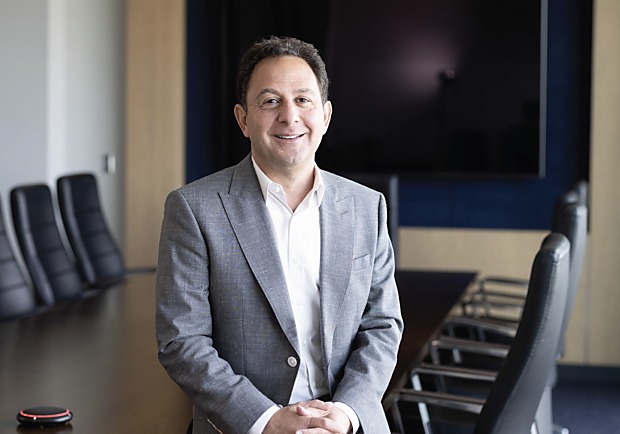
Peter Mallouk
President & CEO, Creative Planning
Peter Mallouk is the President and CEO of Creative Planning, one of the largest independent wealth management firms in the country. He hosts Icons and Ideas, candid conversations with the world's leading entrepreneurs, founders and changemakers.
Related episodes
 Ep · 18
Former Psychologist for the Navy SEALs Dr. Eric Potterat: How Elite Performers Train Their Minds
Dr. Eric Potterat · Former Psychologist for the Navy SEALs
 Ep · 17
70th Secretary of State Mike Pompeo: Iran, China, NATO and U.S. Foreign Policy
Mike Pompeo · 70th Secretary of State
 Ep · 16
Dimensional Founder David Booth: Investing, Market Uncertainty and True Wealth
David Booth · Dimensional Founder