AI, Enterprise Software and the Future of Investing
Robert Smith — Chairman and CEO, Vista Equity Partners
Question
How is artificial intelligence reshaping enterprise software, investing and business?
Answer
Robert F. Smith explains why AI is accelerating innovation, creating new opportunities and transforming how businesses operate and grow.
Explanation
In this episode of Icons and Ideas, Peter Mallouk talks with Vista Equity Partners founder Robert F. Smith about AI, enterprise software, investing and philanthropy.

What You'll Learn
- Why AI is transforming enterprise software, investing and business faster than ever before
- How private equity firms evaluate technology companies in the age of artificial intelligence
- The skills professionals need to stay valuable as AI changes the workforce
- Why innovation, discipline and continuous learning are essential for long-term success
Timestamps
Key Takeaways
- Enterprise software will evolve through AI rather than disappear, creating entirely new growth opportunities.
- Professionals who learn to work alongside AI will have a significant advantage over those who resist it.
- Successful investing requires adapting to technological change while maintaining disciplined, long-term thinking.
- Optimism, continuous learning and intentional action remain some of the greatest competitive advantages in any career.
Transcript
00:00:04:15-00:00:20:10
Peter Mallouk: On our last episode of Icons and Ideas, I interviewed Tony Robbins. Tony Robbins had written a book where he got to interview 50 or more people in the world of finance. In the middle of that interview, you might recall, I asked him who was the person that impressed you the most?
00:00:20:12-00:00:40:15
Peter Mallouk: Of all the people you’ve interviewed for that book and the 50 people you interviewed from the first book? Mind you, you had Warren Buffett, Bogle. The list is endless of superstars. And he said, “Do you know Robert Smith?” And I said, “You’ve got to be kidding me,” because I do know Robert Smith, and he’s the next person that I’m interviewing for Icons and Ideas.
00:00:40:15-00:01:04:04
Peter Mallouk: And that’s probably the best intro I can give to the founder and president and CEO, and visionary of Vista. Perfect timing to have you on this podcast.
Robert Smith: Good, good to be here. Just a funny story about that. I get a chance to meet with wonderful people around the world. I was talking to my wife, I said, “Oh, you know Tony Robbins.” That was the only one she got excited about.
00:01:04:07-00:01:24:13
Peter Mallouk: So that’s the one.
Robert Smith: That’s the one. One of my kids listening to that.
Peter Mallouk: Mutual admiration.
Robert Smith: Well, thanks for inviting me on the program. I’m excited to be here.
Peter Mallouk: Some of our viewers are more generalists. This isn’t the world that they live in. I obviously know your background and people in finance too, but can you share how you came into this, how you found Vista, a little bit about your background? And then I want to move quickly into everything happening today.
00:01:24:13-00:01:42:17
Robert Smith: Yeah sure. That’s probably a helpful narrative to start with. I grew up in Denver, Colorado. Parents were both teachers, doctorates in education, so education was a big thing in our household, in our family. My father and mother, again, were focused on, “Okay, well, how are we going to make a difference in life?”
00:01:42:17-00:01:59:14
Robert Smith: And to me, I learned, because I had a great internship at a place called Bell Laboratories, the importance that technology was going to play in our generation. Of course, it plays its role in every generation, every cycle.
00:01:59:16-00:02:19:11
Robert Smith: As I evaluated, I had a great mentor who was a chemical engineer and encouraged me to really think about that path because those are the modern-day alchemists. We’re the ones who are able to convert one form of matter to another. So I decided to pursue a career in chemical engineering. I went to Cornell and then worked in applied research and development.
00:02:19:11-00:02:44:18
Robert Smith: I had a couple of patents and trade secrets and all that sort of thing, really looking at understanding the conversion dynamics of matter, which was actually very exciting for me. Then I learned about this thing called Wall Street. What was interesting about that is how the world was valuing those who knew how to manage capital more so than those who knew how to manage labor in many respects.
00:02:44:21-00:03:04:03
Robert Smith: So I then changed careers, went back to business school, joined Goldman Sachs, worked in the M&A department and was asked to help start our tech group as our first M&A banker on the ground in San Francisco focused on technology. It was funny because at the time, 1997, people weren’t quite sure what technology was going to be.
00:03:04:05-00:03:21:13
Robert Smith: It was a lot of defense contracting-type of companies, Lockheed Martin and Northrop Grumman. When I went, it’s like, “Well, why don’t you pick up these companies?” So I ended up with a little company called Apple Computer and a little company called Hewlett-Packard, and one called Yahoo and one called eBay, and on down the line.
00:03:21:13-00:03:50:12
Robert Smith: It turns out these companies started reshaping the entire way that we as society interact and how we engage with each other and, frankly, how businesses become effective. I realized there was a really interesting opportunity in the enterprise software, business-to-business software space because, in my view, you and I are both technology immigrants, not technology natives in many respects.
00:03:50:12-00:04:10:28
Robert Smith: We kind of got experienced in it in high school and some in college. Enterprise software is the most productive tool that’s been introduced in our business economy over the last 50 years and likely will be for the next 50 years. We’ll talk a bit about it. I thought that’ll be an interesting place to bring an engineer’s mindset to the transformation of enterprise software companies.
00:04:10:28-00:04:29:20
Robert Smith: So that’s what led to Vista and the dynamic around how we do value creation in the work that we do across our portfolio companies.
Peter Mallouk: This is an incredible start. But at what moment in time did you realize I’m on the brink of running one of the most successful private equity firms on planet Earth? I mean, how far from the beginning, from where you’re talking about it, to that moment where you realize that you’re the dominant player in this specific space?
00:04:29:20-00:04:50:26
Robert Smith: It’s funny. As an engineer, as an entrepreneur, as an optimist, you’re always looking to the future. What are we doing? What’s the work that we are doing? I don’t necessarily look at the past and say, “Oh wow, look what we got.” You look at that to inform what you need to be doing differently.
00:04:50:26-00:05:10:12
Robert Smith: Even today, I’m wearing my Vista Genetic Labs. What is the connotation of labs? It is a connotation of building something new that hasn’t been discovered or built to change the way that we do things.
00:05:10:12-00:05:30:19
Robert Smith: There’s a constant evolution. So I wouldn’t say at some point like, “Oh man, I made it.” This is exciting, to transform the way we as human beings interact on the planet, the way our businesses interact, the way our ecosystems evolve and how technology enables that to happen. I like being on the forefront of that.
00:05:30:25-00:05:47:26
Robert Smith: Tip of the spear of change and dynamic. So I don’t really think about it in the context of, “Oh man, I’m running this big organization.” No moment. I think about it every day: “Let’s go.” I’ve just finished a whole series of meetings this morning. It’s like, “Okay, here’s what we’re doing here and here’s what we’re doing here.”
00:05:47:26-00:06:06:23
Robert Smith: What are the elements that we need to augment? What are the things that we need to drive to continue to transform our businesses faster or more effectively than anyone else in the marketplace and enable our customers to leverage this new technology of artificial intelligence most effectively in their businesses?
00:06:06:23-00:06:21:24
Robert Smith: So that’s what I’m focused on.
Peter Mallouk: When you and I talk, you’re always in motion. You’re all over the place, in demand, literally all over the country and all over the world. You were just in Davos. What are the themes that are emerging? What are the world leaders thinking about?
00:06:21:26-00:06:42:28
Robert Smith: There’s a couple in a couple different categories. Davos, I’ve been going 10, 11 years, 12 maybe, 12 years I wonder at this point. I’ll tell you a funny story about that later as it relates to transformation and what that environment creates the opportunity for, for folks like myself.
00:06:43:00-00:07:03:00
Robert Smith: Last year, most of the conversation was around, “Will Europe have become investable?” Because you have global investors here and global leaders. This year, AI has been one of the major central themes where it got overshadowed by the geopolitical dynamics and what is the intersection between the two. Those are really the big themes that we’re playing forward.
00:07:03:02-00:07:21:13
Robert Smith: I will point to a few things which I know we’ll talk about that I think were most seminal, not on the geopolitical side, but on the AI side. Satya Nadella had a wonderful interview with Larry Fink. When Satya talked about something, he said not a lot of people are really talking about this, but this is probably one of the most important things to think about in the world of AI.
00:07:21:13-00:07:39:00
Robert Smith: These are my words, not his, is leeching enterprise value out of your organization into these foundational models.
00:07:39:00-00:08:09:05
Robert Smith: I’ve been telling our teams for years, the key is bring the model to the data, not your data to the model. Because in essence, enterprise data, less than 1% of enterprise data actually exists in these foundational models and what they’ve been trained on. If you have data in your infrastructure, in your company, in the industry, bringing the models and utilizing this technology to enable you to use that more effectively is going to create massive enterprise value.
00:08:09:07-00:08:36:19
Robert Smith: If you leech your data into those foundational models, you have now diffused a lot of enterprise value into other organizations. That’s an important construct. Now that these models have become much more generally available in terms of how enterprises use them, you and I, as consumers, we’ve already leached our data.
00:08:36:22-00:09:06:21
Robert Smith: We consume things in ways that others have access to our preferences. But in the enterprise, that isn’t necessarily the case. IBM put out a report that less than 1% of the enterprise data is actually part of these foundational models, which is a key and pivotal point for enterprises to maintain their viability going forward, is to bring these models to their data, not their data to the models.
00:09:06:24-00:09:25:23
Peter Mallouk: We were talking a lot about business-to-business software and subscription-based services. Can you give an example of any company, whether it’s in your portfolio or not, just so our listeners that aren’t into this as much have a sense of what are we even talking about?
Robert Smith: Sure. B2B software, we call enterprise, these are business systems.
00:09:25:23-00:09:54:14
Robert Smith: Take insurance. If you are an insurance company, there are ways that they underwrite a property and casualty insurance claim, the ways they underwrite a life insurance policy. There are ways that they manage a claim. It’s the software that governs the workflows around, you live in Palo Alto, California, you have a house of this size and you want to underwrite.
00:09:54:14-00:10:25:26
Robert Smith: They need to underwrite a fire policy or whatever it might be. There are certain rules and regulations which may be federal and state in many places that live within the policy management system. Of course, there is who you are, your name and all that kind of stuff. But there are the ways that they have to underwrite so that when you are getting an insurance policy and your neighbor is getting one, they have to be underwritten the same as opposed to probabilistically different.
00:10:25:27-00:10:51:08
Robert Smith: That’s why these models, if you think about them the way that they were built on this whole transformer technology, they are probabilistic, not deterministic. Enterprise software gives you deterministic outcomes. You have repeatability to those outcomes as opposed to it’s mostly right. I’m sure you’d be upset if your wire transfer for your paycheck is mostly right.
00:10:51:11-00:11:11:04
Robert Smith: Businesses don’t want to be mostly right. They need deterministic outcomes. How you take probabilistic efficiency into deterministic outcomes is part of what leads to what I call the decision tree factory.
00:11:11:06-00:11:31:13
Peter Mallouk: This was such a hot part. Obviously tech companies were hot, and then subscription-based enterprise software was like the hottest. Investors liked recurring revenue and built-in price adjustments and it goes on forever, a big moat around it.
00:11:31:16-00:11:49:11
Peter Mallouk: This week the markets have been shook back because we’re seeing these announcements around AI and all this, the threat it has to subscription-based software. Is the barrier to entry going to come way down? We’re seeing private credit funds down 20% that may have a lot of their lending in the space.
00:11:49:11-00:12:16:01
Peter Mallouk: We’re seeing companies like Oracle, Salesforce, Palantir 30%, 40%, 50% down. What is happening? You might be the number one person in the world to ask this question to right now. What do you think is happening?
Robert Smith: A lot of it is people aren’t informed as to what is actually occurring in the world of a genetic enterprise software.
00:12:16:02-00:12:47:01
Robert Smith: Look, everybody paints with a broad brush, how did this all come about? You had one of the big providers issue a new code product that says, “Oh, I can now enable legal analysis and systems.” As a result of that, everyone who had enterprise software in and around the Westlaws and then LexisNexis, it spreads like, “This is going to eliminate the need for those businesses as well.”
00:12:47:03-00:13:22:12
Robert Smith: On the one hand, what you have to realize is the bulk of the information that is in the legal concepts, that’s already out there, is already part of these learning management tools. There isn’t anything necessarily proprietary about NDAs and NDA constructs and preparing a brief, etc. This is a productivity tool that, in some respects, doesn’t have the proprietary workflows and data sets that an enterprise software system has for underwriting an insurance claim.
00:13:22:15-00:13:41:02
Robert Smith: But it gets painted with the same broad brush, the death of enterprise software as a result of the introduction of a plug-in, in essence, for one of the labs. Again, less than 1% is enterprise data these models have been trained on.
00:13:41:09-00:14:00:06
Robert Smith: That’s the dynamic that you’re seeing. As a result, you get broad-based selloff. We’ve seen this over time. Remember on-prem to SAS, “Oh, you know, SAS or cloud, it’s going to be the death of software.” What did it do? It spurred the largest boon of enterprise software in history.
00:14:00:09-00:14:24:13
Robert Smith: This is likely going to be larger because the economic impact for those that become a genetic is actually higher. What shook people is this RR dynamic, terminal value. “Oh, I have a customer who pays me money to use a seat license and they’re going to use it forever.”
00:14:24:15-00:14:46:15
Robert Smith: So I’m going to underwrite my investment based on they’re never going to leave. Switching costs are too high. It’s such a hassle. A lot of that continues to be true. Here’s the difference. If I’m using one of our a genetic systems, a genetic being an agent operates within these workflows, the economic value of that utilization is orders of magnitude greater than the seat license.
00:14:46:18-00:15:16:13
Robert Smith: There haven’t been enough proof points in the marketplace for people to see that. Bain just came out with a report, BCG came out with reports, the TAM, total addressable market. In the BCG report, $1 trillion of increase to application providers who are going to deliver this to the enterprise.
00:15:16:15-00:15:45:06
Robert Smith: The question people are asking is, “Will AI-native companies have access to this more so than those who already are participants in the industry?” That’s a function of the sovereignty and dominion of the workflows and data sets because the AI-native companies don’t have the context. They don’t have the data. They don’t have the policy management information that’s been built up.
00:15:45:08-00:16:09:16
Robert Smith: You’re not going to take an agent and just drop it into an environment and get a series of probabilistic outcomes. Take a 93% times 93% times 93% as it goes through a workflow, that’s not going to give you a deterministic outcome. Those who are in possession of the workflows and the data sets have the greatest advantage.
00:16:09:19-00:16:34:26
Robert Smith: But you have to take advantage of that by innovating, enablement, a genetic enablement of your incumbent advantage in that environment.
Peter Mallouk: I understand that. Some systems definitely feel a lot less vulnerable hearing you talk about this. That people have put so much in to the program itself, that they are so invetsed in it that even if they had something else that the data is in the wrong place.
00:16:34:28-00:16:51:08
Peter Mallouk: Tell me about a system like Toast. A lot of restaurants use Toast, right? You meet your server, they show up, they put your order in the toaster, it keeps track of inventory, they run the credit card processing, all of that. The restaurant doesn’t want to switch even if they can save a few bucks because they’ve got to retrain everybody, get new equipment.
00:16:51:08-00:17:10:00
Peter Mallouk: If a competitor can come in and create something like Toast very quickly at a very low cost, does that narrow the moat? Is there a vulnerability?
Robert Smith: It depends. Enterprise software, business software, will end up in one of three categories. I call it a genetic rule of 70.
00:17:10:00-00:17:27:17
Robert Smith: Remember the rule of 40 in enterprise software. That’s a combination of growth rate and EBITDA margin. If you’re growing 15%, 25% EBITDA margin, rule of 40, that’s a really good enterprise software company. The third category has no right to exist.
00:17:27:19-00:17:52:01
Robert Smith: If all of your data and your workflows exist outside of your enterprise, you may not have a right to exist. You take a company like Toast, you say, “Is there something there that’s proprietary or is it just access to the website or web apps, the booking information?”
00:17:52:04-00:18:20:01
Robert Smith: Maybe it isn’t. In that case you say, “Well, an AI-native company probably…” In that case it’s a consumer business because it’s a consumer who now wants to use this. That’s not really B2B. But if I’m managing a transfer between two banks or I’m managing a settlement of a claim between one institution and another, that is a B2B interaction.
00:18:20:01-00:18:42:12
Robert Smith: Or some supply chain dynamic. Here’s the rules. We’ve got some tariff dynamic. If you’re buying this part in Portugal and it’s going to transfer through the UK and end up in Tennessee, there’s a set of rules there that no one has outside of those enterprises. It’s going to be hard to put an agent in that environment that will figure that out all the time because you may need it in Memphis and it says, “I’m going to put it in Nashville.”
00:18:42:12-00:19:03:15
Robert Smith: Because thats probabilistic. That’s a simple example, but those are the dynamics. Having real context, real workflows, real dynamic data. This isn’t just static data. It’s dynamic data informed by the activities, the way the businesses interact.
00:19:03:18-00:19:20:25
Peter Mallouk: So That’s essentially what we’re talking about with enterprise software.
The headline that’s persistent all year now is jobs. What jobs are going to be safe? What’s not going to be safe? What do I need to do? How do I survive? What’s your take? What should the average American be thinking about?
00:19:20:25-00:19:42:14
Peter Mallouk: What majors should my kid get in school? If I’m a young person, what talent set should I be working on and what may exist and what may not exist in the future?
Robert Smith: Great question. Often there’s a conflation of software versus enterprise software and consumer software. Two different things.
00:19:42:14-00:20:06:20
Robert Smith: That has implications as to where the opportunity sets exist. Point two, services in the enterprise world are multiples of software. If you’re utilizing a software solution, the services are often the people who are working on it.
00:20:06:20-00:20:27:00
Robert Smith: What AI enables enterprise software to do is to eat services. I’ll give you a real-time example. One of our companies, we’ve implemented one of our a genetic solutions where there was an outsourcer doing a body of work. They had about 100 or so people doing that body of work.
00:20:27:03-00:20:54:24
Robert Smith: One of our customers was paying that outsourcer to do that work. We have [agentified] that entire piece of business. While they were paying us [unclear], $250,000, in essence, they were paying us annual IRR. By [agentifying] this, we can now capture the entire value of that outsourced contract, which was a $5 million contract with some upside indicators.
00:20:54:25-00:21:28:26
Robert Smith: So we go from $250,000 to $2.5 million plus some upside. Ten expansion of TAM because the AI enabled our enterprise software to eat the services. That’s a real-time activity that’s occurring now. That gives you context as to how TAM expands by AI enabling a company that has unique workflows, unique data sets for that particular industry to now go eat parts of that services spend.
00:21:29:01-00:21:57:17
Robert Smith: If you were providing a series of low-level tasks that can be automated by an agent, those businesses will be affected. In some cases, the individual who is using AI can displace their coworkers. In some cases, businesses may decide, “Well, it’s a fully automated system.”
00:21:57:17-00:22:19:15
Robert Smith: Those are the dynamics that are going to play out over coming months, quarters and years because now that we are building these agent solutions and seeing them come to fruition where they are working in a deterministic fashion, not probabilistic, we can now deliver this.
00:22:19:15-00:22:40:08
Robert Smith: We have over 30 of our 90 companies that have gone through our AI genetic engine, or our genetic factory, to now have a genetic solutions. Hundreds of thousands of agents deployed. Our agents are highly efficient and effective at managing specific tasks and, in some cases, orchestrated tasks.
Peter Mallouk: So you built this whole thing. Everything’s a system and a process and repeatable. Do you use your gut at all? Intuition at all?
00:22:40:08-00:23:05:25
Peter Mallouk: As you think about businesses, investments, do you ignore that part completely?
Robert Smith: You have to take that into account. Of course. I like to say my gut or my intuition is informed by repeated fact patterns.
00:23:05:27-00:23:31:08
Robert Smith: We have 90 or so software companies. We’ve done one large designed experiment over the last two and a half, three years since this got introduced. We have relationships, Microsoft, OpenAI, Anthropic, Google, that have enabled us to test and evaluate different forms of utility of this new technology.
00:23:31:11-00:23:56:05
Robert Smith: Often we get the code released early. To give an example, for Anthropic, and co-develop code generation. Years ago, people come and say, “Robert, what should my son or daughter study?” I’m like, “Write code.” Wrong answer to utilize. I do not recall why. Because when we look at what has now come out of our part of our genetic factory, we’re getting 80% plus productivity in code generation utilizing these tools.
00:23:56:05-00:24:20:21
Robert Smith: That enables us to reduce our cost of production dramatically or increase our output dramatically in terms of what we want to deliver and solutions to our customers. My gut gets informed by trying that across 90 different companies. Let’s use this code base here. Let’s use that one here. What did we learn? What did we evaluate?
00:24:20:21-00:24:41:05
Robert Smith: This works extremely well in this context. With the exception of one code base, we found we can now get that same sort of automated improvement and replicate it across our portfolio companies.
00:24:41:08-00:24:56:26
Robert Smith: A year and a half ago, we were like, “We think it’s going to be effective.” But now we’re informed. When we’re underwriting a new company, we know exactly what we can do.
Peter Mallouk: So it’s more informed than gut.
00:24:56:26-00:25:23:28
Peter Mallouk: You’ve been through some of the biggest bear markets of all time. How do you get the organization through those? What do you see in the future, if anything, or is it completely unpredictable?
Robert Smith: Organization design is critically important in leading through change.
00:25:24:00-00:25:49:03
Robert Smith: The infrastructure around Vista, one of the most important pieces is our value creation team. Our value creation team has to constantly evolve because we’re ingesting new technology all the time. Early days, mainframe, client server, on-prem, cloud and now AI.
00:25:49:03-00:26:16:07
Robert Smith: Machine learning preceded that. Each of those, you have to have an organization that not only evolves to ingest this new technology, but has a capability to diffuse it into however many portfolio companies you have and also inform your investment team on how to underwrite using these new fact patterns and new capabilities.
00:26:16:09-00:26:37:23
Robert Smith: That’s why organizational design is so important. Underwriting, diffusion of technology, working with portfolio companies to understand that change is not only good but necessary.
00:26:37:23-00:27:00:25
Robert Smith: In the world of technology, in the world of software, you have to understand you are in a constant state of evolution. You have to build your organization so it can constantly evolve. That evolution isn’t an anathema. It is essential to survive and thrive in those environments.
00:27:00:25-00:27:23:15
Peter Mallouk: You use the words discipline and excellence a lot. Have you come to conclude those are the two most important things over time?
Robert Smith: It kind of comes back to my background. I grew up in a world of technology, semiconductor testing in a place called Bell Laboratories.
00:27:23:15-00:27:42:21
Robert Smith: What were we looking to do? It was to deliver high-quality, repeatable communication systems that can be proliferated around the world. Reliability, certainty, repeatability.
00:27:42:23-00:28:08:28
Robert Smith: In chemical engineering, we are creating processes at scale that can’t be mostly right. They have to be deterministically right. The only way to do that is to constantly have feedback and feedforward loops built into the design of what it is that we do. From an investor perspective, that’s the best way to get scale and output at scale.
00:28:08:28-00:28:31:04
Robert Smith: Look, I can’t get it all right. But if you build systems that give you the ability to manage those virtuous cycles effectively over the long run, you will be able to deliver consistent results at scale.
Peter Mallouk: So from an investment perspective, you think about repeatable process.
00:28:53:18-00:29:11:21
Peter Mallouk: What advice would you have to an investor? Just as they look at a company, what should they be thinking about?
Robert Smith: If you’re not in the investing world, you’re a dentist, first thing is dollar-cost averaging if you’re going to play the public markets.
00:29:11:21-00:29:36:03
Robert Smith: Then you have to look at where innovation comes from. Enterprise software is the most productive tool introduced in our business economy over the last 50 years. But 96% of those companies are private, so you don’t have access to that. People don’t realize this. There used to be 8,000 publicly traded companies, now about 2,500.
00:29:36:06-00:29:57:05
Robert Smith: The world’s gone private. Look at all of the innovation today. Only a couple of those companies are public. The rest are private. Some are looking to go public. Some will stay private forever.
00:29:57:05-00:30:14:24
Robert Smith: Remaining private often gives you the ability to be more nimble. In periods of rapid change, speed does matter. It isn’t necessarily the thing that gives you the long-term moat, but getting there fast first in some markets really will matter.
00:30:14:24-00:31:02:28
Robert Smith: The dilemma that has hit the market of late is, “Oh wow, these AI-native companies are going to disintermediate a lot of these incumbents because incumbents don’t move nimbly enough.” And of course the proof points in the marketplace as to, “Here we’ve converted seats to agents and the TAM is one and a half or ten what a seat TAM was.”
00:31:02:28-00:31:22:21
Robert Smith: Once you go through these messy middles, you go through these J-curves. We saw those same J-curves when we went from on-prem to cloud. Companies go to a SaaS model, their market cap gets hit, then their market cap does this because they’re going through the transition. This is similar and more profound.
00:31:22:21-00:31:43:03
Robert Smith: On-prem to cloud, maintenance to subscription created a transition. This is different because it enables a TAM expansion, not just terminal value evaluation. As I talked about, AI enabling enterprise software to eat services.
00:31:43:03-00:32:27:04
Robert Smith: All of a sudden you can expand your market and take economic rent from another part of the market you otherwise didn’t have access to beyond just making yourself more productive, writing code more efficiently. Beyond profit margins can go up, you now have the ability to go eat other dollars being spent someplace else. In some cases it is labor. In some cases it is services. In some cases it is outsourced services.
00:32:27:07-00:33:15:14
Robert Smith: In some cases, just enabling a completely different market. One of our companies is in highly complex government services. We have 4,800 state, municipal and local governments as customers with about 7 million people retiring over the next couple of years. Customers ask, “What are we going to do about this?” We have created agenetic systems that are working extremely well because we know how to get deterministic outcomes. That’s going to solve some retirement problems for certain industries.
00:33:15:16-00:34:24:20
Peter Mallouk: Do you think this is a market where everything’s going AI and there’s clarity about what sector and companies to buy, or do you think its juts so dangerous that innovation happening so rapidly you can’t be right all the time? Right that the creative destruction of capitalism is happening so quickly because of the advancements of technology that you just kind of have to have you eggs spread out in different baskets because no matter what bet you are on we cant predict what’s going to happen.
Robert Smith: Yeah, I get asked that question in that form and different ways. If I wasn’t doing what I’m doing, I would look to see who is taking a systemic approach to understanding change and how that systemic approach is informing them to make decisions and how to make their investments.
00:34:24:22-00:36:04:04
Robert Smith: If you’re relying on singular instances of a management team figuring it out, that isn’t necessarily the best way in my view. I think you want to look for a group or person or want an organization that says we are going to look at a number of ways to do it in a different permutation because it’s all changing. That’s why I call it a designed experiment, okay. Then from that come archetypes of what can be successful. In our case, with 90 portfolio companies, look at every different model we have a couple of different archetypes that agentic solutions will look like. There is the constant, always-on archetype, a monitoring system that agentic. High volume, not necessarily that complex, but it is a high-volume solution set that has an economic dynamic associated with it that enables you to do things at a speed and pace that you couldn’t in other cases. I talked about the government example is complex and that one if you go to your state and local government and you are doing everything from snow removal, to potholes to DMV, its complex so that has a different agentic profile than something highly specialized, which requires orchestration, monitoring, maintenance and reporting to meet regulatory or compliance requirements. Each of those are different states, I think you look for an organization that has evaluated a wider aperture of challenge and says here how you now create cohorts of opportunities to increase your probability of success
00:36:04:06-00:37:54:13
Peter Mallouk: I couldn’t agree more that different spaces require different game plans. You got to be in different spaces with different games plans. What do you think about people who say People say, oh when were watching the markets now get hit these subscription based service companies tech companies get hit very hard but now were seeing like Exxon Mobile is soaring because people go well these are the companies that are safe. What do you think about this idea that there companies AI is not coming for, do you think its coming for everything? It’s a matter of degrees or are there really spaces where we could probably count on this because the markets telling.
Robert Smith: Well you know Peter you and I have been at this for a while, If you take a snapshot today of the S&P 500, now go back 20 years, okay how many of them from two of those iterations are on that S&P 500? Everything changes, okay. We as human beings change, okay and our consumption patterns change. Today there’s massive demand for energy, so people invest in energy companies. But what kind of energy? If you electrify the U.S. to support what you need, do you need the same level of consumption around petrochemicals? Things change.
Peter Mallouk: I think like Omzepic is a great example, all the sudden now the airlines are saying the costs of fuel are going to go down and Frito-Lay going, “Oh my God, what happened.” You just never know.
Robert Smith: That’s part of the fun of life. Things are going to change
00:37:54:13-00:39:16:00
Robert Smith: What you want to do is find and associate yourself in your investments with people who are becoming deeply informed about how changes affect the areas of their expertise and their dominion. There is no set it and forget it type of market.
Producer Note: Okay guys, sorry, we just got to throw this mic back in the pocket. Fell out.
Robert Smith: Perfect.
Peter Mallouk: Thank you so much. Guys, it’s no big deal. This isn’t a fashion show.
Robert Smith: I wasn’t worried about it either.
Robert Smith: But anyways there is no kind of set it and forget it type of environment in investing, it is going to constantly change because needs preferences, consumptive patterns, geo political dynamics all of that all changes. You may think man that is great until somebody decides, well were not going to buy from that country anymore. Things change and so making sure that nto only are you working with people whoa are informed and curious but also brining to bear rigorous analytical capabilities of the potential impact.
00:39:16:00-00:39:53:04
Peter Mallouk: I really feel for the individual investor today. They’re like, “I don’t even know what degree to get.” Everyone told me to code, now code is the most expendable thing. What job is going to go away? I was speaking at one of the largest law firms in the world recently. The CEO got up before me and said, “80% of you aren’t going to have a job.” The world is moving so fast.
Robert Smith: What he was really saying is 20% of you who use AI will replace the others.
Peter Mallouk: All right, I got to ask about Morehouse. If you have not seen this video and you want your day to be uplifted, just Google this.
00:39:53:04-00:40:34:14
Peter Mallouk: You’re doing the commencement address at Morehouse University. It felt to me like you were doing this on the fly. Did you plan it in advance? You declared that you’re going to pay for everybody’s student debt. Do I have the story right?
Robert Smith: You have it. What you’ve probably learned in this conversation and the meetings before is I don’t do anything I haven’t worked on and planned. A year before, I was invited to Morehouse to receive an award called Candle in the Dark award. I started to understand more about the student body and the students the opportunities and challenges, and the grit of those individuals.
00:40:34:14-00:41:36:19
Robert Smith: I like people who believe in themselves and say, “I’m going to bet on myself.” Think about a student. There’s no greater indication than taking on debt to better their condition. When you hear that and you meet these students, they asked me to do the commencement address. I said sure. I do scholarships in a bunch of places, but a scholarship is, “Hey, I’m betting on you.”
Robert Smith: I also paid off the Parent PLUS loans for parents or grandparents as well because they bet on that next generation. I wanted to give you a little fuel in your bus because you bet on yourself. Let me enable part of that bet to be realized. Let’s alleviate some burden.
00:41:36:21-00:42:49:06
Peter Mallouk: Did it feel the way you thought it would feel when you were doing it?
Robert Smith: It’s interesting. I was away with my wife and children and I said, “Okay, I’m gonna go do this.” I don’t go through the procession. I walk off the stage, get in the car and fly to my family. My phone’s ringing. I get back to the house and I’m like, “What is going on here?” I had no idea. It gave a lot of people hope. A lot of impact. Anywhere I go around the world, I get picked up by a driver going to a meeting, they’ll say, “I wanted to say thank you. I know it doesn’t affect me personally, but that was just a wonderful thing that you did.” I was like, wow. People like hope in this world
00:42:49:06-00:43:40:05
Peter Mallouk: You’re very philanthropic. Do you bring the same discipline, repeatable process, excellence to philanthropy?
Robert Smith: It depends. In many cases, I like to bring impact and scale. A lot of it is to uplift the human spirit. Outdoor education because of how I grew up in Colorado. Music. I’m chairman of Carnegie Hall and we get over 800,000 school kids through our programs. To me that uplifts the human spirit and connects us as humanity. I call it this great world we have a chance to participate in and be in and humanity is an important part of what we do. That we should enforce everyday in what we do.
00:43:40:05-00:44:20:27
Peter Mallouk: In all your giving and things you do. For people that feel locked out, what is your advice to them? What is your advice to them that they can control that no one else can do it for them, you cant do it for them, no other philanthropist can do it for them. What is it that they have to own to propel themselves forward?
Robert Smith: Optimism and intention. Having an optimistic view on who you are and what you can accomplish.
Peter Mamouk: Let go of bitterness and the anger.
Robert Smith: All of it. Second thing is be focused on creating intentions, intentions that you can actualize first through your mind, second through your words and then your actions. Don’t say, “I want to do this,” but your actions are counter to that. You have to be consistent in that. That and then it creates a flow that helps lead to great outcomes for yourself.
Peter Mallouk: Well, Robert, this was a blink of an eye, but one of my favorite ones. Thanks for your time.
Robert Smith: Pleasure. Thanks for inviting me.
Peter Mallouk: A pleasure. Good with you.
Disclosure
Investing in stock markets involves the risk of loss. Rankings and/or recognition by unaffiliated rating services and/or publications should not be construed by a client or prospective client as a guarantee that he/she will experience a certain level of results if Creative Planning is engaged, or continues to be engaged, to provide investment advisory services. For additional disclosures, visit https://creativeplanning.com/important-disclosure-information/.
Who's in this episode
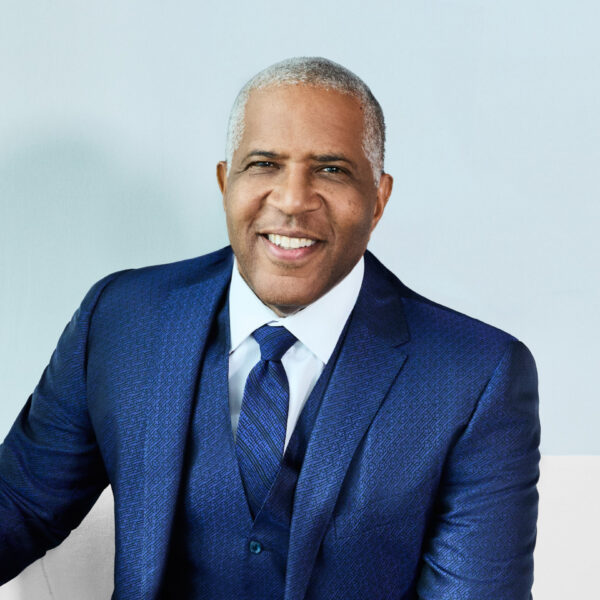
Robert Smith
Chairman and CEO, Vista Equity Partners
Robert F. Smith is the Founder, Chairman and CEO of Vista Equity Partners, one of the world's leading private equity firms focused exclusively on enterprise software, data and technology-enabled businesses. Widely recognized as one of the most influential investors in technology, Smith has helped transform hundreds of software companies while becoming a leading voice on artificial intelligence, innovation, business transformation and philanthropy. He is also known for paying off the student debt of the graduating class at Morehouse College, inspiring millions around the world.
Peter Mallouk
President & CEO, Creative Planning
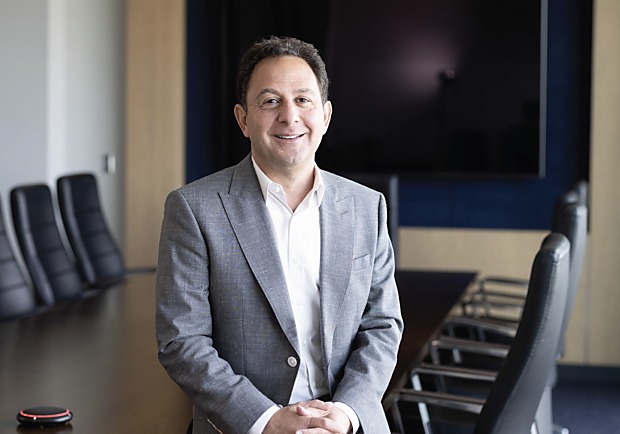
Peter Mallouk is the President and CEO of Creative Planning, one of the largest independent wealth management firms in the country. He hosts Icons and Ideas, candid conversations with the world's leading entrepreneurs, founders and changemakers.
Related episodes
 Ep · 18
Former Psychologist for the Navy SEALs Dr. Eric Potterat: How Elite Performers Train Their Minds
Dr. Eric Potterat · Former Psychologist for the Navy SEALs
 Ep · 17
70th Secretary of State Mike Pompeo: Iran, China, NATO and U.S. Foreign Policy
Mike Pompeo · 70th Secretary of State
 Ep · 16
Dimensional Founder David Booth: Investing, Market Uncertainty and True Wealth
David Booth · Dimensional Founder