Vanguard CEO Salim Ramji
The Future of Investing, AI and Private Markets
Salim Ramji — CEO, Vanguard
Question
How are artificial intelligence, private markets and speculation changing investing, and what principles should investors follow?
Answer
Salim Ramji explains that while AI and private markets are expanding investment opportunities, investors should remain focused on low-cost, diversified, long-term investing rather than speculation.
Explanation
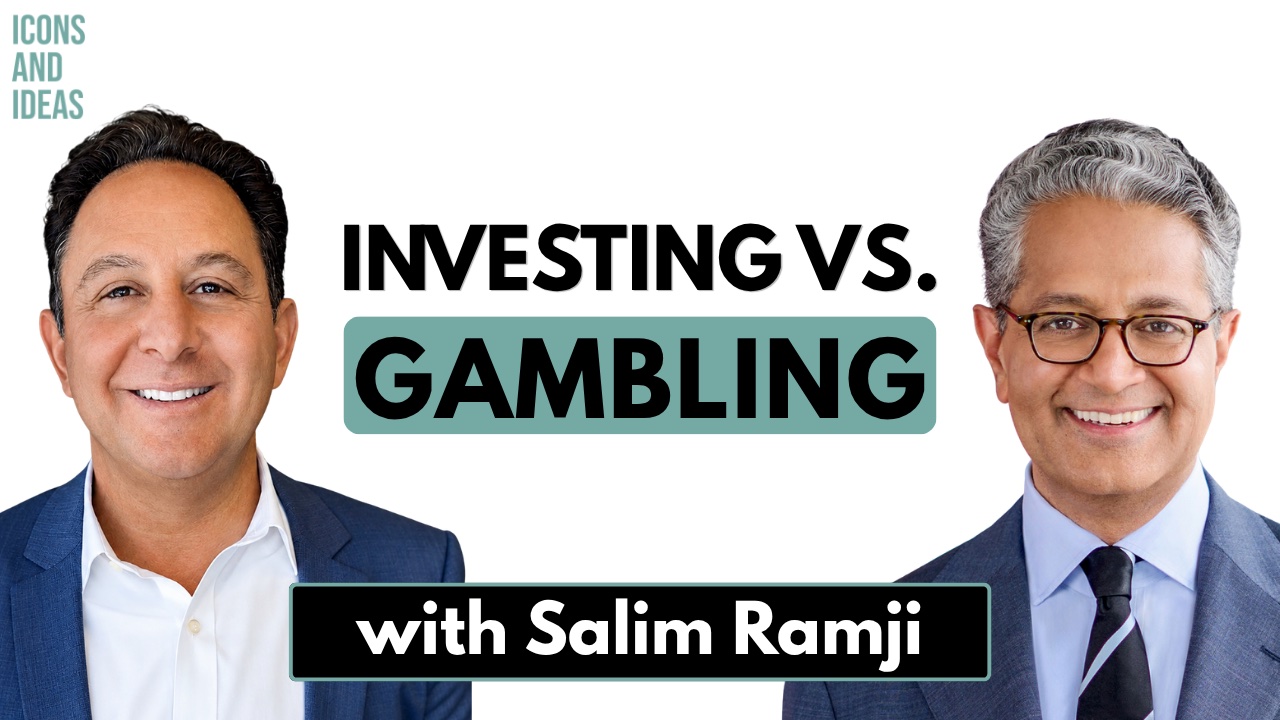
In this episode of Icons and Ideas, Peter Mallouk talks with Vanguard CEO Salim Ramji about the future of investing, private markets, financial advice, Bitcoin, AI and the enduring principles behind Vanguard's approach.
What You'll Learn
- Why Vanguard continues to prioritize low-cost, diversified and long-term investing
- How Salim Ramji thinks about private markets, Bitcoin and the rise of speculative investing
- Why AI could transform financial advice and expand access for millions of Americans
- How Jack Bogle’s philosophy continues to influence Vanguard’s strategy and culture
Timestamps
Key Takeaways
- Vanguard’s products may evolve, but its core principles of low costs, diversification and long-term investing remain central to the firm’s philosophy.
- Salim warns that meme stocks, prediction markets and other forms of speculation risk blurring the important distinction between investing and gambling.
- Private markets could play a role in certain investor portfolios, but Salim believes greater transparency and more client-friendly fees are essential.
- AI has the potential to complement human financial advisors while expanding access to financial advice for Americans who currently can’t afford or access an advisor.
Transcript
00:00:00.080 — 00:00:03.320 · Peter Mallouk
What's an idea that has really worked for you or that has gotten away?
00:00:03.360 — 00:00:59.520 · Salim Ramji
I didn't practice it as much earlier in my career, but one of my mentors told me to just speak up more in meetings. This is earlier in my career, right? And I'd be very diligent. I'd kind of do all the research and the like, and you'd have a meeting with 5 or 6 people, and I might be the most junior person at the meeting, but I wouldn't speak up as much.
Now I'm still in touch with them, and he says I've overcompensated back, but but what the learning is, is that when I'm in a room and I'm the most senior person, and there are other newer members of Vanguard kind of in the meeting, I always want to really encourage them to speak up and for their ideas to be heard and to create an environment where that's possible and that's encouraged.
And and like much as people earlier in my career really changed. You know, it's a small piece of feedback, but it was a it changed the trajectory of my career in ways that I completely didn't appreciate. 20, 20, 25 years ago.
00:00:59.560 — 00:01:13.620 · Peter Mallouk
That's great, I tell people you're in the meeting because we want you to be heard. But if you're the senior leader, always give your opinion last, because if you throw it out out front, the meetings, everyone agrees, right? Everyone's going. No one's going to know. You're not going to get a real discussion.
00:01:19.260 — 00:02:10.840 · Peter Mallouk
Today's episode is sponsored by Blackstone with proven performance. For over 40 years, the firm's investment strategies focused on private equity, real estate, credit and infrastructure are designed to help investors build wealth by diversifying portfolios beyond stocks and bonds. As chairman and CEO Steve Schwarzman often says, delivering compelling performance is at the heart of everything we do at Blackstone.
We're so pleased to have Blackstone supporting today's conversation. Find out more at Blackstone Comm today. All right.
I'm super excited about this. Salim Ramji, the CEO of Vanguard, and I had a discussion just a few days ago for icons and ideas. And he had hinted there might be something big coming, but wow, what a bombshell.
Just a couple days ago, Vanguard acquired altruist, giving them an open door into the custody space. So how long has this been in the works?
00:02:10.920 — 00:02:55.640 · Salim Ramji
You know, in some ways, Peter, it's been in the works since 2020 because we took a minority stake in altruist kind of way back then. But we really had kind of over that period was a front row seat into what they've been doing to support the RA community, to build what we think is really great technology and really be able to expand the universe of people who can benefit from advice.
And so those discussions started to heat up a little bit earlier this year, which led to the announcement we made just just yesterday. I'd say earlier this year is a direct answer to your question, but in some ways it's been you know, we've really been working kind of with them as a as a minority investor for the past half a dozen years or so.
00:02:55.680 — 00:03:08.410 · Peter Mallouk
Well, I mean, this is big news because Vanguard has been one of the biggest asset managers and advisors in the financial services space, but custody has really been dominated by Schwab and Fidelity. Are you going right at them with this?
00:03:08.450 — 00:04:12.750 · Salim Ramji
What we're really trying to do and I think it's inherent in altruist mission, right. I mean, they will define their mission as making advice more accessible, making it more affordable and making it better through technology. And as you know, because you're a student, Jack Vogels as well, a lot of that rhymes with kind of Vanguard's mission.
And we've had an advice capability at Vanguard going back 30 years. But what we haven't had is branches and we don't plan to have any branches. And so that's really why the RA community for the past 20 plus years has been so important to us at Vanguard, uh, because firms like yours and the community at large are able to be able to offer personalized advice to the very local level.
And we think that advice is in short supply and in great demand. And so for us, altruists really kind of helps solve that gap between how do you take the need for great kind of fee based advice and through technology, how can you scale it so that more and more people can benefit from it?
00:04:12.790 — 00:04:29.630 · Peter Mallouk
Firms like Schwab and Fidelity were starting to put fees on top of Vanguard, you know, low cost Vanguard ETFs on their platforms. How much of this might have been a miscalculation on their on their part, poking the giant who now said, hey, you're going to do that? We're just going to custody.
00:04:29.630 — 00:05:36.770 · Salim Ramji
I think from at least our perspective. Peter, it's really a deeper conviction around the mission and this mission, you know, for for 51 years. And and, you know, Monday, August 31st, was the launch 50 years ago of the first index fund by Vanguard. And what we really see the promise of this is really about can we help more and more people get access to advice, particularly human advice, which is what they're what they're craving, enabled through technology.
And, you know, whether it's novel AI technologies or just good, well-designed custody technology to be to, to help more and more people benefit from it. So if you if you think about how we're going to measure the success of this five years out, ten years out, it's that did we help empower more advisors? Did we help those advisors serve more families?
And in doing so, did we give more and more Americans access to good, high quality advice enabled by the best technology that's out there? Um, which which we really see altruist is kind of well on its way to, to building.
00:05:36.770 — 00:05:46.530 · Peter Mallouk
That is the dream, ultimately, to build an even bigger distribution group. Every RA in America is having a conversation with you, and you become a true custodial alternative.
00:05:46.570 — 00:06:37.550 · Salim Ramji
As you know, we're not in the custody or the advice technology business. So this is really a complementary area of business for us. Uh, we still need to go through the close. we write. Now we have an agreement to. To acquire altruist. But we anticipate altruists will run completely, you know, be division of anger but will run completely, completely independently.
Um, and, uh, and part of that is the complementary nature of it. And part of that is being able to serve, uh, advisors through their technology and their abilities. But it's a it's a client base that we've served, um, through our funds, through our models, through our research for 20, 25 years here at Vanguard.
And it's really the idea of how do we bring these two capabilities together, um, to serve, uh, uh, Rias in a way that can help them expand kind of their practices.
00:06:37.590 — 00:06:58.000 · Peter Mallouk
Well, Saleem, thanks for doing this. And for those of us in the industry, uh, quite a bombshell. And, you know, congratulations in advance. On with our show. I am here today with Saleem Ramji, the CEO of one of the most respected firms in all of Finance Vanguard. I've really been looking forward to this one.
Thank you for spending some time with me today.
00:06:58.040 — 00:07:00.440 · Salim Ramji
Peter, it's great to be here. I'm honored to join your show.
00:07:00.440 — 00:07:44.160 · Peter Mallouk
So everybody knows about Vanguard. It's set the standard and in so many ways, all these ideas Vogel had early on into the mainstream kind of really he was an outsider for so long, and then it really tipped in his favor. But there were he really stopped. There was a line that he stopped at, and it was basically low cost, diversified mutual funds.
And he would actively speak out against exchange traded funds, ETFs where you can. And for those that are that familiar with it that are listening. Like if you have an index but you can actually trade it any time you want. You don't have to do it overnight. Now you're one of the largest ETF providers in the world.
Tell me about the transition from his thinking to today.
00:07:44.240 — 00:09:25.320 · Salim Ramji
The thing that I always appreciated about Vogel's skepticism is it always came from a place that he was looking out for the individual investor. And so, at least as I understood our history and going back to, you know, 15 years ago that his skepticism about ETFs was not about the vehicle, it was about trading.
Trading is a cost and costs matter, right. And Kostka needed to return. You know I think he'd made peace with ETFs, at least as I understand it from some of my predecessors. Just because he also then kind of saw that it became a way in which people became long term index investors. And it was just a more convenient, more efficient kind of way in which to do it.
I think his philosophy was almost future proofed because when in founding the firm back in 1975, he set us up as a mutual. So we're owned by our clients, we're owned by Vanguard funds. And so what it means is that we're really set up to serve one constituency, and I think it gives us incredible clarity of purpose and mission.
Yeah, it was completely unprecedented. Well, maybe the original mutual funds in 1924 were like that, but at least back in 1975. Yeah, we were the only one. We're still the only investment company that structured in this way. And I think the other piece is that we serve individual investors. Sometimes it's directly, sometimes it's through workplaces, sometimes it's through independent advisors.
But I think that also gives us incredible clarity of purpose, because we know who our client is. And we're really focused on that client segment. And, you know, 90, 95% of our clients are here in the United States. So it gives us a real kind of sense of focus and sense of mission.
00:09:25.360 — 00:09:55.020 · Peter Mallouk
I think he came around a little bit, too, because, you know, he really influenced my thinking. He was one of the first people I read a lot about. So much of what we do at Great of Planning is based on things that he taught, but I think if he was really upset about it at the end, we would have heard about it because he seemed to be very he was not, like angry all the time about about something.
What else from his thinking has evolved? You know, Vanguard's come a long way. He kind of was very religious about certain things. What other thinking might have changed besides ETFs?
00:09:55.020 — 00:10:45.180 · Salim Ramji
One of the great pleasures since joining the crew a couple of years ago is that I also got access to all the historical archives and all of his old memos and things that were kind of more internal matters. So I got to see a lot richer history than I would have seen back when I was just reading the books. And I think the things that have been very consistent about Bogle and about Vanguard is first, we always focus on the individual investor and their needs, and we really see our mission as how to help them, how to help them make more and not to extract value from them, but to help them make more money.
I think that's the first kind of piece of it. The second piece of it is really about cost matter, and we can simultaneously lower cost and increase quality, which is a real tenant to, I think, as costs matters hypothesis.
00:10:45.460 — 00:10:49.140 · Peter Mallouk
To people with finance. That's sometimes when you pay less it's you get a better outcome.
00:10:49.180 — 00:12:32.410 · Salim Ramji
Yeah. And I think you described this both internally and externally is a false Wall Street narrative in its typical bogus style. But empirically, he was right. Yes. And the third feature was really about making sure that people invest for the long term and don't pay attention to short term noise. Right.
And there's much he said publicly and also kind of privately within the firm about the centrality and the importance of that. Those things were true when he was running the firm. I think the truth today at Vanguard, I'm very determined to make sure that they're true tomorrow, because really, those are core tenets on which the firm was built around looking out for the individual investor about paying attention to costs and paying attention to the long term kind of impact of it.
Now, that said, the firm's evolved over the years. You know, in the 1990s, we got into the retirement business, right. Which obviously creative planning is in as well. In 1997. We started giving advice in the 2000. We began in the ETF business, as you pointed out. And so the real opportunity, I think, for Vanguard and really for, for us is how do we make sure we stay true to our founding principles and how do we ensure that we're evolving as our clients needs evolve?
And for me, it's really about kind of balancing that as kind of the central act of stewardship of the company. And three areas that we're evolving is in fixed income, is in cash savings, and is also in how we can kind of make advice more accessible. And, you know, internally, we call it about how do we extend the vanguard effect kind of in fixed income and cash and as advice.
But those are all three examples where we're staying true to the principles but evolving how we do things.
00:12:32.410 — 00:13:23.390 · Peter Mallouk
I think people they go from principles to product with a straight line that never changes with time. And I think that's an interesting way of looking at it, because I feel exactly the same way. Like when I started my career, I said, hey, it should be passive, you should be diversified, you should be low cost, we should be tax sensitive.
Thus we should be using things like Vanguard mutual funds. Right? But then as ETFs became available, you could have the same diversified low cost exposure, but actually do things like tax harvesting. Yes. And then as transaction fees went away, things like direct indexing can sometimes make sense.
And so the principles stay the same. But the solution evolves based on what's happening in the world as, as different things change. And so I think people look at John Bogle and say low cost diversified. And he said mutual funds. So it should be mutual funds. But really you could take those principles and you can apply them to different ways.
00:13:23.430 — 00:13:45.590 · Salim Ramji
Yeah. No. And I think that's a really well said. And that's kind of very much how we think about it. Strict adherence to the principles, but also not losing sight that our mission is to take a stand for all investors, to give them a fair deal and to help them with their investment success. And as products and solutions evolve, we need to make sure that we're evolving to help our clients in those ways.
00:13:45.630 — 00:13:54.090 · Peter Mallouk
You mentioned something I didn't know, which is that 95% of the businesses in the United States. Is there an effort to go oversea? Where is the other 5%? All 1 or 2 countries?
00:13:54.130 — 00:14:53.300 · Salim Ramji
Or it's a handful of countries where big in the UK and Canada and in Australia. And each of those countries, they have certain familiarity. The big difference, particularly in the UK, is it's really about how do you turn savers into investors. Right. Where in the United States we've been through that journey over the past kind of 50 plus years, but some of the same principles apply in those countries as well.
Right. Because if you can keep things simple, if you can keep it low cost, if you can keep it diversified, and if your business model is focused on kind of being on the side of the client, there's need for that. In countries outside the United States. Because the United States, thanks to a whole series of things from workplace retirement index funds, independent advisors has the most flourishing and thriving investment culture of any place in the world.
Right. But there are many other countries where individual investors could benefit from some of the same things that we've experienced here.
00:14:53.300 — 00:14:59.260 · Peter Mallouk
I see overseas, most countries, the fees are so high and they have no expectations.
00:14:59.300 — 00:14:59.420 · Salim Ramji
They.
00:14:59.420 — 00:15:04.340 · Peter Mallouk
Have no coming down and they think there's a problem if the fees are lower. And yeah, it's fascinating.
00:15:04.380 — 00:15:33.180 · Salim Ramji
And they have no real idea about it. That's right. In the United States, uh, in part because Bogle was very vocal about it for a very long period of time, uh, that people paid attention to fees and appropriately so, and they started to realize that this trade off of, like, lower fees and higher qualities was it was a false trade off.
You can have both if you're able to kind of do it well and, and build scale. But I think some of the other countries, even some of the countries I mentioned, which are very kind of well developed.
00:15:33.220 — 00:15:34.180 · Peter Mallouk
Further along the most.
00:15:34.220 — 00:15:38.460 · Salim Ramji
Kind of things. But the fees in in those countries are, you know, outrageous.
00:15:38.500 — 00:16:02.760 · Peter Mallouk
Oh yeah. For those of you viewing in Canada, you're paying too much. I mean, there are some countries. It's just insane. Yeah. You're the first outsider to lead Vanguard. So you walk in. I mean, it's I from an outsider, it looks like religion to me. Right. And so you walk in and what did you see that maybe they couldn't see because they've done the same thing for so long.
Or what view did you bring that was different?
00:16:02.800 — 00:18:20.160 · Salim Ramji
I'll tell you the thing, that was the biggest surprise for me. And some of this you can probably appreciate some of it, maybe not, which is like the culture of a company when the CEO and founder is still running the company is one thing. Yes. Okay. And you know that from the seat you kind of sit in today. But I'm not the fourth CEO since Bogle.
Bogle retired as CEO 30 years ago. Right. You know, it's been seven and a half years since he passed. But the culture of the place felt really real and unusual. And as I talked to many of our crew members who'd been at the company for a long period of time, when I first joined about the culture and what made it unique and what made it distinctive, uh, and, and even where it was, it written down anywhere that people were just like, well, this is how it's always been.
Right. And so they didn't see what I saw because they grew up there. I saw how special it was, how unusual it was in corporate life. And it was almost like the, you know, that David Foster Wallace speech you gave at Kenyon College about this is water? Yeah. Do you know this one where you have the big fish kind of going by two small fish and.
Hey, boys, how's the water? The other two are like, what's water? Right. And for us, our culture was kind of like the water. Yeah. And because we're a growing company. And so half of our crew members joined Vanguard in the past five years, not taking the culture, if you will, for granted that just because it's always been this way.
You know, we spent a lot of time last year, which was our 50th anniversary. We engaged something like 4000 of our crew members in the in the act of really writing down what made Vanguard's culture special, because at least I saw something in my first week, in first month that was really special and needed to be kind of preserved and treasured.
And even if people who grew up there didn't necessarily see that because it was always like that. I thought it was really important, given kind of just our growth and our expansion, that we really made sure that we we write it down, we teach it, we tell stories about it, we engage our crew members about it.
But it was something that I thought might have withered many years since Vogel. It hadn't. But I was very determined to make sure that ten years from now, people have the same impression that it's still as strong as it was in 1975 or 1985, or in different eras of our growth.
00:18:20.200 — 00:18:30.880 · Peter Mallouk
And you're stepping into a company that's not publicly traded. You know, many are publicly traded, or they're owned by a privately held family and you're owned by your shareholders. How does it affect decision making?
00:18:30.920 — 00:18:56.130 · Salim Ramji
It's different. And I've worked at private companies and public companies. I'll give you a couple of examples. One of them is just around fee cuts. Right. So back in February of this year and then February of last year, we announced a pretty sizable fee cuts. In aggregate, it's like $650 million across our funds.
Like, it was a moment of celebration that day on campus at Vanguard.
00:18:56.210 — 00:18:58.050 · Peter Mallouk
It was all we had to do this. No.
00:18:58.090 — 00:19:12.770 · Salim Ramji
Our crew were delighted. Our board of directors was cheering me on. Everyone at Vanguard was really excited because this was just another example of us following through on our mission and our on on why we're doing what we do. That would not happen.
00:19:12.810 — 00:19:16.570 · Speaker 3
Around the company. The opposite would be very obvious.
00:19:16.690 — 00:19:43.530 · Salim Ramji
And and so but it was just it's a very unusual. I've never worked at a company before where, where there was such positive focus on something like that. Because we're giving back to our investors in these examples in the form of lower fees. Right. I think the other example, which is probably less transparent, is we're good at making medium and longer term investing investment decisions into the company of tomorrow.
Yeah. Now they need to pay off.
00:19:43.650 — 00:19:44.790 · Speaker 3
But not tomorrow. Not Tomorrow.
00:19:44.910 — 00:20:53.490 · Salim Ramji
And, you know, a couple of years before I arrived. We had embarked on a pretty significant overhaul of our technology and our technology modernization. It was a five year endeavor. Uh, happily, I arrived halfway through it. But what it means is that for our direct platform today, we've now moved off of all of our legacy mainframe and and and legacy systems.
And we're fully cloud native, and we're fully modernized. A year from now, we'll be in the same position in our workplace business. And so those were the types of investments that are really core to our client experience. It enables us to do a whole range of things in terms of, you know, enhancements to our website enhancements, including integrating AI where it makes sense.
That wouldn't have been possible before, but by its nature, it's a 4 or 5 year investment horizon. And so part of what we're always doing, just as any public company or any private company does, is how do you balance both? But just the ability to invest for the medium term, where we can see the clear benefit for our clients.
That's been another kind of really interesting aspect of being part of this structure.
00:20:53.570 — 00:21:16.810 · Peter Mallouk
It allows you to make good decisions, make better decisions for the long run. Yeah. No one had a bigger impact on the way the average American invests than Vanguard in terms of really mainstreaming, diversification, low cost and so on. How do you feel about like the meme stock revolution and all the stuff around that?
Because you know, you've got what you're doing mainstream, but you also have kind of the whole opposite happening to the mainstream at the same time.
00:21:16.850 — 00:21:17.290 · Speaker 3
Yeah.
00:21:17.370 — 00:22:11.230 · Salim Ramji
Well, I'll tell you, I'll tell you what I feel really good about. I'll tell you what I'm really worried about. And it may be some of the same things you're worried about, too. Well, I feel really good about is that if you look at the 170 million Americans who invest today, more of them are long term. More of them are diversified.
More of them are investing in low cost ways than has ever been the case before. And I think that's because of retirement systems target date funds. Yeah, I think that's because of independent advisors and fee based advisors and their growth over the past 25 years, putting themselves on the same side as the client.
And I think it's because of firms like ours and index investing that have really, as you said, democratized investing. And I think, you know, across most of that population, they're investing in a much better way today than they were ten years ago or 20 years ago or the like, because of all of those forces all working in unison to help the clients kind of achieve a better outcome.
00:22:12.310 — 00:23:21.760 · Salim Ramji
The central worry I have about kind of the whether it's the meme stocks or various forms of speculation, is that it's starting to deliberately blur the lines between investing and gambling and investing in speculation. First of all, it's a terrible thing for the individual investor because we know that that benefits the House and it doesn't benefit the investor.
But I also don't think it's a great thing for the system, because I think one of the reasons why the United States has a flourishing investment culture Uh, is because people can really see the benefit of long term wealth creation, um, through capital markets and through investing in long term, diversified kind of ways.
So. So I have a lot of concern about that, particularly when we look at younger generations of investors starting to to see this not as just a way in which that that bit of fun or, or or do some bets on the side, but they're seeing it as a fast path to, um, financial security. And you and I both know it's the opposite of that.
And, and I think that can have some harmful consequences if not kind of managed, dealt with. And those lines should not be blurry.
00:23:21.880 — 00:23:30.960 · Peter Mallouk
So speaking of the kind of things that are speculative, this one some people think of as an investment. Yeah. Vanguard and a Bitcoin ETF.
00:23:31.000 — 00:23:32.400 · Speaker 3
Yeah yeah.
00:23:32.440 — 00:23:34.440 · Peter Mallouk
I didn't think I'd ever say those two things.
00:23:34.600 — 00:23:35.320 · Speaker 3
It's the same.
00:23:35.320 — 00:23:37.160 · Peter Mallouk
Sentence. So elaborate.
00:23:37.200 — 00:23:37.520 · Speaker 3
Okay.
00:23:37.560 — 00:23:58.100 · Salim Ramji
So let me give you kind of two things. One is we have a self-directed investment platform. That self-directed investment platform has 4800 different ETFs on it. It's open architecture, and what it's really based on is kind of choice and enabling self-directed investors to have choice in an open.
00:23:58.100 — 00:23:58.820 · Speaker 3
Architecture.
00:23:58.820 — 00:23:59.220 · Salim Ramji
Way.
00:23:59.260 — 00:23:59.820 · Speaker 3
Yeah.
00:24:00.060 — 00:24:10.380 · Salim Ramji
And the second thing is that our investment philosophy hasn't changed. We believe investments are things that deliver cash flows or have the prospect of delivering cash flows.
00:24:10.380 — 00:24:11.380 · Speaker 3
So not knowing.
00:24:11.420 — 00:25:08.520 · Salim Ramji
We don't have a gold ETF. And gold's got a 3000 year track record. And we don't have any plans to have a gold ETF. So maybe we need to wait 3000 years. But but it just doesn't meet our criteria of what a good long term investment is because it doesn't. It suffers from the flaw that it doesn't deliver cash flow or have the prospect of delivering cash flow.
And in our orthodoxy, that's what an investment is. Um, just to go back to the speculative point before the thing that even in an open architecture, kind of self-directed kind of brokerage platform that we don't do and won't do is really things that encourage speculation and even things that encourage active trading.
Right? Like our self-directed platform is really a pretty long term, pretty long term buy and hold investors, by and large. But we don't think blurring the lines and adding speculative activity into our platform, whether it's prediction markets, whether it's.
00:25:08.680 — 00:25:11.000 · Speaker 3
Which a lot of yeah, mainstream.
00:25:11.040 — 00:25:11.400 · Peter Mallouk
Big time.
00:25:11.400 — 00:25:11.600 · Speaker 3
Now.
00:25:11.640 — 00:25:33.400 · Salim Ramji
Yeah. And I think that that's not us right. Both from a philosophic point of view, long term diversified low cost investing. But I think that blurring also does harm to the system and does harm to the investor. So it's almost like, you know, if you're running a bank and you put a slot machine in the lobby and you tried to convince your clients that the slot machine was an ATM.
00:25:33.440 — 00:25:34.920 · Speaker 3
Yes. Like it's.
00:25:34.920 — 00:25:35.080 · Salim Ramji
Not.
00:25:35.080 — 00:25:36.280 · Speaker 3
The same thing, right? Right.
00:25:36.320 — 00:26:21.020 · Salim Ramji
And, you know, in a slot machine, like the house always wins, Right. It doesn't generate wealth for the for the individual. And I think it does harm to the trust in the system as well as the outcomes for the individual investors. So those are things that we're very mindful of. We're not going to be doing any of those things.
But I think that there's a really important role for firms like ours to play. There's a really important role, I think, for good fee based, independent advisors to play in helping clients kind of really understand, like there may be fun money over here, right? But when it comes to your serious long term kind of financial security is a really good path that's been well worn empirically, kind of correct over the past 50 years.
00:26:21.060 — 00:26:59.230 · Peter Mallouk
Follow some basic rules to become a millionaire multi-millionaire. Yeah, I'm very concerned about the predictive market going mainstream as investing because, you know, you go to Vegas, you know, you're gambling. And when you go to, you know, Vanguard and you buy ETFs, you know, you're investing.
But this we're going to see on major platforms these predictive market bets, and the net effect of the person doing that is to lose. It's going to be Vegas odds, because you're going to be 50/50 with the house taking a cut all of the time, and we're going to see a lot of market manipulation there. I think we're going to see headline after headline after headline of people having inside information, um, making big bets in those markets.
00:26:59.230 — 00:26:59.870 · Speaker 3
It's concerning.
00:26:59.870 — 00:27:01.950 · Salim Ramji
For us to you're not going to see that at Vanguard.
00:27:01.990 — 00:27:02.390 · Speaker 3
Right.
00:27:03.470 — 00:27:19.950 · Salim Ramji
Now or at any point in the future. But I do think, um, both. Peter, from the seat that you're in, the seat that I'm in, I think there's more that we can do as an industry. Um, really to bring kind of appropriate caution, um, kind of to this because, look, it's exciting. It's engaging. Like it's fun, I get it.
00:27:19.990 — 00:27:20.190 · Speaker 3
Yeah.
00:27:20.230 — 00:27:27.470 · Salim Ramji
But at the same time, uh, if we're really on the side of investors and their financial success, like, it's not that.
00:27:27.510 — 00:27:29.670 · Speaker 3
It's not even if it might feel like that in.
00:27:29.670 — 00:27:32.350 · Salim Ramji
A given, like, hour or given day.
00:27:32.390 — 00:27:32.710 · Speaker 3
Right.
00:27:32.750 — 00:27:47.010 · Salim Ramji
Like over the course of a number of years and over the course of decades, it's the opposite of that. And I think that there's more that that we can do as an industry to really articulate that. And certainly that's one of the things that I want to make sure we do beyond just like, not for us.
00:27:47.050 — 00:27:55.210 · Peter Mallouk
Now you've got into private investments which meet your criteria of, you know, diversifying and also bringing income to the investor, but not low.
00:27:55.210 — 00:27:57.170 · Speaker 3
Cost, low cost, not yet low cost.
00:27:57.410 — 00:27:59.210 · Peter Mallouk
So talk to me about Vanguard.
00:27:59.210 — 00:27:59.930 · Speaker 3
Step into this and.
00:27:59.930 — 00:28:48.430 · Salim Ramji
Say, you know, we had done our first private market investing product, if you will, back in 2020. Uh, and it was a first, if you will toe in the water to really see, um, is this something that Vanguard could do in partnership with another firm? In this case, we did it with Harbor Vest and, uh, in our research teams within our CIO teams for the past several years, we've been looking at private markets, and we have a term within Vanguard about does it load?
So any new product idea we always look at through the lens of an efficient frontier and say, does this help enhance kind of returns or risk profiles for clients. And for a number of years we believe that in certain circumstances. And there's a long list of caveats to this that private markets can load.
00:28:48.550 — 00:28:48.790 · Speaker 3
Yeah.
00:28:48.830 — 00:28:52.390 · Salim Ramji
Okay. Now it depends on picking the right manager. It depends on making.
00:28:52.390 — 00:28:52.830 · Speaker 3
Sure that.
00:28:53.030 — 00:28:54.710 · Peter Mallouk
The opposite of the public markets.
00:28:54.750 — 00:28:55.350 · Speaker 3
Right. Yeah.
00:28:55.470 — 00:29:41.010 · Salim Ramji
And it depends on picking, um, making sure that the client is the, the right sort of client that is able to, to invest for the long term. Um, and it also depends on finding the right fee structure that is much more client friendly. Now, some of those fee structures exist for private markets in the institutional market, which just don't exist in the retail market.
And if you think of what Vanguard's been doing for a very long time, whether it's in partnership with other active managers, we've had a partnership with Wellington dating back to the founding of the firm, for example, is that we find good managers, we try and negotiate institutional pricing, and we pass that savings on to our clients, and so will private markets ever be the same price as index?
00:29:41.050 — 00:29:41.970 · Speaker 3
No, I don't think so.
00:29:42.610 — 00:30:30.010 · Salim Ramji
But is there a role in it for certain clients in their portfolios? Sometimes, yes. Is there an opportunity to help bring greater transparency and lower fees? Absolutely. And I think that as we look at that market, what I'm saying may be five years, ten years, 15 years in the journey. We think that there are opportunities to help bring greater transparency and lower fees into that market, just as we have in public equity markets, just as we're doing right now in public fixed income markets and for certain clients.
It's part of how they think about a portfolio. And so we want to make sure that for clients for whom that's suitable, we're we're able to negotiate fees and kind of bring transparency and help them think across the total portfolio, not just within the public part of.
00:30:30.010 — 00:30:30.410 · Speaker 3
The system.
00:30:30.450 — 00:30:36.940 · Peter Mallouk
Thinking in lower volatility and maybe improve performance. And the goal will just to do it the vanguard way of driving me down?
00:30:36.980 — 00:32:18.000 · Salim Ramji
Yeah, that one's kind of more long term in its nature. Uh, you know, we did one product in 2020. Some of our clients had were very receptive, but had asked us to kind of do a bit more. We launched a couple more. This is in concert with, uh, with Wellington and with Blackstone. But even in the here and now, if you talk about fixed income, public fixed income, I mean, that for me is a beautiful example of what Bogle talked about in Costs Matters.
Yes. Right. So active fixed income we think can play a role. Uh, Bogle started an active fixed income platform back in 1981. So we've been doing this for 45 years, right? Um, our performance of our active fixed income managers, you know, 90 plus percent of the funds outperform their peers over a ten year period.
And one of the reasons why is we charge ten basis points for what our competitors charge 50 basis points. And so it's a fabulous example of you can have lower fees and higher quality, even in active management. You can certainly do it in index Manager index, but you can even do it in active if you really focus on the fee.
And as more people retire, they need more fixed income in their portfolios. And and if we can help them do it at a lower fee with better outcomes, as independent advisors build portfolios, they're able to do it with more choice and, and help kind of bring down the cost and improve the outcomes. And so this vanguard effect in the here and now is is happening in fixed income.
And, you know, if you look over five years, ten years, 15 years, I hope it can also happen in private markets. But there are lots of opportunities to really extend what we've been doing for a number of years in different asset classes today.
00:32:18.040 — 00:32:37.660 · Peter Mallouk
So you're so dominant in all stocks, and now you're moving into private markets and different kinds of ETFs and and more even more into bonds. You're so dominant though in the stock market that between Vanguard Blackrock State Street you you own. Is it the majority now or a significant minority?
00:32:37.820 — 00:32:39.460 · Salim Ramji
If you take the Vanguard funds.
00:32:39.500 — 00:32:39.820 · Speaker 3
Yeah.
00:32:39.860 — 00:32:49.940 · Salim Ramji
And you take, you know, the S&P 500 or something. The Vanguard funds in aggregate will own, you know, about seven 8%.
00:32:50.140 — 00:32:51.180 · Peter Mallouk
The three of you together.
00:32:51.220 — 00:32:52.140 · Speaker 3
Though, right? Yeah. Yeah.
00:32:52.220 — 00:32:55.820 · Salim Ramji
And and I think and your question was really about like influence and the like.
00:32:55.860 — 00:32:56.660 · Speaker 3
Right. Yeah. Yeah.
00:32:56.740 — 00:33:07.660 · Peter Mallouk
To the level of conspiracy theories now. Right. Like people talking about, hey, three companies own so much of the US stock market. Um, they control everything that's happening. How do you.
00:33:07.660 — 00:33:07.980 · Speaker 3
Yeah. Like.
00:33:08.540 — 00:33:21.540 · Salim Ramji
I give you kind of 2 or 3 things. The first is an index investor, as you know, is the ultimate long term investor, right? Uh, we will hold an individual company in the Vanguard funds for as long as it's in the index.
00:33:21.580 — 00:33:21.820 · Speaker 3
Yeah.
00:33:21.860 — 00:33:42.360 · Salim Ramji
And so what it means is that we tend to be holders for like 15 years of large companies in this case. And for, for those companies, that's a good long term source of very predictable capital. We think that's a good thing for capitalism to have some of your shareholders who are really with you for the long term.
00:33:42.400 — 00:33:42.680 · Speaker 3
Right.
00:33:42.680 — 00:35:14.290 · Salim Ramji
And having the vanguard funds as investors in companies is an ultimate long term investing kind of piece to it. The second piece is that in in the proxy votes of the company companies at the Vanguard fund zone, we vote like an index investor. We're not trying to tell any company what to do about their strategy.
We're not trying to tell them to do anything other than to just adhere to good corporate governance principles, which are transparent and clear, and we behave like an index investor. And then the third thing is different people may have different views as to what good governance is, right? And so about seven years ago, what we did is that we took all of the voting for all of the shares.
That's done through our third party active managers, whether it's Wellington or we have 24 different active equity managers. They vote the shares in the way they think adheres to the active principles and for the index investors. We launched about three years ago something called Investor Choice, which is now the largest retail proxy kind of voting system in the country.
It's available to 20 million Vanguard investors, about 3 trillion of index equity assets. By the end of next year, it'll be available to all of our index equity assets. It's been really popular with our clients because what it enables them to do, if they have a particular view that's different than the Vanguard index view, they can express that view.
And we make it simple and easy and free for anyone who wants to do it. But I think what it really does is that it unites the owners of the capital.
00:35:14.410 — 00:35:14.610 · Speaker 3
Which.
00:35:14.610 — 00:35:52.030 · Salim Ramji
Is the people who own the vanguard funds with the issuers of the capital, which is the companies they invest in. And if the owners want their voice heard, we've developed the technology and the capability to make that happen at incredible scale. And I think that's also a really good thing for capitalism because it it provides a greater diversity of voices.
And it really kind of brings together the people that own the companies, which is ultimately the holders of the funds and the companies themselves in a way which which makes the system better. So I think it's those three things. It's index investing is long term. We vote like an index investor, and if you're a vanguard fund holder and have a different point of view.
00:35:52.070 — 00:35:52.590 · Peter Mallouk
You've got the.
00:35:52.590 — 00:35:55.230 · Speaker 3
Ability. You've got the ability to do it like online.
00:35:55.230 — 00:35:59.390 · Salim Ramji
And we partnered with firms to make it kind of available, even well beyond.
00:35:59.430 — 00:36:01.110 · Speaker 3
Kind of the Vanguard index for us. Yeah.
00:36:01.150 — 00:36:13.310 · Peter Mallouk
So looking at technology, AI, everything that's happening, where do you see? I mean, things are moving so fast in every industry and finances is in the middle of all of that. Where do you see things down the road? How do you think things look?
00:36:13.350 — 00:37:31.510 · Salim Ramji
That's a broad question. I'll try and answer it narrowly, because the area where I think I certainly have the most amount of excitement as to where AI can play a a significant additive role is in advice. And and for me, it's fundamentally a question of access and quality. Right? And if you look at advice today that only one out of five Americans have access to a fee based financial advisor.
And so if you're one of those one out of five Americans, you're in good shape, right? And we've done a lot of research. I'm sure you've done a lot of research that having a good fee based financial advisor on your side improves the outcomes and gets you to a better spot than you would have had if you didn't have one.
Right. From some research we just released a couple of months ago. Uh, and, and, and we'd surveyed Vanguard fund holders. One out of three of them are using AI. It might be some other platform. Not a, like, just their own. Kind of like Gemini or Clod or something like that. Um, but they view it as a complement to their relationship with an advisor, and it almost strengthens the bonds they're having with an advisor because it it's, it's giving them answers, but they still want someone trusted.
They still want someone who's personalized to them. They still want to have a private conversation, which they can only really have with a human being.
00:37:31.550 — 00:37:31.870 · Speaker 3
Right.
00:37:31.910 — 00:37:48.070 · Salim Ramji
And so I think that for the one out of five Americans who are served through a fee based advisor today, I believe that AI will help those advisors expand their practices and help them continue to serve their clients well. And at least what clients are telling us is they want both.
00:37:48.190 — 00:37:48.590 · Speaker 3
Right. Right.
00:37:48.630 — 00:37:50.270 · Salim Ramji
It's not a one versus the other.
00:37:50.430 — 00:37:50.630 · Speaker 3
Yeah.
00:37:50.670 — 00:38:10.950 · Salim Ramji
And I think the other piece where it can play a role is for the four out of five Americans who don't have an advisor at all. Right. I mean, as you know, better than probably anyone in the country, there's a scarcity of really good fee based advisors. And so how do you solve the problem for the other four out of 5 or 4 out of five Americans who could use a financial advisor.
00:38:10.950 — 00:38:11.950 · Speaker 3
But they can't afford one.
00:38:11.990 — 00:38:12.350 · Peter Mallouk
Raising their.
00:38:12.350 — 00:38:12.790 · Speaker 3
Minimums?
00:38:12.830 — 00:38:47.400 · Salim Ramji
Yeah, they keep raising their minimums. And I get it. It makes good business sense as to why to do that. But what I believe is that technologies like this responsibly developed, responsibly deployed in a regulated framework can have a real impact to make Advice more accessible. And and if you think about, you know, I talk to you about fixed income and savings and advice.
But advice for me is kind of like a version of what investing has been for Vanguard for many years, right? When Bogle founded Vanguard in 1975, less than 1 in 10 Americans invested.
00:38:47.640 — 00:38:48.160 · Speaker 3
That's amazing.
00:38:48.160 — 00:39:21.040 · Salim Ramji
Today, two out of three Americans invest for a whole set of reasons, right? Independent advisors indexing for one. Okay. And the thing that's most exciting to me about this technology is it can help advisors scale their practice, but it can also help Americans become more advanced. It can help them withstand some of the siren songs of speculation that can help them invest in a good, long term, diversified way, even if they don't have a lot of money.
And I think for for people in that situation, you know, growing up, my family was one of the four, not one of the.
00:39:21.080 — 00:39:21.560 · Speaker 3
One.
00:39:21.880 — 00:39:22.200 · Salim Ramji
Out of.
00:39:22.200 — 00:39:22.840 · Speaker 3
Five.
00:39:22.960 — 00:39:49.020 · Salim Ramji
Like that can just make such a huge difference to people's outcomes and financial lives. And I think there's a big role for firms like yours, firms like ours to play, enabled by technology to help make that happen. But certainly the Vanguard, that's something that we're really, really focused on, really excited about in a way that wouldn't have been possible, honestly, for having this discussion three years ago or four years ago, because the technology is advanced.
00:39:49.140 — 00:39:51.899 · Peter Mallouk
You're the manager for
00:39:52.940 — 00:40:02.420 · Peter Mallouk
hundreds of millions of accounts, right? What do you worry about? Like, what is it that concerns you? You're not going to be worried about the market's day to day, even though that's the business you're in.
00:40:02.460 — 00:40:02.860 · Speaker 4
Yeah.
00:40:02.900 — 00:40:04.580 · Peter Mallouk
What are the things that that you're.
00:40:05.100 — 00:40:09.700 · Salim Ramji
Really worried about? We have 56 million clients here in the United States.
00:40:09.740 — 00:40:10.500 · Peter Mallouk
Unbelievable.
00:40:11.180 — 00:40:11.540 · Salim Ramji
All in.
00:40:11.540 — 00:40:11.980 · Peter Mallouk
Multiple.
00:40:11.980 — 00:40:20.820 · Salim Ramji
Accounts. Yeah. And and the thing I really worry about is what we talked about earlier. I think that the system in the United States of investing, of advising,
00:40:22.300 — 00:41:45.300 · Salim Ramji
of helping people invest, I think is the best system of any country in the world. And. when I go to Europe, or when I go to other markets in which Vanguard is in. Part of the reason they don't have an investing culture is they view investing like gambling, and so they just keep their money in cash. Yes. Savings.
And as a result, they missed out on all the gains that American investors have made over the past 25 years, 50 years or longer. And if we allow some of the speculation and some of these other activities to blur into the investing realm here, I think that puts at risk, first and foremost, people's financial futures.
But secondly, I think the incredible foundations that we've built in the country in terms of a thriving capital market system. The thing I worry about with a 5 or 10 year horizon is how do we make sure that we help people stay true to what we know are good, sound investing principles? How do we do it in their interests, not in the House's interests?
And how do we make sure through technology we can be able to expand that to more and more people. Because I think there's real opportunity in being able to take what was started in the mid 70s and continue it. But I also think there's the worry about like, what if we take a step back? Or what if we do damage to something that I think has been really well built by many different firms over a long period of.
00:41:45.300 — 00:42:11.140 · Peter Mallouk
Time, we've finally figured it out. Investment. Right. Everybody, everybody has a very clear path. There's so much academic evidence and real world evidence or the things to do. And in the last five years, we're trending towards setback with the meme stocks and the 9000 cryptocurrencies and the the predictive market going mainstream.
It's so fascinating to watch. We there were all these messy things. We finally figured stuff out.
00:42:11.180 — 00:42:11.900 · Speaker 4
Really starting.
00:42:11.900 — 00:42:12.420 · Peter Mallouk
From Bogle.
00:42:12.500 — 00:42:13.140 · Speaker 4
Right? Yeah, yeah.
00:42:13.180 — 00:42:35.390 · Peter Mallouk
And Vanguard took it mainstream. And now you are seeing this trend away from the obvious. And it's just so frustrating to watch. And I think I think most people know the right thing to do, but they so desperately want to propel themselves into a different financial state. Yeah, that they will buy into a narrative that, okay, I'm going to go try this, and this might work to make me rich.
00:42:35.430 — 00:42:40.310 · Salim Ramji
Yeah. And that's like, it's got a long history in human life. Like you described my father.
00:42:40.550 — 00:42:45.070 · Speaker 4
My mother was a good long term saver and investor. So like, it turned out okay, but.
00:42:45.110 — 00:42:59.870 · Salim Ramji
The technology's just made that more pervasive. Yes. But I think for firms like ours, it's just making sure that we are equally forceful around the principles of good, sound, long term investing. And it may not be as exciting.
00:42:59.910 — 00:43:00.470 · Speaker 4
Right.
00:43:00.510 — 00:43:30.210 · Salim Ramji
In a given day, but we know from all the academic evidence, all the research that that that you've seen, that we've seen that we've done, that it works. Yeah. And so it's hard to help people stay the course and really avoid the mistakes. And that's to our mind. It's it's it's you want to have good firms. You want to have good advisors.
You want to have good technology. And yes, you want to have good underlying investment products. But the answers are there and we just need to kind of as a, as an industry, kind of help our more and more of our clients get there.
00:43:30.250 — 00:43:35.610 · Peter Mallouk
Yeah. You've got so many things going on at Vanguard. What do you think it might look like ten years down the road?
00:43:35.650 — 00:43:38.210 · Salim Ramji
The first thing I'd say is,
00:43:39.770 — 00:43:55.570 · Salim Ramji
part of the reason why Vanguard has done really well over the past 51 years is that we've done well by our clients, and I think part of that is being a reassuring voice. Part of that is being a voice that's on the client side. Part of that is just reinforcing the essence of our kind of business model.
00:43:55.610 — 00:43:55.850 · Speaker 4
Right.
00:43:55.890 — 00:45:03.590 · Salim Ramji
And so ten years from now, I want to make sure, first and foremost, all of that remains true. And whoever's walking in the doors, whether it's the CEO or whether it's someone right out of college, they feel that same sense of culture that I felt two years ago in that same sense of like the, the, the importance of that.
I think the thing if you'd say one thing that would be different, I really feel passionately about the ability to be able to increase access to advice. And I do think a combination of the growth of independent advisors, the growth of technology, the growth of some of our own technology is really going to put us all in a position to see can we help four out of five Americans, not one out of five Americans, get access to really high quality advice.
And and if I think about one of the the biggest accomplishments of Vanguard in our first 50 years is that we help more Americans become investors. And if in the next 5 or 10 years, we with our partners can help more Americans be well advised investors, I think that's a really good further accomplishment for us to stay.
00:45:03.590 — 00:45:03.910 · Speaker 4
Focused.
00:45:03.910 — 00:45:05.870 · Peter Mallouk
On a continuation of the founding mission.
00:45:05.910 — 00:45:06.510 · Speaker 4
Yeah.
00:45:06.590 — 00:45:20.430 · Peter Mallouk
Support for today's episode of Icons and Ideas comes from Blackstone. To learn more, visit Blackstone. Com. You're on icons and ideas. So we're going to end with these two two questions. We always end with who is an icon or mentor you've had over your life.
00:45:21.310 — 00:45:28.250 · Salim Ramji
You know in a weird way because I never met him. Right? I've read all his stuff, and I know this is what I would say. Jack Bogle.
00:45:28.290 — 00:45:28.530 · Speaker 4
Yeah.
00:45:28.610 — 00:45:56.890 · Salim Ramji
And it's been almost puzzling to me about how much he's endured, kind of well beyond his death and well beyond, uh, to kind of the walls of Vanguard. But he was one of these extraordinary figures in American life, even outside the the investing industry. And as you said, you can even learn and be mentored by people you never met, just by their writings and kind of what they did.
But it's a as you said, it's been a joy to discover some of the deeper kind of memos and things like that. Uh, but he was an extraordinary figure.
00:45:56.930 — 00:46:27.180 · Peter Mallouk
I totally agree with that. A lot of people, I'm sure you get asked this a lot. Say, hey, will you mentor me? And I, you know, which usually to that means to someone, you're going to meet him an hour every month or something and say, hey, I've got a team here, I've got to focus on my team. But you really don't need to have this one on one relationship mentor.
I mean, we're in a world where you could follow somebody online and learn more from them by reading what they're saying and their conversations they're having and what they're posting. I mean, I'm finding the people that influenced me the most often are people I'm not ever seeing or rarely seeing.
00:46:27.300 — 00:46:28.780 · Salim Ramji
Yeah. And it's just you can learn.
00:46:28.980 — 00:46:29.700 · Peter Mallouk
Being a great example.
00:46:29.700 — 00:46:37.500 · Salim Ramji
Yeah. And you can learn. You can learn from people who who you don't know. And particularly in case Vogel is a prolific writer and so and.
00:46:37.660 — 00:46:38.300 · Peter Mallouk
A lot of speech.
00:46:38.300 — 00:46:51.340 · Salim Ramji
Writer and a lot of conviction a great speaker and so is that may be an obvious one, but it's something that it's been really, uh, intriguing and energizing to me just because I didn't know the man. But I feel like I'm, you know, I've come to know him.
00:46:51.340 — 00:46:56.700 · Peter Mallouk
Right. And ideas. What's an idea that has really worked for you or that has gotten away?
00:46:56.740 — 00:47:30.560 · Salim Ramji
I didn't practice it as much earlier in my career, but one of my mentors told me to just speak up more in meetings. This is earlier in my career, right? And I'd be very diligent. I'd kind of do all the research and the like, and you'd have a meeting with 5 or 6 people, and I might be the most junior person at the meeting, but I wouldn't speak up as much.
You know, I'm still in touch with him, and he says I've overcompensated for feedback, but but what the learning is, is that when I'm in a room and I'm the most senior person, and there are other newer members of Vanguard kind of in the meeting,
00:47:31.760 — 00:47:55.120 · Salim Ramji
I always want to really encourage them to speak up and for their ideas to be heard and to create an environment where that's possible and that's encouraged. And and like much as people earlier in my career really changed. You know, it's a small piece of feedback, but it was a it changed the trajectory of my career in ways that I completely didn't appreciate.
20, 20, 25 years ago.
00:47:55.160 — 00:48:11.120 · Peter Mallouk
That's great. I tell people you're in the meeting because we want you to be heard. But if you're the senior leader, always give your opinion last, because if you throw it out out front, the meetings, everyone agrees everyone's going. No one's going to know. You're not going to get a real open, honest discussion.
That's great advice. Thank you so much.
00:48:11.160 — 00:48:11.720 · Salim Ramji
No, thank you.
00:48:11.720 — 00:48:12.560 · Peter Mallouk
For having me. It was.
00:48:12.560 — 00:48:14.480 · Salim Ramji
Great. Thanks. Thanks, Peter.
Disclosure
Investing in stock markets involves the risk of loss. Rankings and/or recognition by unaffiliated rating services and/or publications should not be construed by a client or prospective client as a guarantee that he/she will experience a certain level of results if Creative Planning is engaged, or continues to be engaged, to provide investment advisory services. For additional disclosures, visit https://creativeplanning.com/important-disclosure-information/.
Who's in this episode
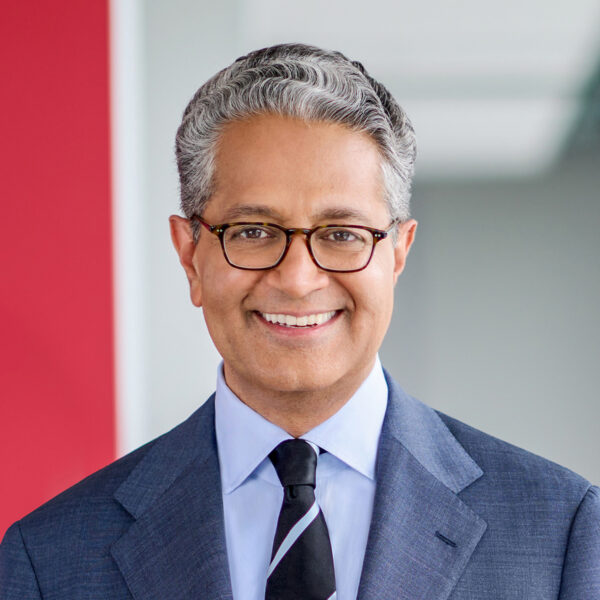
Salim Ramji
CEO, Vanguard
Salim Ramji is Chief Executive Officer of Vanguard and a member of the firm’s board of directors, leading 20,000 crew dedicated to giving all investors the best chance for investment success. Founded in 1975, Vanguard provides investments, advice and retirement services to more than 50 million individual investors around the world through direct investing, workplace plans and financial intermediaries. Throughout his career, Salim has worked to make investing more accessible and empower investors to prepare for a secure retirement. Prior to joining Vanguard in July 2024, he spent 30 years in leadership roles spanning investments, capital markets and wealth management. Salim holds a bachelor’s degree in economics and politics from the University of Toronto and an M.A. in law from Cambridge University. He’s also a CFA® charterholder.
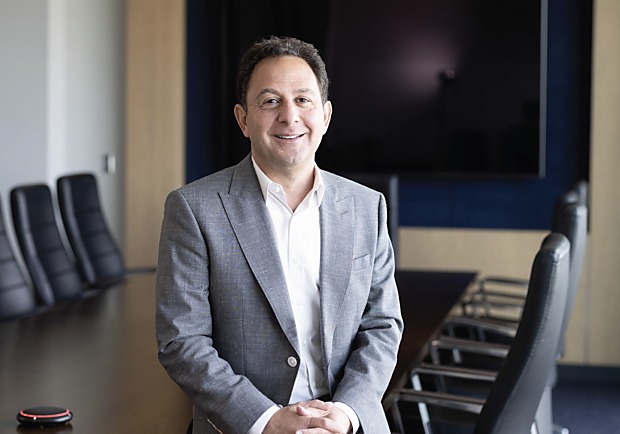
Peter Mallouk
President & CEO, Creative Planning
Peter Mallouk is the President and CEO of Creative Planning, one of the largest independent wealth management firms in the country. He hosts Icons and Ideas, candid conversations with the world's leading entrepreneurs, founders and changemakers.
Related episodes
 Ep · 18
Former Psychologist for the Navy SEALs Dr. Eric Potterat: How Elite Performers Train Their Minds
Dr. Eric Potterat · Former Psychologist for the Navy SEALs
 Ep · 17
70th Secretary of State Mike Pompeo: Iran, China, NATO and U.S. Foreign Policy
Mike Pompeo · 70th Secretary of State
 Ep · 16
Dimensional Founder David Booth: Investing, Market Uncertainty and True Wealth
David Booth · Dimensional Founder