Dimensional Founder David Booth
Investing, Market Uncertainty and True Wealth
David Booth — Dimensional Founder
Question
What investing principles help investors navigate uncertainty, build long-term wealth and define true success?
Answer
David Booth explains that investors should embrace uncertainty, remain disciplined, follow evidence-based investing principles and focus on long-term decisions while defining wealth by purpose, values and impact rather than money alone.
Explanation
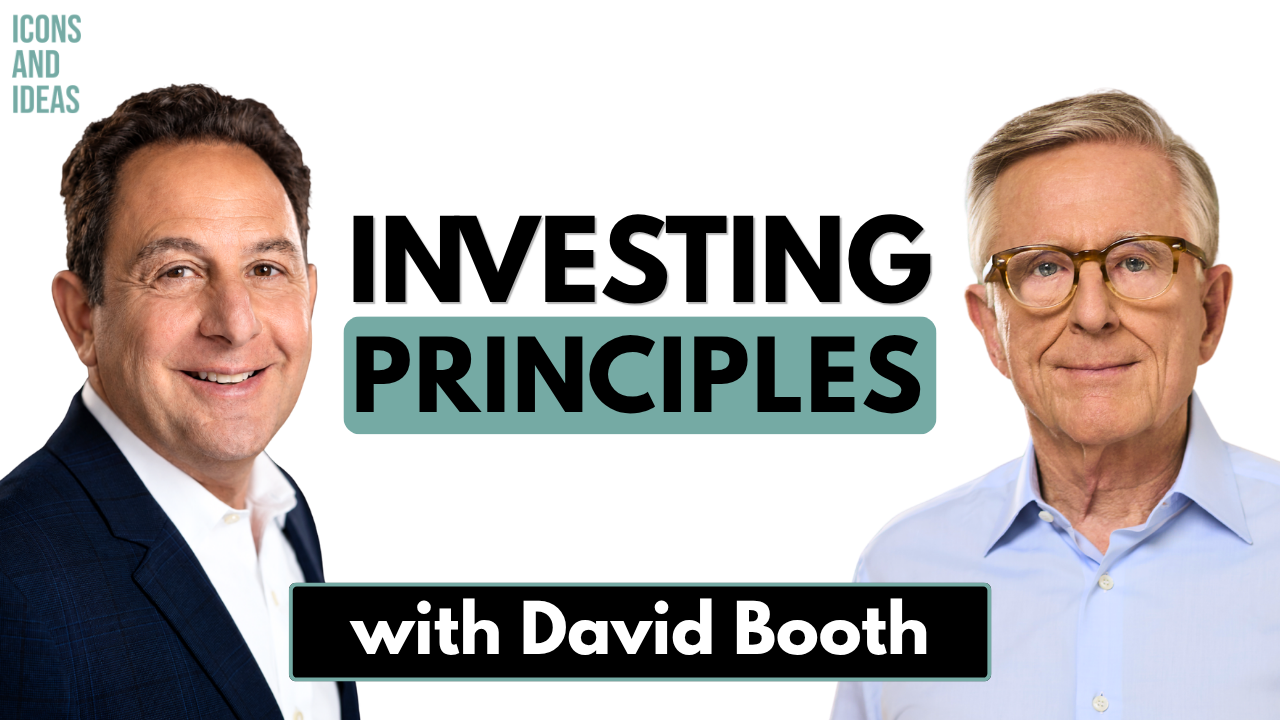
In this episode of Icons and Ideas, Peter Mallouk talks with Dimensional founder David Booth about evidence-based investing, market uncertainty, investor behavior, entrepreneurship, philanthropy and what it means to build lasting wealth.
What You'll Learn
- How academic research helped shape David Booth’s approach to investing and the creation of Dimensional Fund Advisors
- Why uncertainty is a necessary part of investing and can create opportunities for long-term investors
- Why investor behavior and staying invested can matter as much as investment strategy
- How David thinks about true wealth, philanthropy, values and building a meaningful legacy
Timestamps
Key Takeaways
- Uncertainty creates opportunity. Investors can’t eliminate uncertainty, but they can seek opportunities for higher expected returns.
- Staying invested matters. Emotional decisions during market declines can turn temporary volatility into permanent losses.
- Investing should be evidence-based. Dimensional applies financial science and academic research to real-world investing.
- True wealth goes beyond money. For David, wealth is rooted in family, values and what matters most.
Transcript
10:38:20.353 — 10:38:33.063 · Peter Mallouk
Hi I'm Peter Mallouk. Welcome to this episode of Icons and Ideas. I've been looking forward to this one because it is with David Booth, the founder of Dimensional Fund Advisors, and I've known David longer than he's known me. And welcome to the show, David.
10:38:33.103 — 10:38:33.983 · David Booth
Well, thanks for having me.
10:38:33.983 — 10:39:31.213 · Peter Mallouk
And we're here in your Austin headquarters. And that brings me to my first story. So I. Creative planning. Um, you know, the, the firm that I'm the CEO of, we we had maybe, I don't know, seven employees at the time, and it was maybe 17 years ago and we were managing, I don't know, like maybe $300 million. And I had this prospective client and we were talking to him about how part of the portfolio, we wanted to have it in Dimensional Funds.
And he said, well, I just I have to visit this place. And so I said, okay. And we flew to Austin and we met a couple managers, and he understood everything. And someone must have prompted you to come in and say hello. And you come in, you say hello, the guy asks you a question, and 90 minutes later, 90 minutes later, he agreed it was a good idea to invest individual funds.
And I remember leaving that day. And I mean, obviously my lesson really wasn't about investing, but was more about leadership. I mean, you were in the middle of it and in the thick of it, and you still are. I mean, it's it's truly remarkable. Where does that come from?
10:39:31.373 — 10:39:43.093 · David Booth
Well, part of it is, uh. Look, if you're not interested in meeting with clients and explaining me, helping them understand what you do, then it's time to quit. You know, I, uh. Um.
10:39:44.693 — 10:40:08.213 · David Booth
But to answer your question is, uh, I learned so much, um, from my experience of. You won't believe this, but selling shoes. Uh, that's how I put myself through school as an undergrad. And, um. Um, you know, we were commission driven, and so you had a big incentive to work really hard to make a sale. And
10:40:09.653 — 10:40:57.493 · David Booth
but what I learned about myself, because I think I made a couple of mistakes early on and kind of pushed things I maybe shouldn't have and really made me feel horrible. So I realized that when I went home at night, I wanted to feel good about myself, you know, to heck with the commission. Uh, and that is, uh, um, carries over into, you know, the interdimensional.
I mean, we sometimes you just don't have what people are looking for, and, uh. That's okay. You know, just. But try to be as helpful as you can. I mean, that's we're in a great. This is an incredible business. First off, it's an indoor job. You know, that's that's that's pretty cool. But the people that we come across in our industry, it's just, uh, very exciting.
10:40:57.813 — 10:41:19.293 · Peter Mallouk
Yeah. You still have the you still have the drive is what everyone around you. Yeah. Still says. So I, I've read bits and pieces and heard about the inception story a few times. But tell me, like the, the moment you're sitting in class and is there a moment when you say, I can turn this into what I'm learning here today into something?
Or how did that evolve?
10:41:19.333 — 10:42:06.723 · David Booth
Well, I was in the PhD program and the, um, first course, first, uh, day in at Chicago. Um, I took this class from Gene Fama. You know, the 2013 Nobel laureate. Right. And, um, he explained his view of markets and how they work. I go. Makes sense to me. Um, and so, uh, the second year, then I worked for him as a research assistant, and I was working, uh, crazy hours because in those days, you still had punch cards, and you had very limited turnaround time on, uh, when you turned your program.
And to get it back, and so frequently, you're up working all night down at the computer center. So.
10:42:07.763 — 10:43:12.153 · David Booth
And then all of a sudden, I went home for Christmas. One day I went to Christmas the second year and, uh, down to my paternal grandparents house, which is a small town in southeast Kansas. And, uh, it was a house that didn't have indoor plumbing and so had an outhouse in so. And my relatives are there. My aunts and uncles and cousins.
And most of them were farmers. And, uh, they were all having a great time and I, I go I am wound up tighter than a you know, I was totally stressed out doing all this work. And what I realized was that wasn't me. The the world is better served if Gene Foreman does the research and I try to figure out how to apply the ideas.
And so that's what I wanted to do. I wanted to figure out how to, uh. So you have this great science. Um, but people weren't implementing it, so, uh, that was that was what, uh, that was the excitement. And so I walked into farmer's office one day and I said, look, I don't think I'm cut out to be a.
10:43:12.193 — 10:43:13.353 · Peter Mallouk
And how old are you here?
10:43:13.433 — 10:43:14.553 · David Booth
I'm 24.
10:43:14.593 — 10:43:15.513 · Peter Mallouk
24. Okay.
10:43:15.793 — 10:43:19.073 · David Booth
And, um. And farm was 31. I thought he was an old man.
10:43:20.433 — 10:44:43.773 · David Booth
And so, you know, and he talks to me. He thought it would be a good professor. I got a. Um, so I said, well, you know, I've had this guy, uh, Mac McCown out in San Francisco who always wanted one of my students. I'll give him a call for you. So he did. And Matt called me and we hit it off. And he came to have dinner with me in Chicago and then offered me a job, uh, with him out in San Francisco at Wells Fargo.
And this was an incredible, uh, point in time. By the way, as I'm telling these stories, what I you'll observe is I've had this great opportunity over 50 little 57 years ago, I went to Chicago, uh, to observe the changes in the industry and, uh, starting with, uh, at that time when I was in school, the real buzz was that, uh, Michael Jensen had done the study and shown that active managers just weren't they weren't worth the cost.
So then the big question came in, well, if you can't out guess the market. What are you supposed to do? Because everybody growing up thinks investing is about, you know, analyzing financial statements and finding out market mistakes and capitalizing on that, which is, of course, all the evidence is that's hooey.
But these were new ideas. So basically the idea was, well, you want to
10:44:44.933 — 10:44:56.253 · David Booth
a portfolio with lots of stocks in it and low turnover, pay attention to fees and taxes. That's about it, which is a good idea. And
10:44:57.333 — 10:45:33.173 · David Booth
the the group I worked on at Wells, we had two outside consultants that we used primarily to help us figure out how can we beat the market without out guessing the market. Right. That's eventually that that's the basis for dimensional. Um, so and our two consultants that we use it primarily were Fischer Black and Myron Schultz.
So a sidebar on that is while they were working together on this project, they developed the Black-Scholes option pricing model, arguably the biggest event in finance in the 20th century. Anyway, um, um,
10:45:34.613 — 10:46:40.763 · David Booth
our group eventually was disbanded and we ten years later, then formed dimensional but with the same premise. How can we use the science to, uh, do better than straight indexing while we're at Wells? That's Wells Fargo, though. The trust department said instead of doing these kind of crazy ideas that we were thinking of, um, why don't we just create an S&P 500 index fund?
And, uh, so that's what they did. And eventually that took off. And that group was sold a couple of times and is now the cornerstone for, uh, Blackrock, the iShares and all came from that. The antecedent is this trust department that had Wells when I was there. Um, and um, so that kind of really is kind of the history of the development of, of of finance really.
The S&P 500 took off. Um, we've well, we've now we've had 45 years. And even though we have $1 trillion under management, it pales in comparison to the amount of money in index funds.
10:46:40.803 — 10:46:41.163 · Peter Mallouk
Right?
10:46:41.203 — 10:46:54.523 · David Booth
Uh, but, um, um, I tell our people, you have it easy now. We've demonstrated we can beat index funds. You know, I mean, in the old days, it was just an idea. Except we were selling the concept.
10:46:54.563 — 10:47:01.403 · Peter Mallouk
And what was the. Was there a key client or a turning point where you went from like, hey, this is an idea, and you were literally in your garage? Is that.
10:47:01.403 — 10:47:01.803 · Peter Mallouk
Correct?
10:47:02.403 — 10:47:04.763 · David Booth
Well, no, it was in my apartment.
10:47:04.803 — 10:47:05.443 · Peter Mallouk
Oh, okay.
10:47:05.483 — 10:47:12.363 · Peter Mallouk
So you're in your you're in your apartment and you're doing this like, what was the. Maybe I've got an actual enterprise here a moment.
10:47:12.483 — 10:48:16.873 · David Booth
Well, it was, um, um, at Wells. What? Uh, my experience there was we came up with all these great ideas, but nobody ever did a market test. Does anybody. Does anybody find these ideas appealing? So, um, I've done a consulting project for AT&T, which at that time was the largest pension fund in the world. Uh, before the split up into all these, um, different companies.
Um, and they had 110 managers picking stocks. I go, I don't know what you got here, but you've got some contorted index fund that because anybody it's any good on the street, you've hired them. So if anybody's buying something they're buying it from, from one of your other managers is selling it. So uh, and guess what?
None of them are holding the stocks of smaller companies. So if you, uh, I was helping them set up an index fund. I said, if you want to index something, why don't you index the smaller companies? You know, uh, and eventually.
10:48:17.393 — 10:48:17.753 · Peter Mallouk
That was.
10:48:17.753 — 10:48:18.233 · Peter Mallouk
The moment.
10:48:18.273 — 10:48:29.063 · David Booth
That was. So that was the idea. Then I kind of met my company. We had kind of show and tell. You know, I just here's the project I worked on and people go.
10:48:29.103 — 10:48:29.663 · Peter Mallouk
Wow.
10:48:29.783 — 10:49:20.693 · David Booth
That is so cool. So I said, well, if if you think it's a good idea, let's go out and see if clients would be interested in that. So we did a little market test and it got a lot of positive feedback. And then, uh, so I said we decided we wanted to start. Uh, I was working closely with a guy named Larry Klotz. He was one of my colleagues.
And, uh, we decided we wanted to start this firm. So we proposed it to our company, and they go. They weren't interested. So they said, okay, well, we're going to go out and try it on our own. They said, fine, but if no, if you can stay a few months, that would be great. So during that time period, we went back to those same people we talked to earlier, said, look, no, we had great feedback on this idea of small cap.
We called it an index fund at the time. Um,
10:49:22.653 — 10:49:33.173 · David Booth
you know, we're going to start a firm. So how interested are you? And that week we got for people to commit on the spot to give us money to start our fund.
10:49:33.213 — 10:49:35.453 · Peter Mallouk
So it was early indication that you were going to.
10:49:35.493 — 10:49:36.573 · Peter Mallouk
So that was that.
10:49:36.693 — 10:49:56.013 · David Booth
Okay. So now the idea would go, Holy cow, this is a killer idea. So I call it farmer said, look, I think we we've got an idea of we want to start and, uh, I'd like to have you participate with us as a founder, he said, and kind of head up the research. He goes, okay, that'd be great.
10:49:56.053 — 10:49:59.053 · Peter Mallouk
He had no idea what that would mean for him, I'm sure.
10:49:59.093 — 10:49:59.573 · Peter Mallouk
No.
10:49:59.613 — 10:50:00.693 · David Booth
Well, we didn't either.
10:50:00.733 — 10:50:02.053 · Peter Mallouk
He goes, by the way.
10:50:02.453 — 10:50:16.453 · David Booth
We just had a student here that does a PhD dissertation on exactly what it is you're talking about. I think it was Ralph Bonds, and he had what Ralph had done, and he had gone down and
10:50:17.533 — 10:50:48.293 · David Booth
Taking the New York Stock Exchange stocks and broke them into five quintiles of by market cap. From the largest to the smallest quintile and the smallest quintile outperformed. You know, it was actually monotonic. The first quartile had lower returns in the second and lower returns the third, fourth and the fifth was.
So I'm only bringing that up because we'd sold people on the idea of a small cap fund, and we didn't tell them really what we meant by small cap, and they committed anyway, as sure.
10:50:48.293 — 10:50:49.253 · Peter Mallouk
As how good an idea.
10:50:49.253 — 10:50:50.413 · David Booth
Was. It all.
10:50:50.413 — 10:50:50.733 · Peter Mallouk
Sounds.
10:50:50.733 — 10:51:26.883 · David Booth
Too easy now, but, uh uh, so we we thought we had a great idea. Now, in those days, the, uh, it was hard to hold a portfolio with hundreds of stocks in it, which is what we were going to do in small cap. And, um, so we decided we wanted to do a mutual fund, which is. So our first clients were all big institutions and corporate pension funds.
Sovereign wealth funds, so forth. And, um, but we decided we wanted co-mingled because of administrative difficulty of having all these separate accounts. That shows you how much the business has.
10:51:26.883 — 10:51:27.483 · Peter Mallouk
Changed a lot.
10:51:27.643 — 10:51:52.443 · David Booth
Right? Um, so I didn't know anything about any mutual funds. So I went down to Vanguard, talked to Jack Bogle, and said, hey, Jack, why don't you do the back office? If we want to do this mutual fund, you do all the back office stuff and, you know, price the portfolio daily and so forth for a fee. I mean, we'll do the trading and at the end of the day, we'll fax down the trades and then you take care of the administrative.
So he said okay. And so that's how we got started.
10:51:52.483 — 10:51:56.203 · Peter Mallouk
I did not know about the Bogle connection. I can't believe he said, okay. That's a.
10:51:56.243 — 10:51:56.883 · Peter Mallouk
I guess.
10:51:56.923 — 10:52:31.753 · David Booth
Yeah. And he did it for about four years. By that time we were trained. And then he decided he wanted to do it. And one of the cool things there was that about two months before he passed away, uh, I happened to run into him at a conference, and I hadn't seen him for probably 15 years. And I said, hey, Jack, let me buy you a cup of coffee.
So we sat down and I said, Jack, you know, I don't know what we would have done had you not been there. We would have figured out something. But you made starting this firm a whole lot easier, uh, than it could otherwise have been. So I just want to say thank you. And I was so glad I was able.
10:52:31.753 — 10:52:32.113 · Peter Mallouk
To do that.
10:52:32.113 — 10:52:32.593 · Peter Mallouk
Yeah. That's neat.
10:52:32.593 — 10:52:33.273 · Peter Mallouk
You were able to do that?
10:52:33.273 — 10:53:05.713 · Peter Mallouk
Yeah. He's he's. Both of you are real huge pioneers in the industry. So you've touched on the investment philosophy a little bit, which started out as small over large value over growth. There's an emphasis on diversification, tax sensitivity, costs now profitability and so on. Um, but when I think of dimensional and I remember when, when groups would come through for training here, that was half of it.
And the other half was behavioral, which your book, your new book. Congratulations, by the way. Off to a great start. Stay calm is um, really talks about the behavioral side too.
10:53:05.753 — 10:53:08.793 · David Booth
Well, absolutely. I mean, in fact, that's, um,
10:53:09.833 — 10:53:17.943 · David Booth
we had an advisor once tell me, he said, look, I, I don't have clients with investment problems. I've got investments with client problems. You know, it's.
10:53:17.943 — 10:53:18.383 · Peter Mallouk
Uh.
10:53:18.503 — 10:54:19.343 · David Booth
It's. How do you, uh. Because investing is complex and uncertain. So kind of a theme we've been pursuing is you pick it up in the book is, uh. Well, guess. What's those life? It's complex and uncertain. And so, uh, you've learned how to deal with uncertainty as you've grown. And so you, in some sense, you know more about investing than you think, you know, so it's about, um, managing uncertainty in the sense that, uh, we start off with it's uncertainty that creates opportunity.
If there are no uncertainty, you couldn't have progressed, right? You know, I would be a wheat farmer or something else. Uh, and same in investing. If there were no uncertainty, then there would be no risk and all investments would have the same return, the riskless return. And so it's the it's not about eliminating uncertainty.
It's about managing uncertainty. And that's that's kind of the breakthrough and that we've had in communication. And so how do you deal with uncertainty?
10:54:19.423 — 10:54:36.142 · Peter Mallouk
How do you feel about, you know, every time people say this time is different, right. 911 tech bubble or 8 or 9 Covid tariffs, interest rates. And it is I mean the set of facts is different, but how do you address the general concern about well, maybe this time the market won't be so resilient. Like right now we've got the national debt discussion and.
10:54:36.142 — 10:54:36.502 · Peter Mallouk
The.
10:54:36.543 — 10:54:44.943 · David Booth
Yeah all of that. You know, there's a lot of anxiety now. And that's part of the motivation for writing the book. We want people to feel more optimistic
10:54:45.983 — 10:55:17.013 · David Booth
about investing and feel more confident that they're going to have a good long term investment experience. And the way you do that is, in our view, is by educating people and people better understood how markets work. They would make more sensible decisions. That's that was kind of we started down that path with a movie that Errol Morris did about these ideas and the firm.
So let me try that again. Because of.
10:55:17.013 — 10:55:17.933 · Peter Mallouk
This. Oh, sure.
10:55:18.253 — 10:55:20.253 · David Booth
Yeah, yeah. Um,
10:55:22.013 — 10:55:23.373 · David Booth
so the, um.
10:55:25.653 — 10:55:37.813 · David Booth
That gets into the kind of the motivation for writing the book, which is we want people to feel more optimistic about investing and feel more confident that, uh, they'll have a good investment experience. And
10:55:38.893 — 10:55:54.853 · David Booth
the way you do that is by education. If people understood better how markets work, they would make better choices to be more likely to invest and stay invested. Um, so that is kind of a behavioral thing. Uh, as you point out,
10:55:56.533 — 10:56:19.003 · David Booth
you know, people sometimes say I'm an optimist. I mean, we want people to be more optimistic. How can you be optimistic with all things going on? Well, look, there is a lot of stress right now, but, um, you know, we have about 100 years of research quality data on stocks and bonds. I mean, do you think the amount of anxiety now is greater than during the Great Depression or.
10:56:19.003 — 10:56:19.723 · Peter Mallouk
The 60s.
10:56:19.763 — 10:56:38.923 · David Booth
Or the 60s, or right, or the Great Recession or the pandemic? I mean, that's anxiety is part of the process. I mean, uh, because there is uncertainty. Um, so go back to what? The uncertainty creates the opportunity. Sometimes we even say uncertainty is underrated. And people.
10:56:39.243 — 10:56:59.283 · Peter Mallouk
It's the gift for a great investor. Right? If there was certainty. Stocks would have bond like returns and all the outperformance would go away. So I always tell our, you know, the people that I'm working with, you know, the in a bear market a bad investor panics and goes to cash or does some some mistake.
A good investor holds but a great investor leans in. I mean they just see the opportunity.
10:56:59.323 — 10:57:23.113 · David Booth
Yeah. Sometimes I want to give in a talk and say, here's what I want. I want to change your language a bit here. Uh, a typical scenario is bad news comes into the market like the pandemic, right? Uh, people go, oh, God, I've have a lot of anxiety. And then they look and see that the market's down 20%. Now they go, wow, now I really have a lot of anxiety.
I gotta get out.
10:57:24.553 — 10:58:19.143 · David Booth
Don't couch it that way. Uh, bad news comes into the market. That happens. And at that time people were saying what's going to happen? I go, I don't know what's going to happen, but here's what I believe. First off, the consensus is, um, this pandemic thing is a 2 or 3 year kind of thing. Uh, so the market down 20%.
That's about right. So the market's doing its job. It's it's lowered, uh, returns to where you can have a positive expected return going forward. Right. Which is what happened because the market's down 20%. So $100 goes to 80 for the year. The market's up 20%. So the last nine months of the year you go from 80 to 120.
Uh you're up 50%, which is one of the passions I have at trying to help people stay invested. Right. Because you don't get a do over. There are no mulligans in investing.
10:58:19.183 — 10:58:20.183 · Peter Mallouk
It's a permanent loss.
10:58:20.183 — 10:58:20.823 · David Booth
It's a permanent.
10:58:20.823 — 10:58:29.183 · Peter Mallouk
Loss. That's the the one killer thing. I wrote a book, five Mistakes Every Investor Makes. And the number one is that mistake. You just got to avoid that mistake.
10:58:29.463 — 10:58:41.623 · David Booth
Well, as soon, as soon as you figure out how to make, uh, uh, eliminate that argument, uh, let me know I can. That's one of the things I've been working on for 50 years.
10:58:41.663 — 10:58:51.263 · Peter Mallouk
Well, you one of the things you write about in your book is that people should be talking to their advisors about, you know, they do talk about performance and fees, but you say there's something else that they should be asking.
10:58:51.383 — 10:58:54.543 · David Booth
Well, I mean, first off, um,
10:58:55.983 — 10:59:24.023 · David Booth
they should figure out their philosophy, but, um, let me just back up. The darndest thing is people, when they have a serious medical condition, they go to a doctor. Understandably, Everybody has a serious financial problem, and nobody could be an expert on taxes and insurance and investments and estate planning.
And you know, everybody needs help, right? So why
10:59:25.063 — 10:59:56.303 · David Booth
people try to self-medicate their financial issues I don't know. So part of the book is, in fact, one of the reasons that people don't use advisors, I think, is, uh, they just don't know how to get started. Right. So the last chapter in the book is about if you're going to talk to an advisor, what are some questions you might ask them?
And then similarly, what are some questions they might ask you. Yeah. So our goal there is we want to get people invested. So if we can help them find an advisor.
10:59:56.583 — 11:00:05.903 · Peter Mallouk
Uh, I tell people that finding the right advisor is critical because like you can you don't go to a you don't really judge the treatment that you get in medicine. The first, biggest, most.
11:00:05.903 — 11:00:08.253 · Peter Mallouk
Important decision is who's this doctor going to be?
11:00:08.293 — 11:00:08.493 · David Booth
Yeah.
11:00:08.533 — 11:00:08.773 · Peter Mallouk
Right.
11:00:08.813 — 11:00:13.933 · Peter Mallouk
And everything else that emanates from that one critical decision.
11:00:14.733 — 11:02:00.723 · David Booth
Well, no, I think that's right. And of course, you know, that's our I don't want to turn this into a sales pitch, but that's a that's what we do was say, well, look, our big competitors are index funds. Um, because, um, but I don't think scientists would be drawn to indexing, um, for the same for the main reason is that, um, constraints indexing is a constraint you want to do, uh, you give up all your degrees of freedom, your ability to use judgment to track an index.
And I know you're familiar with the story of or the argument that when Standard and Poor's say, adds a new name to its index, it's S&P 500. Uh, it's going to end. Put that into the index at tonight's closing price. So every S&P 500 index fund manager has got to add that to their portfolio at tonight's closing price.
They want to have zero tracking. So they'll all run around saying I'll pay anything, but I gotta have tonight's closing price. And not surprisingly, the evidence is that, um, um, that pushes prices up temporarily. Uh, our best estimate is that for S&P stocks, it's about a 4%. They pay. It goes into the index at two about a 4% to higher price.
Of course that reverses tomorrow. Um, so there are a lot of things just because you can't out guess the market. There is ability for professional money managers to working through what we call them market mechanisms. You know, whether it's trading, securities lending, so forth. There are a lot of little things you can do that will cause you to deviate from pure tracking, but can make you money.
11:02:00.723 — 11:02:03.163 · Peter Mallouk
Over the long run. It should tilt in your favor.
11:02:03.403 — 11:02:15.512 · David Booth
I mean, to a casual observer, if you plot our say small cap returns versus small cap index, you would say those things track. I mean, you know me, doesn't it? It's not exactly. But, uh, you'd have to have
11:02:16.913 — 11:02:25.433 · David Booth
be a, an extreme, extremely good statistician to say, man, these, uh, these things don't really track.
11:02:25.553 — 11:02:33.193 · Peter Mallouk
Well, okay, I'm going to shift gears because we have one big thing in common. Another big thing in common, which is, um, you're a Lawrence, Kansas guy.
11:02:33.313 — 11:02:33.753 · David Booth
Totally.
11:02:33.793 — 11:02:59.033 · Peter Mallouk
And they're both Jayhawks. Yeah. And both pretty involved in the University of Kansas. But you, um, you bought the the rules of basketball. Yeah. And, you know, I, I remember watching this, uh, it was on a 30 for 30, right? This was on. And, I mean, it's a great story. Walk me through, like, how you got pulled into this.
What was interesting to you about this? And obviously, you know, the University of Kansas has done a lot with that since then.
11:02:59.073 — 11:04:10.183 · David Booth
Well, yeah, it, um, the backdrop was, uh, starting in 2003. I. Um. We, uh. My sister and brother and I have funded an addition on to Allen Fieldhouse, uh, called the Hall of Athletics, is what they they call it. And then we've done. So I started to get involved, and then, um, one day I got a phone call from a friend of mine, said he just read where the rules of basketball were going to be up for auction at Sotheby's in December.
And the rules of basketball mean these are two typewritten pages. Uh, Jane Smith typed together to invent the game. It's the only major sport where you know how it was invented. I mean, it was it was a class assignment for him. And, um, and after, um, graduating, he goes to Kansas and taught there for 40 years.
He's buried in Lawrence. And, of course, basketball's a big deal. So when I heard, okay, they're up, uh, for sale, I called up Q and I said, I assume you're putting together a grouped together to buy these. Count me in. They go. Well, we're not sure they're real, and we're not sure we can take care of them.
11:04:10.223 — 11:04:13.063 · Peter Mallouk
So you just showed up? You volunteered yourself.
11:04:13.103 — 11:04:26.863 · David Booth
Yeah. So I said, okay. Well, I hung up. I go, what? Saved me some money? Then this guy just swayed who I did. The movie calls me up about a month later saying he's putting together a group to buy. And so I
11:04:27.983 — 11:04:59.583 · David Booth
said, okay. He said, I don't want to. I want to talk to you. So he kind of we were having a conference in Las Vegas, of all places. And, um, I talked to him and he said yes, he wanted to put together. I said, okay, we thought the rules would go for about 2 million bucks. Yeah. Um, so, uh, I didn't want to waste any more time.
I said, okay, you can count me in for a million. So, uh, um, he said, good. And then it comes up the week of, um,
11:05:01.263 — 11:05:05.773 · David Booth
of the auction at Sotheby's in New York. And, uh,
11:05:07.693 — 11:05:15.773 · David Booth
the COO calls me and. And talked to my assistant and says they didn't think we should buy the rules.
11:05:15.813 — 11:05:16.453 · Peter Mallouk
Incredible.
11:05:16.493 — 11:05:16.773 · David Booth
Yeah.
11:05:17.093 — 11:05:17.533 · Peter Mallouk
Wow.
11:05:17.813 — 11:05:36.533 · David Booth
So, uh, Mark Allen, um, son of grandson of Fogg Allen, was on his way to a conference. He stopped by and had dinner with with me and my then wife and said, oh, no, you got to buy these. And then he gets Bill self to give me a call. And Bill self, I mean, I can't understand how he can recruit.
11:05:36.533 — 11:05:41.013 · Peter Mallouk
So he recruited for those not into basketball. One of the greatest college basketball coaches of all time.
11:05:41.053 — 11:05:42.453 · David Booth
Yeah. Yeah. Right in the Hall of Fame.
11:05:42.493 — 11:05:42.933 · Peter Mallouk
Right.
11:05:42.973 — 11:06:03.843 · David Booth
So, uh, he calls me. And for every student, uh, for every alumnus ever been to Ku, you got to buy these rules. So I was okay. So, um, and it's if you want to see the, uh, the video, it's, uh, there's no place like home Yes. And 30 for 30. Right. So, um,
11:06:05.043 — 11:06:27.323 · David Booth
the auction happens, and pretty soon I'm bidding over the phone, and pretty soon it comes down to me and one other person who's also bidding on the phone, and we go on and it drags on and on. And finally, uh, um, I prevail. And including Sotheby's fee, it was like $4.3 million.
11:06:27.563 — 11:06:28.243 · Peter Mallouk
More than double what.
11:06:28.243 — 11:06:38.203 · David Booth
You give. So I get a email. So that's an announcement and I'm the buyer. And, uh, I get an email from David Rubenstein. He was the guy on the other.
11:06:38.243 — 11:06:39.123 · Peter Mallouk
Oh, wow.
11:06:39.203 — 11:06:48.403 · David Booth
He's a friend of mine who we said on the board of the University of Chicago together. I see, and he said he sent me an email saying, I may have cost you some money. I go, yeah, you cost me money. Why?
11:06:48.443 — 11:06:49.403 · Peter Mallouk
Why was he bidding on it?
11:06:49.443 — 11:06:50.963 · David Booth
He was bidding for Duke. He went to Duke.
11:06:51.363 — 11:06:51.523 · Peter Mallouk
Oh.
11:06:51.723 — 11:06:53.363 · Peter Mallouk
Oh, thank God you got. Yeah.
11:06:54.403 — 11:06:56.683 · Peter Mallouk
So anyway, a travesty.
11:06:56.723 — 11:06:58.882 · David Booth
But, you know, it's it's one of the
11:07:00.353 — 11:07:08.873 · David Booth
Best things I've ever done. Um, because in philanthropy. And I'm sure you advise your clients on philanthropy. Um,
11:07:09.993 — 11:07:17.393 · David Booth
you know, it's really great when you can have an impact, when you can see an impact that has changed. Uh,
11:07:18.473 — 11:07:28.393 · David Booth
you know, Allen Fieldhouse for sure. Um, but the whole northeast Kansas is. Allen Fieldhouse is now the most visited building in the state. I I've heard.
11:07:28.433 — 11:07:42.913 · Peter Mallouk
I think that you have to be very pleasantly surprised at how incredible that turned out. And the people I know, those people aren't here anymore that advised you not to buy them. Wow. What a what a mistake. So it's good you got that Bill self call.
11:07:42.953 — 11:07:50.353 · David Booth
Yeah. Bill self. And then Paul Bruce stepped in and funded the uh the Bruce Center there. So it's, you know, um,
11:07:52.153 — 11:07:56.433 · David Booth
I really am an example of you often hear the cliche, you know,
11:07:57.553 — 11:08:04.463 · David Booth
when you give money away, you end up getting more from it than than you gave. And I really feel that way about my involvement, I kid you.
11:08:04.503 — 11:08:21.783 · Peter Mallouk
So do you feel about so with your involvement at Ku? I mean, that was like nothing compared to what just happened last year. You donated, which close to $300 million lifetime gift to the University of Kansas. I mean, just shattering every previous record there. I mean, where did that come from?
11:08:21.783 — 11:09:08.263 · David Booth
And, well, it goes back to, um, my parents, um, great people. And I learned a lot. You know, I gave you the example of Christmas going down and having seen my relatives were happy people, and I wasn't my, uh, parents, I characterize as being wealthy. They just didn't have money. Right. Because it gets into actually going back to the book, what, uh, investing is about it.
First off, you have to have a notion of true wealth. What's really important, right to you. To my parents, it was family. And, um, so then I was able to accumulate some money and, uh, first put in the Hall of Athletics and their, their, uh, memory. Um, and.
11:09:10.423 — 11:09:21.823 · David Booth
You know, they, um, about 100% or maybe a of their entertainment budget for the year was getting two season tickets to the back, basketball tickets back when they cost, you know.
11:09:21.983 — 11:09:23.623 · Peter Mallouk
Right. It's changed.
11:09:24.703 — 11:09:27.943 · David Booth
So I, um, I knew how
11:09:29.063 — 11:09:50.943 · David Booth
there's not much you can do to bring back their memory. I mean, that's, uh. But hopefully things like this, uh, um, people will appreciate people like my parents, who I get a lot of credit for because I ended up with, you know, some money. But, uh, uh, people like my parents don't get that much credit. Right.
And that's really what it's about.
11:09:50.983 — 11:09:55.503 · Peter Mallouk
That's right. You've also been that the largest donor ever to the University of Chicago.
11:09:55.543 — 11:09:56.183 · David Booth
Yeah.
11:09:56.303 — 11:10:03.173 · Peter Mallouk
Where the school is now. The business school is named after you. And tell me about that. And that gift just keeps going and going.
11:10:03.373 — 11:12:03.112 · David Booth
Going, going. Yeah. What happened is so kind of my sequence was to start the firm. It gets successful and it gets to be some of the money sticks. And you've had, you know, that experience. The um, and so I provided for my kids and my family is um, um, so then I still have a little bit left over. And so, um, I go to, um, the University of Chicago now, I told the story about working for Gene Pharma, but it was, uh, incredibly stimulating experience because, in essence, investing was going through a revolution.
It was going from being, who knows what to science. You know, for there to be a science, you have to have testable hypotheses and to have testable hypotheses, you need data. And before 1960, there really wasn't a research quality of data and computers weren't big enough. That all changed in the 60s. So there I am in the late 60s, and a lot of the University of Chicago just happened to be kind of one of the centers of, of, of this, of this revolution.
And so being in the PhD program, you meet regularly, I think almost weekly, and you'd sit around a table and, um, Fama and French. It was around this workshop. Gene Fama, my mentor, and Merton Miller, the 1990 Nobel laureate. Um, now, this is way back before any of these guys got their Nobel Prizes. They were just in academic circles being, you know, superstars, but not getting much recognition yet.
So you sit around and present papers and, um, you got to know the faculty well. So when we started the firm, as I mentioned, we were decided we wanted to do this mutual fund. And, you know, Jack Bogle pulls out a card. He says, you know the first thing you're going to need a good law firm. Now we're operating out of my brownstone.
11:12:03.352 — 11:12:04.513 · Peter Mallouk
Yeah, right.
11:12:04.993 — 11:12:40.512 · David Booth
So you're not going to get a big name law firm when you're kind of negative net worth. And so here's who I use. Call him up. He'll he'll he'll help you. So we met with him and actually were meeting in pharma's office on the campus of Chicago. And, uh, he says, you know, you need to have an independent board of directors.
So Rex and my partner and I, we walk across campus into the faculty building. Closest office was Martin Miller and, uh, Merton. We needed independent director. Oh, sure. He was. You know, because he
11:12:41.753 — 11:13:25.343 · David Booth
knew we were trying to do things the right way. Walk out of his office, my shoulders come in the other direction. You know, the 97 Nobel laureate and, uh. Go. Myron, we need independent director, and Mirren tells a story the same way he goes. Well, how much are we going to get paid? And I said, well, Myron, we're asking you to be an independent director.
It would be unseemly for us to pay you anything. And by the way, we don't have any money anyway. But if we get the fund off the ground, there'll be director's fees if we're successful. Oh, okay. And that's how we got started. That led eventually for a long time. And we invited other academics, the dean of the business school and so forth.
Um,
11:13:26.423 — 11:13:45.223 · David Booth
they were all independent directors, were all professors at Chicago, which is great for great for our investors. Yeah, it's tough going someday because they don't give you any slack when you're presenting papers in this workshop. Nobody got any slack if you didn't do things the right way, people called you on it.
11:13:45.263 — 11:13:45.783 · Peter Mallouk
Right.
11:13:45.823 — 11:13:55.503 · David Booth
So but that's what you want is independent directors. And so years later now I am financially secure. So I approached the dean of the business school
11:13:56.623 — 11:14:14.223 · David Booth
and I said, look. Not only did I have great training, but my whole starting the firm, there had been so much help. All these professors have helped me. I don't know if it had gotten off the ground. I mean, who knows? Because we use their names indiscriminately. We're making on sales calls, you know. Yeah.
Pharma. Murray Miller.
11:14:14.263 — 11:14:14.423 · Peter Mallouk
Right?
11:14:15.783 — 11:14:16.543 · Peter Mallouk
Yeah, yeah.
11:14:16.743 — 11:14:30.343 · David Booth
And so that helps. So I want to give you a big chunk of what I have. This was like an. Well, and we ended up announcing at the same month that Obama got elected, November 2008. And, um,
11:14:31.823 — 11:14:33.103 · David Booth
it was it was a,
11:14:34.663 — 11:14:37.223 · David Booth
um, income stream from, from my firm. I mean, they were.
11:14:37.223 — 11:14:37.623 · Peter Mallouk
Basically.
11:14:37.703 — 11:14:39.183 · Peter Mallouk
During the financial crisis.
11:14:39.223 — 11:14:40.183 · Peter Mallouk
Yeah. Yeah.
11:14:40.223 — 11:14:55.453 · David Booth
I mean, this was. Yeah, it was, uh, a crazy time, and it was right in the middle of, uh, we had about, uh, less than $100 billion in assets under management. Now we crossed a trillion so that having that income that.
11:14:55.573 — 11:14:56.013 · Peter Mallouk
They've been.
11:14:56.053 — 11:15:13.333 · Peter Mallouk
Annexed for them. Yeah they they can't. Probably can't believe what's happened. Yeah. Between their COO. Is there something you want students to take away? I mean, obviously there's scholarships and there's buildings and there's the rules and there's research. But is there something you want students to think about or take away from your story?
11:15:14.053 — 11:15:22.093 · David Booth
Well, I think, um, in simplest level, um, we try to figure out what is the,
11:15:23.373 — 11:15:55.403 · David Booth
you know, learner for ourselves. What is the best way to invest? Uh, and that we think is based on the science of investing. And we got the absolute best people to help us out. Um, so I think that's always go for the best. You know, if you can't be the best at something or have a chance of being the best, you probably ought to think about something else.
There's probably there's something there. You can be, you know. You know, the best hat. Um, and it's got to be something you really believe.
11:15:56.483 — 11:16:10.763 · David Booth
And as people get out of college, hopefully by that time they have a well-developed set of values. It's got to be consistent with your set of values. And, uh, and if you have all of that and you have a little bit of luck, then you're you're probably going to be okay.
11:16:11.723 — 11:16:37.163 · Peter Mallouk
Um, I think that's good advice. Find your find your lane as soon as you can. It's a hard thing to do. It took me a long, long, long, long time to find my lane. But try to find it. I had the opportunity a few years ago to tour part of your art collection. The outdoor part of your art collection. Unbelievable. Uh, while we were walking around, I asked what the common theme was.
And you said, Peter, my rule is I only buy happy art.
11:16:37.203 — 11:16:37.523 · Peter Mallouk
Yeah.
11:16:37.563 — 11:16:41.763 · Peter Mallouk
Is that really is that is that the lens through which you're making your art decisions?
11:16:41.803 — 11:16:43.883 · David Booth
Yeah. You won't see paintings of people stabbing each.
11:16:43.883 — 11:16:45.203 · Peter Mallouk
Other or anything like that.
11:16:45.363 — 11:17:42.233 · David Booth
I mean, there's no political message, but there is kind of a tendency now I can bias towards minimal art and which, um, you can call it to the casual observer can often look simplistic. But as you notice, those structures of some of these huge sculptures, there's a lot of engineering in that. So there's a lot of science behind it.
And yet there's an art. So sometimes with minimal art, people think, you know, hey, I could have done that. Nah, you couldn't have because the structure behind it is really important. It's got to be able to stand up through all kinds of weather. And I liken that to our investment business. You know, you got to have the science behind you.
Yeah. And yet there's still an art to the science. So going back to your notion of medicine, let's say all doctors study the same textbooks. Some of them just turn out to be better than others.
11:17:42.273 — 11:17:42.593 · Peter Mallouk
Yes.
11:17:42.633 — 11:17:48.113 · David Booth
You know, that's the art of the science. And that's what we try to do at dimensional.
11:17:48.313 — 11:17:58.153 · Peter Mallouk
So this this podcast called Icons and Ideas. And so I wanted to ask you an idea that really got away from you, or one that turned out great. Now I already know one that turned out great.
11:17:58.193 — 11:17:58.473 · Peter Mallouk
Was.
11:17:58.473 — 11:18:01.433 · Peter Mallouk
That was the investing idea. But anything else?
11:18:01.473 — 11:18:14.033 · David Booth
Well, the stuff that didn't work out so well, let's put it in. There's a class of investments I've made, and I haven't bought any individual stocks that publicly traded, but, um, there were investment opportunities that come from friends.
11:18:14.273 — 11:18:14.873 · Peter Mallouk
Yeah.
11:18:15.233 — 11:18:16.553 · David Booth
Those have all gotten away.
11:18:16.593 — 11:18:17.153 · Peter Mallouk
Yeah.
11:18:17.273 — 11:18:37.913 · David Booth
You know, and but part of me goes, hey, look, I remember how the struggle of getting started. So sometimes I've invested in, I've taken fliers on, but without even worrying about whether it made sense or not, just just to help out the friends. I wouldn't call that investing. I call it something.
11:18:37.913 — 11:18:38.313 · Peter Mallouk
Else.
11:18:38.313 — 11:18:55.303 · Peter Mallouk
I would agree. That's the lens to with which to look at that. And and you're going to live forever with that attitude, you know, not getting worked up about things. All right. And then icons, is there somebody that you've looked up to or that's been a mentor, whether you actually knew them or personally or not, that's really impacted your way of thinking?
11:18:55.303 — 11:19:06.103 · David Booth
Well, I've had I mean, there probably are some I mean, you could say George Washington or something, but, um, no, there are really three people that come to mind. First off, Gene farmer.
11:19:06.143 — 11:19:06.383 · Peter Mallouk
Yeah.
11:19:06.423 — 11:19:16.663 · David Booth
My mentor who one of the things you learned from Gene is your moral compass better be due north all the time, not just most of the time. Uh,
11:19:18.343 — 11:19:47.693 · David Booth
healthy. And then Mac McClellan, who went to work for Wells Fargo, uh, an amazing guy. And once again, uh, trying to apply these new ideas. He was sitting on a powder keg of new ideas, but always do the right thing. And then the third person would be, um, Senator Bill Bradley, who was kind of my hero, uh, growing up.
He was just a few years older than I am, and he was, um.
11:19:49.933 — 11:20:18.973 · David Booth
He led. He went to Princeton, led Princeton to the final for the only time in Ivy League school. I think he's done that. And then was a Rhodes Scholar. He was college player of the year and doesn't go into the pros. Right? He he studied at Oxford for two years with a Rhodes Scholarship, then comes back and a place for the Knicks for ten years.
It was on their last championship team until the spring, and then after that, he becomes a senator from new Jersey.
11:20:18.973 — 11:20:19.493 · Peter Mallouk
For.
11:20:19.533 — 11:20:31.893 · David Booth
And was helpful in writing the 86 tax code. So and he's helped us part of what I do I have what we call a Tuesday group, which is, um,
11:20:32.973 — 11:20:42.453 · David Booth
based on the idea about, I guess, about 12 years ago now, I realized that we do a good job of selling to all the geeks that are out there. No offense.
11:20:42.973 — 11:20:43.533 · Peter Mallouk
The, uh.
11:20:44.213 — 11:20:49.563 · David Booth
The, uh, But if you want to change the world, you got to use a language. You got to meet people with their language.
11:20:49.603 — 11:20:50.163 · Peter Mallouk
That's right.
11:20:50.203 — 11:20:56.603 · David Booth
And, uh, you know, being a senator, you're basically a retail salesman. You're selling. You got to get votes. Yeah. You know.
11:20:56.603 — 11:20:57.603 · Peter Mallouk
You got to hit everybody.
11:20:58.003 — 11:21:32.683 · David Booth
And here again, his moral compass is really, uh, due north. And so having his perspective. And he's not an investment, uh, uh, person. So having fresh eyes, uh, helping us communicate has been very helpful and has turned into be my passion. So a couple about ten years ago now, we turned over running the firm really, to two co-CEOs, Dave Butler and Gerard O'Reilly.
I still come in every day and try to try to be helpful, but not get in the way.
11:21:32.683 — 11:21:34.083 · Peter Mallouk
And it's an art.
11:21:34.163 — 11:21:42.043 · David Booth
It's an art. And, uh, so I really work on on communication, which eventually leads to the book, the movie in the book.
11:21:42.083 — 11:21:42.723 · Peter Mallouk
Right.
11:21:42.763 — 11:21:45.273 · David Booth
So it's been and I would.
11:21:46.353 — 11:22:15.513 · David Booth
And just he didn't ask this, but I would just add that what I've learned is that what you want to do, if you're lucky in life, you can change your job description around to meet where you are at your stage in life. So, you know, my legs aren't as strong as they were. You know I can't work, you know, 60 hour weeks anymore.
Uh, and I've found a a format that works for me, and I think I can still be helpful.
11:22:15.873 — 11:22:43.953 · Peter Mallouk
Well, David, I've known you a long time in many capacities. From somebody explaining to one of my clients how to invest. You know, our team coming out here to learn, you know, maybe 15 or 20 years ago on charity board or university boards and, um, at basketball games and football games on occasion. And I can say unequivocally, you're the same person in every room you're in, and you can't say that a lot about a lot of people at your level in this industry.
And thank you for spending time with me today.
11:22:43.993 — 11:23:02.952 · David Booth
Well, thank you for having me on. I've really enjoyed getting to know you and I, since we have a lot of, you know, common values and I imagine you're the people that invest with you. Uh, share a lot of those values or they wouldn't hire you. And so and that's pretty cool. At the end of the day, it's
11:23:03.993 — 11:23:05.833 · David Booth
interested in your thought at the end of the day.
11:23:06.913 — 11:23:15.913 · David Booth
It's really rewarding when people come up to you and just say thank you for and for all your help. And you, you know, what you do is incredibly important.
11:23:16.353 — 11:23:25.513 · Peter Mallouk
100%. I mean, the most satisfying thing is I didn't understand a certain thing, and you helped put me in a better spot. There's nothing more fulfilling than that.
11:23:25.633 — 11:24:12.863 · David Booth
And I. And I feel safe. See, that's really. That's my latest thing. Uh, in life, you know, people want to feel safe. Yeah. And by safe, they don't mean just, um, nothing bad can ever happen to them. Feeling safe, I think, means when? When bad things do happen, you figure out how to deal with them and get back on track.
That's what feeling and investing is the same way. If you can, um, give people the confidence that that your process that you have in place, long term process, playing for the long haul, the way you do it over the long haul has got to work. I mean, and if once people accept that, then they can feel safe in investing as well.
So here again, congratulations to you.
11:24:12.903 — 11:24:13.743 · Peter Mallouk
Thanks, David. Good to.
11:24:13.743 — 11:24:14.903 · Peter Mallouk
See you. Good to see you.
Disclosure
Investing in stock markets involves the risk of loss. Rankings and/or recognition by unaffiliated rating services and/or publications should not be construed by a client or prospective client as a guarantee that he/she will experience a certain level of results if Creative Planning is engaged, or continues to be engaged, to provide investment advisory services. For additional disclosures, visit https://creativeplanning.com/important-disclosure-information/.
Who's in this episode

David Booth
Dimensional Founder
David Booth is the Founder and Chairman of Dimensional Fund Advisors, a $1 trillion global investment firm known for its evidence-based approach. Over five decades, he has helped bridge academic research and practical investing, including work that helped shape index and factor investing. Booth studied at the University of Kansas and the University of Chicago, whose business school bears his name. His philanthropy also includes the largest donation in University of Kansas history and support for arts and conservation initiatives.
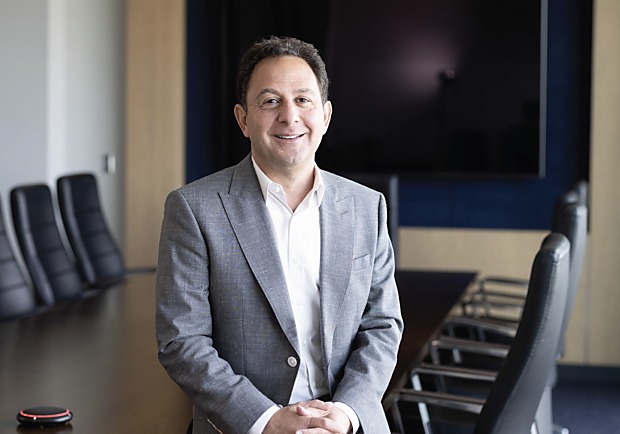
Peter Mallouk
President & CEO, Creative Planning
Peter Mallouk is the President and CEO of Creative Planning, one of the largest independent wealth management firms in the country. He hosts Icons and Ideas, candid conversations with the world's leading entrepreneurs, founders and changemakers.
Related episodes
 Ep · 18
Former Psychologist for the Navy SEALs Dr. Eric Potterat: How Elite Performers Train Their Minds
Dr. Eric Potterat · Former Psychologist for the Navy SEALs
 Ep · 17
70th Secretary of State Mike Pompeo: Iran, China, NATO and U.S. Foreign Policy
Mike Pompeo · 70th Secretary of State
 Ep · 15
Inner Excellence Author Jim Murphy: Why Success Isn’t Enough
Jim Murphy · #1 New York Times Bestselling Author