Carlyle CEO Harvey Schwartz
Leadership and the Future of Private Markets
Harvey Schwartz — CEO, Carlyle
Question
How do leaders navigate uncertainty, build resilience and shape the future of private markets?
Answer
Harvey Schwartz explains that resilient leadership, strong teams and disciplined decision-making are essential for succeeding through adversity and change.
Explanation
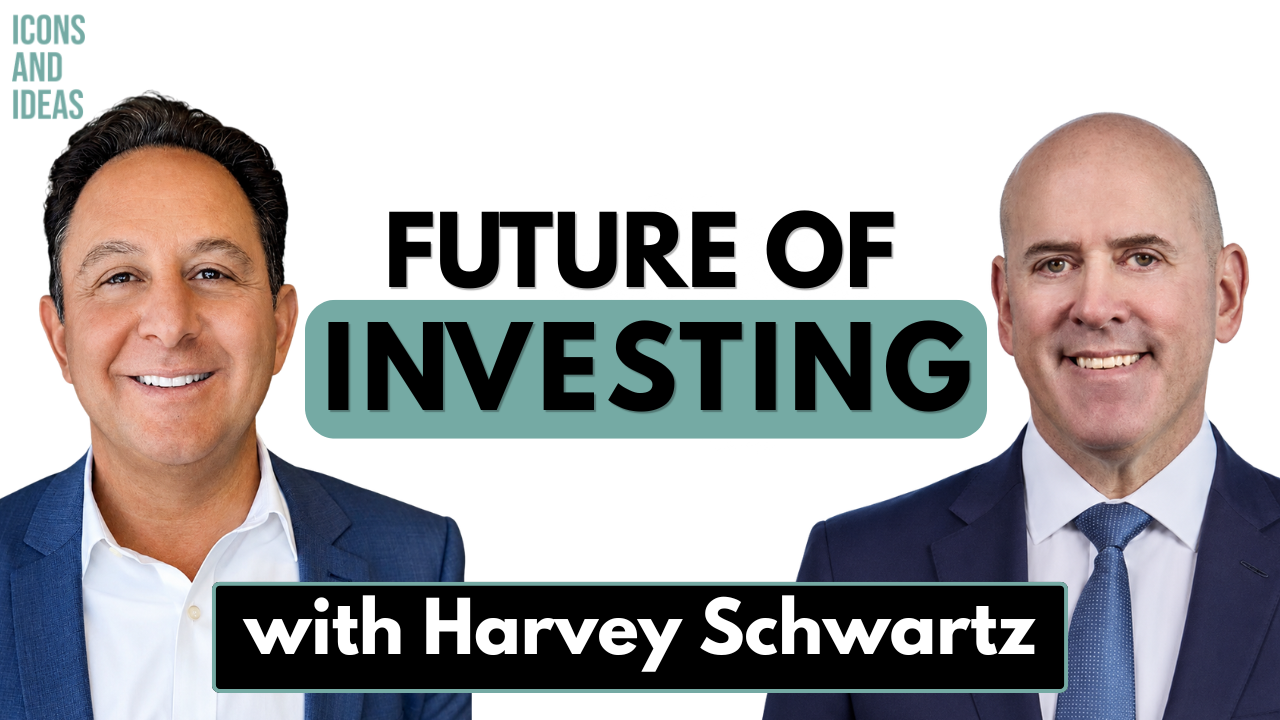
In this episode of Icons and Ideas, Peter Mallouk talks with Carlyle CEO Harvey Schwartz about leadership, resilience, mental health and the future of private markets.
What You'll Learn
- The leadership lessons that helped Harvey Schwartz become CEO of Carlyle
- Why resilience, mentorship and continuous learning are essential for leadership
- How private markets, private equity and AI are reshaping the future of investing
- The leadership habits that help organizations succeed during uncertainty
Timestamps
Key Takeaways
- Leadership isn't about having all the answers. It's about building trust, making thoughtful decisions and learning through adversity.
- Private markets continue to create opportunities for investors seeking diversification, innovation and long-term value.
- Artificial intelligence will transform business, but human judgment, culture and leadership will remain competitive advantages.
- The most successful leaders embrace lifelong learning, seek mentorship and invest in developing great teams.
Transcript
[00:00:00]
00:02:13.480 — 00:02:34.000 · Peter Mallouk
On today's episode of Icons and Ideas, I've got the CEO of Carlyle, Harvey Schwartz. Carlyle is one of the largest private capital firms in the world. But my favorite part of the day, we're going to cover all of that markets, economy and everything else. But it's really about Harvey's nontraditional background that has me most interested in. So thanks for spending time with me.
00:02:34.000 — 00:02:37.800 · Harvey Schwartz
Today, Harvey. Peter, great to be here. Thanks very much for taking the time. Really honored.
00:02:37.840 — 00:02:46.600 · Peter Mallouk
Yeah, I'm honored to be with you. And, you know, your story starts in Morristown. Your dad's a scientist, and from there, it gets really different.
00:02:46.640 — 00:03:20.300 · Harvey Schwartz
Yeah. Um, I guess nontraditional probably is the right language. You know, um, two parents who were both very well educated. My father was a scientist, a PhD. My mother had a master's, but unfortunately they were both very seriously ill. They both suffered severe mental illness. My mother suffered what we would call today, um, bipolar disorder.
And my father suffered from very severe schizophrenia. Now, this is I was born in 1964, so it's many years ago. Um,
00:03:21.740 — 00:03:29.700 · Harvey Schwartz
the drugs, the pharmaceuticals that were available, the treatment protocols that were available weren't nearly what they are today, although they need a lot of work today.
00:03:29.860 — 00:03:31.260 · Peter Mallouk
I here today is still right.
00:03:31.300 — 00:04:18.720 · Harvey Schwartz
Yeah. The biggest issue of being a young person in that environment was, uh, many things, but mostly the stigma, the stigma around that. Um, ultimately, uh, my mother passed away when I was 14. She died of breast cancer. I actually would probably live today. Um, and then it was my my father and I, and I kind of.
You can almost mark it in time when after my mother passed away, I kind of just completely went off the rails. I was a freshman in high school, and I basically ended up being a bit of a feral kid. Um, my big achievements in, um, high school were I missed 23 days of school by Christmas my senior year, which, if you think about it in some ways, is an achievement, right?
00:04:20.640 — 00:05:02.860 · Harvey Schwartz
had credit at the local liquor store in town because I was a big kid. I was always a big kid. So I was the kid that looked like I was 18 and I was 16 when I had credit. Liquor store. Um, these are not things to romanticize, obviously, so I don't say it looking back, but to say that I was a long shot for being on the icon discussion show with any ideas, uh, which is, I think, one of the most extraordinary statements of all time.
I kind of basically figured out how to get out of high school, threw some favors. Um, didn't apply to college. Took a year off. Ultimately applied to Rutgers. Was the only school I applied to in new Jersey. Didn't get in. Um,
00:05:04.140 — 00:05:26.660 · Harvey Schwartz
a woman and her husband took an interest in me. I was actually working as a health instructor at a club in new Jersey, which is, I know, hard to picture sitting here today, but you have to picture hair in a different physique and everything. And, um, you know, she was a Rutgers graduate, but she wasn't an influential person like yourself or other people.
You and I know I'm now on the board of Rutgers, an extraordinary institution. And,
00:05:27.940 — 00:05:54.320 · Harvey Schwartz
um, she couldn't believe I didn't get in. She called the school name was Linda. She didn't call the school. I'm still friends with her to this day. And Linda called the school and said, hey, I think you made a mistake with this young person. And she was so annoying to the administration that they ultimately said to her, hey, um, have him write an essay about why he was such a poor performer in high school, and we'll interview him.
And they did, and they changed their mind. And I went to Rutgers and I would say
00:05:55.840 — 00:06:03.680 · Harvey Schwartz
between the family that helped me get out of high school, Linda and other people who, for whatever reason, um,
00:06:04.920 — 00:06:56.020 · Harvey Schwartz
took an interest in me, saw something in me, gave me an opportunity. When I think it's inexplicable looking back at it, um, it's a pretty remarkable. I think, you know, where you. I'm sure you've had mentors. I've had mentors. I think there are mentors and there are angels. I've had angels. And if you're lucky enough to have angels give you an opportunity, uh, you have to really reflect on it and just realize how fortunate you are.
And I've had angels come into my life. And as a result, through some, you know, a path of luck certainly worked hard. Um, it was very insecure for probably I was in my mid 30s about anything related to professional performance, which we can talk about. But, um, yeah, I feel super fortunate to be sitting with you here today, and there'll be a lot of people that wouldn't have expected that when I was certainly a senior in high school.
That's for sure.
00:06:56.060 — 00:07:00.540 · Peter Mallouk
What does Linda say when you have lunch with her or call? I mean.
00:07:00.620 — 00:09:07.810 · Harvey Schwartz
You know, I've asked the Linda's who have intervened in my life, and there's a handful of them in my angels. And I recently said to one of them and said, hey, why did you help me get that job, right? And he said it was just the right thing to do. And I think Linda saw something. She didn't think it was right. She just did it.
Now, the story with Linda is a little bit unique in that there were some parallels in our lives which I won't get into her personal life in terms of her family history. So there was some relatability in terms of some of the parenting challenges that we both had as kids. So there was a connection there. But I think people, um, again, they just saw something and they did the right thing and they took a chance.
And you know, when you're in a position like you are or I am a leadership position or a position of influence. In many respects, you're giving people an opportunity all the time. You're taking a chance on someone. And I'm very fortunate that people took a chance on me. And I can chart that pretty specifically.
Um, you know, my first opportunity out of college. You know, when I work with your people, I'm so impressed by them. Your team. Because I am a failed financial advisor. You know, when I came out of Rutgers, I was working at a small firm in New Jersey on. I mean, you might remember this. They used to call it, uh, you worked on a draw.
Oh, yeah. Yeah. So for those for those of the audience who don't know what that is, you basically cold called back in the day. That was legal in 1987. There are prohibitions on that today. But you would solicit on the phone and you got paid $1,000 a month. That was hard to live on even in 1987. And then, of course, if you built your business, you had to pay that back.
I proved to be particularly bad at this, actually, But I really have tremendous respect for anybody that works in your field and does what you do. But then through a whole other series of opportunities, someone got me a job at Citibank. In the back office, I was hired as a temp and again managed to convert that into a bigger opportunity at Citibank.
Ultimately, Citibank sent me to business school. It's just kind of a I'm very grateful.
00:09:07.970 — 00:09:26.210 · Peter Mallouk
So, you know, going back to the the angels, as you call them, that stepped into your life. Do you find yourself more aware of someone around you that's that is struggling with mental health or is just in need for a break? And do you find yourself going out of your way in a way you wouldn't otherwise, given the breaks you got early on?
00:09:26.250 — 00:10:00.549 · Harvey Schwartz
Yeah, so I can break that into two parts. I think on the on the mental health front, I didn't even speak about my parents illness, really to an event I did where I interviewed Ray Dalio a number of years ago. And Ray and I were in the green room catching up. And I said, and Ray openly speaks about some challenges in his family.
I said, oh, I know a lot about this. I told him, my parents. He said, you ever speak about it? I said, no, he said, you should. I said, okay, now why didn't I speak about it as the more important question? The reason I never spoke about it is
00:10:01.790 — 00:10:42.630 · Harvey Schwartz
in our family. My mother had a very explicit rule. Um, you never talked about the family illness, and she was very severe about this. Again, it was the stigma. And so I kind of grew up not talking about it. So it was reflexive. It wasn't like I actively made the decision not to talk about it. But I did that day very briefly talked about the fact that, you know, my mother had attempted to die by suicide, and a couple of people came up to me in the audience afterwards, about 3000 people there.
Um, Ray's a good draw. And they said, um, thank you for talking about mental health. And I said, why are you whispering? And it occurred to me there was something about
00:10:44.570 — 00:11:56.030 · Harvey Schwartz
Mental health that I didn't understand and that people were uncomfortable talking about it because of the stigma. And if you really think about it, Peter and I've gotten more knowledgeable over the years. I'm on the board of an organization called One Mine, and, um, I've spent time in this space. The brain just isn't working.
Just like the heart, right? Just like the liver. If someone has heart disease, we don't have a problem talking about it. But someone has a brain illness. Nobody wants to talk about it. It's getting better, but it's so wildly misunderstood. And there's a lot of reasons for that. But I realize that just by talking about it, it was having some marginal benefits.
So, uh, during the period of time after I left Goldman Sachs, about five years before I joined Carlyle, I spent time exploring philanthropic initiatives around brain health. I've sponsored some early stage brain scientists where it's difficult to get research funding because they're so early in the preclinical stage and just kind of got myself smarter because I realized Growing up in a household with family members who struggled with severe mental illness actually left me knowing very little about mental illness and the state of the world today in terms of giving people the opportunity.
00:11:57.470 — 00:11:59.109 · Harvey Schwartz
I would say that
00:12:00.350 — 00:12:08.870 · Harvey Schwartz
for sure, someone in my situation has to feel the obligation in some respects to give back. However I give back. Um,
00:12:10.550 — 00:12:11.630 · Harvey Schwartz
you know, uh,
00:12:13.430 — 00:12:42.570 · Harvey Schwartz
I once had a mentor who I and I've told this story before, but I clumsily said that his mentor when I was 25. It's a bit cringeworthy, the story in retrospect. But I said, hey, can we go out and maybe have a beer and take some advice? And one of the smartest people I'd ever met and worked for. And I said to him, geez, I would have thought you would have accomplished more in your career, given how smart you are, which is a horrible thing when you think about it.
So cringeworthy. And but it was it was an innocently positioned Question, and
00:12:43.650 — 00:13:08.370 · Harvey Schwartz
he taught me a lot in the next few minutes. One thing he really taught me was grace, because he could have been offended by that question, but not in the slightest. He knew he was just an inexperienced kid who was 25, trying to learn something very graceful. Second thing he said was, well, you'll learn over life careers.
This was his paradigm. 50% luck, 50% skill. Yeah. And I've often thought, wow.
00:13:08.530 — 00:13:09.450 · Peter Mallouk
At least 50%.
00:13:09.690 — 00:13:17.249 · Harvey Schwartz
That's right. And for me, someone like me, maybe way more. And so sure, I also think that
00:13:18.650 — 00:13:36.570 · Harvey Schwartz
my generation of finance professionals growing up in the late 80s and 90s, I think in the workplace, generally speaking, and I could be wrong about this, but generally speaking, there was it was, uh,
00:13:37.770 — 00:14:04.950 · Harvey Schwartz
culturally more acceptable to give people more responsibility early. And I felt like people really not forgetting the opportunities they gave me, which were extraordinary. Having the chance to take on leadership positions, go build businesses and go do things. I think there was maybe a more willingness to do that.
And so I really try to inspire that at Carlisle, and my team tries to inspire a lot because we want people to feel
00:14:06.590 — 00:14:16.669 · Harvey Schwartz
within the realm of their capabilities. We want people to feel stretched. We want them to feel like they can have an impact. We want to feel like they can do the best they can for their clients, the best they can for the businesses, and that is
00:14:18.670 — 00:14:37.670 · Harvey Schwartz
very constructive for all outcomes. And we don't want people to take so much on that they don't succeed. And but I do think there's an element of willingness to give people chances, which I hope my team does. And I hope I can inspire that too, because so many people did it for me. But I think it's both a.
00:14:40.290 — 00:14:52.490 · Harvey Schwartz
I think it's a moral obligation, but I also think that there's a professional outcome that makes a lot of sense in the workplace. But certainly outside of the workplace. I'm very involved with Rutgers. I sponsor student scholarships. And how do I pay back that debt?
00:14:52.530 — 00:14:53.170 · Peter Mallouk
Right.
00:14:53.210 — 00:15:10.610 · Harvey Schwartz
A university that said no and says yes. And without Rutgers, who knows? So, um, yeah, I think all of us need to be very cognizant of the opportunities we've had and wherever we can within the realm of what we can do. Yeah, I think we pick your language, pay it forward, pay it back, whatever the case may be.
00:15:10.650 — 00:15:36.170 · Peter Mallouk
You mentioned that it's getting more accepted to talk about mental health now. What do you think is there's a lot of prognosticators about the crisis right now in a big crisis right now with mental health and suicide. And what do you think has changed that's made it so much more prevalent? It seems like it used to be, you know, people might have been born with an issue and some environmental, and now it seems like there's a lot of environmental that's piling on all.
00:15:36.170 — 00:15:36.490 · Harvey Schwartz
Of us.
00:15:36.490 — 00:15:36.910 · Peter Mallouk
Yeah.
00:15:37.510 — 00:15:39.949 · Harvey Schwartz
You know I'm not. I'm pretty careful
00:15:41.470 — 00:15:52.910 · Harvey Schwartz
to not portray myself as a medical expert. I think that part of it is just awareness and actually some degree of willingness to talk about it. Um,
00:15:54.630 — 00:17:32.770 · Harvey Schwartz
you know, I don't think my situation in my family was particularly uncommon. Yes. Maybe having two parents that suffer from the severe mental illness is a bit uncommon, but the notion of the stigma and an unwillingness to talk about it now, it had knock on effects. So I ended up being my daughter. She always reminds me that I'm not supposed to say it this way, but I.
I ended up being the fattest kid in the school and my sister had her issues. I sort of ate my emotions as a kid, so I don't know, I sit here, I don't know, I probably weighed 255 pounds. I weighed that in eighth grade. Okay. And I was about five seven. Um, so there were a lot of coping mechanisms that we worked on.
I don't, I don't think that's changed. I think awareness has changed. I can't imagine being that kid and having Instagram, Facebook, Snapchat. Like the pressures that young people have today for expectations. All that stimulation, processing that information, and the world's more complicated.
Yeah. You know, I grew up in a really, uh, again, born in 1964. I'm sure we'll get to the economy, but pretty powerful geopolitical environment, very favorable, very powerful demographic environment, very powerful economic trends. It's more complicated today. So I think that's all in the soup. Um, but I think it's good at least that there's more discussion.
But I still don't think, uh, we're nearly at the level we are for other illnesses, which is truly tragic.
00:17:32.810 — 00:17:56.270 · Peter Mallouk
Yeah. To me, it feels like there's a real crisis. So I think the more people that are out there talking about it, I lost a friend in the financial services industry to suicide, and he really struggled in his last days to express what was really going on. I think the more people like you, I mean, like you're running one of the biggest private capital firms in the world and you're talking openly about this, I think is really good.
00:17:56.430 — 00:18:40.810 · Harvey Schwartz
Well, that's nice of you to say, and I appreciate that. I think there is an element of that just because hopefully the discussion normalizes. Yes. So what I realized so after that experience at that one conference back in 2017 with Ray Dalio, I was so struck by the fact that people had that reaction. Yeah.
You know, again, I'm a fortunate person, Peter. So people would come up to me after this conference and say, hey, how did a kid who fell out of high school and didn't get into Rutgers actually achieve whatever I have achieved? And that's incredibly flattering. And it's the great get to talk about yourself and hopefully be some inspiration for another kid.
Going to a state school like Rutgers, or maybe doesn't come from the perfect background or perceived to be the perfect background. And
00:18:41.930 — 00:19:13.890 · Harvey Schwartz
I then said, wow, that was so striking to me. I went and I repeated the exercise very deliberately. So I spoke at a Rutgers event not too long after, and I briefly talked about my parents and getting into Rutgers. And of course, a young person from the school reached out to me through a professor and said, hey, I lost my father to suicide, died by suicide.
I'd love to talk to you about it. Senior year of high school, they had a small charitable thing, was very, very moving. But, you know, I realized the expression I've used is I didn't realize the room,
00:19:14.930 — 00:19:51.150 · Harvey Schwartz
the room was short of air and it needed air, and I didn't know it, and I don't think anybody else knew it. And so there was a benefit to talking about it and focusing on the initiative, because there are a lot of people just struggling in silence and in darkness and don't know how to receive help. I also lost one of my closest friends, died by suicide right at the beginning of the pandemic, and, uh, hard for me to talk about, but, um, at the time, I remember, uh, someone on his team said.
I just spoke to him last night, and he said, fine. So people are really, uh, trapped?
00:19:51.230 — 00:20:09.030 · Peter Mallouk
Yes. No, no, no doubt about it. Yeah. Let's go back to you growing up. Talk about this incredible story. So you you graduate from Rutgers, which should you should have graduated from high school, got into Rutgers, graduate from Rutgers. You get the first break making calls you don't love that you end up at Citi.
Take me from there because we know.
00:20:09.070 — 00:20:19.870 · Harvey Schwartz
So do you mean two years to almost run out of money and be bankrupt? I had a daughter who was one of the most incredible things ever happened in my life. Um, and
00:20:21.790 — 00:20:59.810 · Harvey Schwartz
I was at a real crossroad, and someone did me a favor, offered me a position to be in the. We called the back office of office. Citibank. At the time, I was hired as a temp. Hourly temp. Um managed to convert that to a full time position, then ultimately became an analyst. There was another angel intervention along the way there.
Um, angel intervention to get the back office job. Angel intervention to actually become part of the analyst pool, which, um, I won't drag you through the details of that. Um, and then, uh, I was a derivative specialist at a time when derivatives were quite popular in the 90s. And then, um,
00:21:01.010 — 00:21:10.130 · Harvey Schwartz
one of our colleagues at Citibank went to Goldman Sachs in 96, brought somebody else, brought me over in 97, and then I had this. I ended up being a very, uh,
00:21:11.210 — 00:21:44.590 · Harvey Schwartz
a really fortunate 30 year career in finance, nine years at Citibank, 21 at Goldman Sachs. But I didn't show up at Citibank till 1989. I was 25, um, working as a temp. And so it was a very late start. Goldman Sachs was incredibly generous to me. I ended up having multiple senior positions. I co-edited the trading businesses with three of the most talented people in the world during the financial crisis.
Then I was the CFO and I was co-president. I left in 2018. David Solomon went on to run Goldman Sachs. I found myself in a position that, uh.
00:21:46.230 — 00:21:52.950 · Harvey Schwartz
Geez. You know, uh, mid 50s in a place I never thought I'd be. Um,
00:21:54.030 — 00:22:24.470 · Harvey Schwartz
you know, I started out with no resume. I had a pretty decent resume by the time I finished, and, um, I took a couple of years to spend time on, uh, philanthropy, passion projects, private investing. And again, I had a decent resume when I finished. So I would get opportunities none more compelling enough.
And then Carlyle called, uh, in the end of 22, and then I signed on in the beginning of 23. And, um, that's I think we met a couple of weeks after that. So right here we said three and a half years later.
00:22:24.510 — 00:22:35.800 · Peter Mallouk
Were you worried about taking that? We were following the one of the biggest private capital firms in the world. You're following these legends? Kind of. Yeah. So how did you feel about stepping into that?
00:22:36.680 — 00:22:37.280 · Harvey Schwartz
Um.
00:22:40.120 — 00:22:43.720 · Harvey Schwartz
Yeah. You know, when I, uh.
00:22:45.920 — 00:22:55.000 · Harvey Schwartz
One of the things that happens, we all have a certain amount of insecurity. All of us. Even those who don't show it have a lot of insecurity.
00:22:55.040 — 00:22:55.400 · Peter Mallouk
Everybody.
00:22:55.440 — 00:23:25.859 · Harvey Schwartz
Yeah, I would say I had a disproportionate amount of insecurity because of the way I grew up. You know, it doesn't build a lot of confidence, Peter, to not get out of high school. Right. I guess I snuck out of high school. I switched high schools, and I switched high schools my senior year to graduate. Okay.
I don't get into Rutgers. I do get it at Rutgers, I do. I am a failed financial advisor, and I tried to start a construction company that failed, I did. It was a series of failures. Then I finally started my group. And I'll tell you what insecurity teaches. Insecurity teaches you
00:23:26.980 — 00:23:42.420 · Harvey Schwartz
that you need to be very dependent on other people. So you're right. David Rubenstein, Bill Conway, Dan. Danielle. They are, you know, Carlos founded in 1987. So I'm being a failed financial advisor. They're creating private equity.
00:23:42.460 — 00:23:42.740 · Peter Mallouk
Yep.
00:23:42.780 — 00:24:05.579 · Harvey Schwartz
And David Rubenstein leaves the white House. And accident of birth. Because he's from Baltimore and he's left the white House. He forms Carlyle in D.C. in 1987, when there wasn't even a thing called private equity. It's called leveraged buyout. Yeah. So when you say, yeah, there are legends, I see that as.
Oh, great. Can I learn from them? And
00:24:06.820 — 00:24:08.460 · Harvey Schwartz
that doesn't
00:24:09.700 — 00:24:11.060 · Harvey Schwartz
intimidate me.
00:24:12.100 — 00:25:20.280 · Harvey Schwartz
Actually, the key decision for me in Jordan Carlyle was, uh, my ability to work really fluidly with them. And at the time, they owned roughly the same amount. They own 30% of the firm. It's this is their baby, right? Um, it's everything to them, right behind their families and their philanthropies and everything else.
And so what is intimidating when you pause to think about it? And most of the time, we're all running so fast we don't pause to think about it. So you gain comfort from the nothing about it is, wow, there's a lot of responsibility. There's 2500 employees who, at the end of the day, are counting on you and your leadership team to make the right decisions.
We have 750,000 people in our portfolio companies. It makes us one of the top ten employers in the world. So getting all that right, the obligation as a fiduciary to our clients, um, we're not a big balance sheet firm. So like you, we're a fiduciary, right. And so to get all that right, to get our relationship right with our partners, when you really pause to think about that, that feels like a lot of responsibility.
Me insecurity, uh,
00:25:21.360 — 00:25:59.740 · Harvey Schwartz
sort of as a secret weapon. I just try to surround myself with super smart people, because if you haven't been the smartest person in the world, the room you're very comfortable in not being the smartest person in the room. And that was me all the time. I've had the privilege of working with some of the smartest people on Wall Street in my old life.
Coming from Citibank to Goldman Sachs and here. And so I stepped into a situation where I had the founders there support the board and just this incredible pool of talent at Carlyle, whether it's private equity, real estate, private credit, what we do in insurance, what we do in our secondaries co invest business.
Um, and I knew what they had built,
00:26:01.060 — 00:26:41.120 · Harvey Schwartz
had this powerful global brand. And I didn't really think of it this way, but a very dear friend of mine, when it was announced said, that's the perfect job for you. I said, why? He said, because you stayed on the superhighway of finance, but you moved a couple of lanes over. And so, yeah, I had a chance to learn do different things.
But at the end of the day, all of us who are privileged enough to have these jobs have to ask ourselves, can we have an impact? Can we be intellectually stimulated? What value do we provide? And I felt good about all that by the time we were done. But I did a lot of diligence and they did a lot of diligence on me, which I which I remember saying to Bill Conway,
00:26:42.680 — 00:26:51.760 · Harvey Schwartz
hey, this has to be right, because this is a big personal decision for me. He said, hey, it's a big personal decision for me. And that was perfect. So we were very aligned in the significance of what we were doing together.
00:26:52.120 — 00:27:00.960 · Peter Mallouk
You mentioned being insecure in the past tense several times so far. Do you think you're more secure today or do you still think you carry the full?
00:27:01.440 — 00:27:02.399 · Harvey Schwartz
Well, I think there's
00:27:03.680 — 00:27:04.720 · Harvey Schwartz
I think there's.
00:27:06.960 — 00:27:08.240 · Harvey Schwartz
Gradations. Right.
00:27:08.600 — 00:27:09.000 · Peter Mallouk
You've gotten.
00:27:09.000 — 00:27:10.760 · Harvey Schwartz
Better. Yeah. So I would say.
00:27:13.120 — 00:27:13.800 · Harvey Schwartz
Um,
00:27:15.280 — 00:27:29.580 · Harvey Schwartz
you know, again, I don't want you and your audience to feel like you have to go to therapy with me today. So. But you know, being the and my daughter already says like, hey, daddy, you're not supposed to say fat ass. Um, and she's a lot smarter than me, but, you know, being the fattest in this school is probably the hardest thing.
00:27:29.620 — 00:27:31.500 · Peter Mallouk
Believe or not, I'm sure. No, that's.
00:27:31.540 — 00:27:39.980 · Harvey Schwartz
Teased, bullied, all of that. And so that's sort of set the stage and then the underperformance. And I think there was a period of time where I'd say,
00:27:41.380 — 00:27:44.180 · Harvey Schwartz
hey, repeated success, uh,
00:27:45.340 — 00:28:02.659 · Harvey Schwartz
trained you for success. Repeated failure doesn't really train you, in my opinion, for success. Success comes in, you're like, whoa, that was surprising. Like, I was surprised the first time I got an A in a class at Rutgers. Right. Um, and so
00:28:03.740 — 00:28:16.700 · Harvey Schwartz
you need multiple A's before you realize, oh, this is a thing I can do. Maybe do this. Correct. So I would say I suffered imposter syndrome, the classic definition, until my mid 30s. And then I realized, oh.
00:28:18.280 — 00:28:33.439 · Harvey Schwartz
But there's a security thing is not a bad thing. So I try to worry about the right things and power the right things. But I would say that as a core competency, I don't want to let go of insecurity because it's been my friend, you know, over time. But I think what it does is it
00:28:35.000 — 00:28:46.719 · Harvey Schwartz
it makes me very open, as open as I hope I can be. And I'm sure there are days my team doesn't feel this way, uh, to hearing other people's ideas, because I am a real believer that
00:28:47.800 — 00:28:56.280 · Harvey Schwartz
everybody in our industry, it's super competitive. They work very hard. They're very smart. These are smart, smart people and
00:28:57.440 — 00:29:12.560 · Harvey Schwartz
they're ethical or they don't survive in our industry. Um, creativity is hard to there aren't a lot of people that can do what you did starting out with, you know, handful of assets, some advisors and built what you build. Um,
00:29:13.720 — 00:29:51.659 · Harvey Schwartz
that requires something special. and look, but something special. And, uh, whether it's creativity or adaptability, I think you can you can encourage that by having the right group come together to solve complex problems. At the end of the day, that's what we're really trying to do. That's why we have investment committees.
That's why we encourage teamwork. Um, so I do think by bringing people together and to do that and, and there's no question I have no problem asking any question. The most basic question, I think it really can be annoying for people, but I'm not embarrassed by that, because I think
00:29:52.900 — 00:29:57.420 · Harvey Schwartz
if there's ever been a benefit of being the fattest kid in the school, maybe that's it.
00:29:58.820 — 00:30:41.079 · Peter Mallouk
So now here you are sitting on top of, you know, a global powerhouse, right? You said 750,000 people employed through Carlyle Company Enterprises. Yeah. It's, um, you know, as you look at the world today, everyone talks about the democratization of the capital markets were used to be available to wealthy accounts being available to everybody else.
You know, a proponent would say, well, like this only wealthy people do this because they think they're going to outperform. They own private equity because they think they'll outperform the stock market. They own private credit because they think they'll outperform the bond market. And it's not fair that only wealthy people can do that.
So this is good that everyone can do it. And the critics of course, they say, oh, these are big, you know, big capital companies just want to come like screw over Main Street. But we're seeing like this huge
00:30:42.160 — 00:30:55.840 · Peter Mallouk
movement in this direction that the markets completely expanded it. Even just a few years you've been in the seat. Really I think you saw that earlier than most. How? Tell me about the landscape today. Do I have it right? Where do you think the truth lies between those two camps?
00:30:55.840 — 00:33:34.860 · Harvey Schwartz
So I think you have some of the narrative, right? I think you've actually framed it perfectly. I think the narrative you're describing, which is the narrative that exists out there, is just too black and white. And I think it has to be wrapped in a much bigger macro architecture. So, you know, I was saying before, I was kind of fortunate to be born in 1964.
So what were the big trends over the 62 years since I was born? Interest rates came down. Globalization, deflation, geopolitical cooperation. The Berlin Wall came down. Peace. Dividend technology went like this. Okay. Of those trends, the only one that is still accelerating is technology. And this is, uh, wrapped around everything that anyone committing capital anywhere in the world of any variety has to think about, because we're now in a world of geopolitical splintering, which has implications for capital, has implications for how ministers of finance, prime ministers, presidents, leaders think about global architecture.
We're in this extraordinary period of technological advancement, which has many, many, many implications. But the part about the democratization, which is the right language, I think, that you use that's a trend that's been in place for a long time, too, because what's happened is we've lost half the public companies since 2000, and I wish there would be more public companies.
But as we've lost half the public companies again, what has replaced that is private capital. And we're in a world today where the capital demands everywhere I go, global. You've been in Asia for more than 25 years. We've been in London, in Europe for more than 30 years. We've been in the US since 1987. And wherever I go in the world, the demand for capital of all forms is going up.
And historically, where would that capital come from? Well, public markets, governments, private markets, governments are stretched everywhere in the world. Deficits. So there's a sort of a competition for economic capital around the world. Everybody wants growth. Europe wants growth. Canada wants growth.
US wants growth. Japan. Asia everywhere wants growth. You need capital. You need ideas. You need an ability to mobilize capital effectively. And so this trend of private capital, it's quite natural that now it goes where capital is growing, which is your part of the world, where it's on this astronomical growth, where wealth is being created and
00:33:36.740 — 00:33:51.420 · Harvey Schwartz
I don't know. US pensions have been managing retiree money. Uh, public private capital in very diversified ways, successfully for a very long period of time. So when I hear the word democratization,
00:33:52.660 — 00:33:53.900 · Harvey Schwartz
I think it's, um.
00:33:56.180 — 00:35:31.380 · Harvey Schwartz
It may capture the moment. It doesn't reflect the trend. I think we are, because retirement, it's much more critical than it's ever been. People are living longer, retirement ages are approaching, and people have to decide individually at the individual level. So I wouldn't be here to say an individual should do this.
I would ask you, hey, what should this individual do with their wealth? You would have a much better view than I would ever have. Your team would know this expertise. They would have the exact portfolio construction for someone who was managing a certain degree of wealth or retirement. What I would say is, in a world where uncertainty is higher, I personally believe uncertainty is higher today than it has been in a while.
So statistically, how would you describe it? You say tails are fat. I think right tails are fat. You can point to a lot of things geopolitical conflict, what's happening in Europe, anything you want, you would say, wow, it certainly does feel higher, relatively. I think the only way to address that is through diversification and how you construct those portfolios.
So I think it's just really the next step in an evolution of a trend that's been in place for a very long period of time. And I think the alpha generated, both in public markets and in private markets, constructed profitably, will give properly, will give people great outcomes. And then it's just a question of which individual what an individual will want.
Right. And what are they trying to achieve. Um, but I do think uncertainty, the, the antidote for uncertainty and risk is diversification. Some people like more concentration. You can seek that too.
00:35:31.740 — 00:35:47.020 · Peter Mallouk
Right. So looking at the world of investments today in your world, the one that gets the most headlines is is private credit. Yeah. What's your take right now. What do you think the media is getting it right. That's a ticking time bomb powder keg and you know everything that.
00:35:47.340 — 00:36:48.310 · Harvey Schwartz
So we've been on the other. That's a great question. We've been on the other side of that debate. Um, you know, I was the head of trading, um, at Goldman Sachs when the financial crisis hit. Lived through all that. Um, I think you have to step back and ask yourself, what are the big systemic risks? Because really, what you're worried we should all worry about as market participants is systemic risk.
Systemic risk normally has a couple of features. It's system wide, very levered, lots of interconnectivity. So 800 credit is perfect right. Right. That's central casting systemic risk. The actual the word systemic risk didn't exist. As far as I know until 2008 2009. Um, so it's an output of what we learned from that period of time.
Private credit, which is really narrowly defined as direct lending, doesn't have those elements to it. So the discussion about systemic risk, I actually think has been
00:36:49.430 — 00:37:02.470 · Harvey Schwartz
debated, and the outcome has already proven itself because it's been it's sort of disappeared as a headline because it hasn't appeared as a reality. Okay. So so the reality of the marketplace has disproved the concern.
00:37:02.510 — 00:37:09.010 · Peter Mallouk
We've seen some pockets, right the like blue owl lending money in the SaaS space and maybe take it a bit.
00:37:09.050 — 00:37:20.690 · Harvey Schwartz
Yeah. So what I think we have learned over the past couple of years is there are certain fund constructs. We've learned this in levered ETFs. Yeah, we've learned this in certain mutual fund structures.
00:37:20.730 — 00:37:22.290 · Peter Mallouk
So don't throw out the whole asset class.
00:37:22.530 — 00:39:00.390 · Harvey Schwartz
Yeah. What we've learned is hey for a particular point in time certain things work really well. They may not work perfectly at other points in time. I think that's what we've learned. The issue around software collides perfectly with private credit, because software was perceived to be the most resilient of the asset classes, right.
You've talked about this a lot. I've seen you on TV. Yes, very thoughtfully discussing the fact that, hey, we don't know what the technological, um, uh, impact will be with large language models and AI, but ground zero for that is software and multiples. Yes. So we had an unfortunate intersection where a lot of lending was given to SaaS companies in that 21, 22, 23 period from the whole marketplace, where that revenue was perceived to be the most resilient.
Now, you put a question mark attached to that and you have multiple collapse. But broadly speaking, it's an important asset class. Private credit also kind of gets lumped in as one thing. There's asset based finance. There's rated instructor rated uh vehicles for other entities. Um hey again going back to better to be lucky maybe than anything else.
When I showed up at Carlisle, one of the things people said to me was, hey, you have a challenge ahead of you. You're not a big SaaS leader. Now it turns out three and a half years later, you're going to be reviewing. It's not it's great to not have a lot of SaaS exposure. So, you know, people are saying, wow, how fantastic is it that you are the only large firm that does aerospace, defense and industrials?
Like, you know, the old economy is the new economy. When I showed up, the new economy was.
00:39:00.470 — 00:39:10.890 · Peter Mallouk
Literally bizarro world. I mean, everything is completely shifted. Correct. Energy versus technology and software. It's just incredible, really. And the speed of that change has been incredible.
00:39:10.930 — 00:39:14.170 · Harvey Schwartz
Yeah. And the concentration and, you know, uh,
00:39:15.330 — 00:39:21.570 · Harvey Schwartz
magazine was everything. Now question people are questioning mag seven. I think that hey, this is what makes markets interesting.
00:39:21.810 — 00:39:22.250 · Peter Mallouk
Oh, yeah.
00:39:22.250 — 00:39:30.290 · Harvey Schwartz
Definitely. There's always something. You know, now there's a debate about inflation. I think these are all again, it gets back to my core thesis, which is, um,
00:39:31.330 — 00:40:26.030 · Harvey Schwartz
uncertainty. Yeah. And so I do think tails are fatter. Um. That's okay. That's a market dynamic. Um, we focus very much on the portfolio construction. And when we commit capital, we're committing capital for three, five, seven, sometimes ten years. And so the point of committing capital is very important that we have the right risk reward.
So it's not about do we want to be in an asset class or not. The question is is the risk reward justified. And that's how we think about the marginal capital deployment. But, you know, there's also other narratives in the industry. Private equity is not returning capital. We've returned more capital than anybody.
We've taken more companies public, but we're in different lanes. Healthcare industrials. Right. You know, we did some of the largest IPOs in the world. We did the two biggest IPOs in Japan. Um, so um, again part of that is market environment. But I got to give our credit to a lot of credit to our teams.
00:40:26.070 — 00:40:37.150 · Peter Mallouk
You brought up private equity. What do you think people misunderstand. The average American misunderstands about that. I mean, they think of the movie Wall Street. You get a business, you fire a bunch of people, you take it, take it apart. Like what's really happening, actually.
00:40:37.150 — 00:40:37.470 · Harvey Schwartz
What people.
00:40:37.470 — 00:41:10.890 · Peter Mallouk
Think about I think I think some people really do think that. Yes. Yeah, I certainly think a lot of people believe that private equity, a typical American. I'm sitting with a client that's called the multi-millionaire next door, not the baby, the family office. So they think of it as predatory. Obviously, I understand how it works.
And so I well, kind of explain. But how do you think the typical American should think about Carlyle? Not the whole asset class. When you buy a business, like, how do you create the value to get the outperformance from the public markets?
00:41:10.930 — 00:42:33.550 · Harvey Schwartz
So I don't think anybody can create value. Maybe you couldn't. I don't know. Whenever that movie came out in 1985 and 1986. But again, it's a movie. Maybe you could by going in and taking a industry that was bloated and you cut out all the costs. Is that really a great value creation methodology? The best way is to create value are either through roll ups, through true revenue plans.
Often it requires changing the CEO. So when we for example, in our private equity business, um, we do lots of carve outs. We're known for doing carve outs where big companies have a portion of their business, where they're just not giving it in a time of attention. So they're a conglomerate. There might be a small part of that business which is small to them, but could be quite meaningful.
and we'll work with them on carving that out and growing that. Um, and so I do think as good stewards, people are always focused on cost, but it really is about how do you create value. And, you know, going back to what we're saying before a lot of today is how do people use technology and not technology for the purpose of eliminating jobs, which we haven't seen a lot of, but more how to use technology to be better with your clients, deliver your product more effectively, innovate more effectively, and grow the top line.
That's where real value creation comes from. And so I think we're you know.
00:42:35.590 — 00:43:27.690 · Harvey Schwartz
If you look, for example, in Japan, in Japan, there are hundreds of companies trading below book on the stock exchange. There are succession challenges around the world where private owners don't have a succession plan. So it's all about that, where private capital, I think, plays the most valuable role in terms of creating value over long periods of time.
Now, from our perspective, we focus on, as I said before, health care, industrials, financial services, aerospace, defense. We're the only large scale firm that's been in aerospace defense for nearly 40 years. Why? Because they formed the firm in DC, and being part of DC informed the fabric of the investors in DC.
As Bill Conway built out the investing teams. And our first transactions were aerospace, defense and government services.
00:43:29.130 — 00:43:42.050 · Harvey Schwartz
Personally, I don't think it's great. I wish the world wasn't going through a period where everybody was increasing their defense budgets, but that is the world we live in. And so there's a lot of demand for resources in that space, and we've been doing it for a long time.
00:43:42.250 — 00:44:05.550 · Peter Mallouk
The demand has to be insatiable because if every country four years ago is like, hey, things are if you're a Gulf state country, you're probably like, hey, the US is here. We're as safe as could be. Europe is like, hey, we're in NATO or as safe as Canada. I mean, nobody feels safe anymore. Ever. There's not a single country that could possibly say, I'm not going to increase and control my own defense going forward.
I can't even imagine what. It's very unfortunate the demand that's going to be there.
00:44:06.230 — 00:44:33.790 · Harvey Schwartz
So as a as a two people sitting on the planet, right. We agree with kids and grandkids and stuff like that in particular. So I would say the following. Do you know that, um, I'll get these numbers roughly accurate. The day Silicon Valley Bank went out of business, the market moved seven times as much as when Russia went into the Ukraine.
Think about that. Why is that? It's because for decades we've basically been taught,
00:44:34.990 — 00:44:41.070 · Harvey Schwartz
thankfully, that geopolitical risk doesn't escalate beyond the localized nature of it. Yes,
00:44:42.270 — 00:44:47.150 · Harvey Schwartz
but we've been taught in 2008 that when a bank goes out of business, it could be wildly disruptive.
00:44:47.190 — 00:44:47.670 · Peter Mallouk
Correct.
00:44:47.790 — 00:45:36.490 · Harvey Schwartz
Okay. So okay, we're all informed by our memories and our experiences. So that's the market reaction. Yet I would argue, certainly in retrospect, the day we should get into the Ukraine, the world changed quite dramatically. What started that day was national security was redefined. National security had a traditional definition, which was defense, and it was prioritized more lowly than many other things.
The day that happened, many things became national security. Traditional defense became national security. Government services became national security. Energy became national security only to be compounded by the events that we sit here today with Iran in the Middle East. And now data is national security, and, I would argue, job creation as national security.
00:45:36.810 — 00:45:38.090 · Peter Mallouk
Yeah. Controlling it. Yeah.
00:45:38.130 — 00:46:15.070 · Harvey Schwartz
For job creation, having job creation, having wage growth in a K shaped world is national security. And again what do all those things need. They need thought leaders value creation Capital. A lot of the capital will come from folks that you work with and the retirement channel, because that is where capital is being generated, and it will go to the marginal demand where it can get the greatest return.
And hey, we can only we can only participate in the environment we're given. Right. And so that environment will demand marginal capital. And I think the returns will be, uh, quite sound.
00:46:15.110 — 00:46:23.990 · Peter Mallouk
So you've got a command on the economy, which we've talked a lot about. We've talked about private credit, private equity. What other investments do you think other than stocks and bonds investors should be thinking about going forward?
00:46:26.030 — 00:46:33.389 · Harvey Schwartz
Well, I have some you know, again, we think less short term, much more long term. We have some core thesis which is
00:46:34.550 — 00:46:39.830 · Harvey Schwartz
like for example, I don't understand why everybody wants interest rates to go to zero again. I know they might have felt good for a little bit.
00:46:39.870 — 00:46:41.630 · Peter Mallouk
Yeah. That means the economy's not doing so hot.
00:46:41.630 — 00:48:26.910 · Harvey Schwartz
Correct. So I don't actually even understand that. I think that we are likely in a period where inflation will be stickier. The cost of capital will be higher. That is neither good nor bad. I just think it will be more appropriately priced. You know, we came out of the financial crisis. We had this distorted zero rate period for a very long period of time.
I don't think that's great long term. It made a lot of sense around the crisis and shortly after the crisis. But that kind of monetary stimulus over a long period of time. You don't want to normalize clearing costs of capital. We just think that's going to be generally higher. Why deficits are high. Inflation is sticky.
I can tell you when we look through our portfolio companies and we roll up all that data. Companies are doing well. EBITDA is growing 910%. Activity is high. The economy's been quite resilient. You're starting to see some weakness in the consumer. But I would say longer term. Um again it depends on the risk profile that you're seeking.
But of a diversified portfolio of private assets and public assets I think would suit quite well over the near intermediate term because, again, it compensates for the uncertainties in the world. And I think you want to have some geographic distribution. Um, I am concerned to some degree about smaller countries.
We used to call emerging markets the global South. I'm only concerned about because, I mean, the markets can do incredibly well. And they have I'm only concerned over the longer term because in an AI driven world, it's not clear to me how that technology gets distributed around the world. So I think those sort of things I worry about, it's not really our business.
It's not where we invest capital. But I think in the big themes of energy,
00:48:27.950 — 00:48:50.210 · Harvey Schwartz
energy diversification is national security. So whether it's from renewables to midstream, upstream things that weren't popular a couple of years ago, these are businesses that we've been involved with for very long time. We're one of the few that have stayed in all segments of the energy business globally, um, all these things I think are going to have, uh,
00:48:51.290 — 00:48:54.690 · Harvey Schwartz
very, very significant alpha over the next, you know, intermediate term.
00:48:54.730 — 00:49:05.410 · Peter Mallouk
You mentioned deficit spending. How do you feel about the national debt? Do you view that as the elephant in the room or. Oh, it's manageable and it's not really the top threat. Like if you think of the next 20 years, what do you think of is the biggest threat?
00:49:06.210 — 00:49:23.210 · Harvey Schwartz
Cyber. Cyber. That's okay. But I think in terms of something that could be profoundly disruptive, like the greatest systemic risk I think is cyber. So, you know, we were talking about private credit as a as a systemic risk, I don't think is high on the systemic risk scale. But I think cyber, because everything is about.
00:49:23.370 — 00:49:24.930 · Peter Mallouk
An attack on a financial institution.
00:49:24.970 — 00:49:29.370 · Harvey Schwartz
Attack on a financial institution, an attack on nation state cyber, I think, I.
00:49:29.370 — 00:49:29.730 · Peter Mallouk
Completely.
00:49:29.730 — 00:49:48.469 · Harvey Schwartz
Agree, is the highest systemic risk issue, uh, that the world faces today other than, okay, you know, God forbid, nuclear conflict, that kind of thing. Global escalation in in military conflict, which hopefully I've never, never happens. So I think that's, uh, I think that's the by far
00:49:50.030 — 00:49:57.790 · Harvey Schwartz
the biggest risk because the race to be technologically dependent is very high. So, for example, um,
00:49:59.390 — 00:50:00.470 · Harvey Schwartz
vibe coding.
00:50:00.510 — 00:50:01.190 · Peter Mallouk
Right?
00:50:01.350 — 00:50:44.280 · Harvey Schwartz
I don't know, the world I come from was, hey, people who code code, people who don't code, don't code because people who don't code code, they make mistakes. Then you have a problem. Like, I don't know, vibe coding is I don't think coding should be cool. I think the people or experts should do it. But hey, maybe I'm too old now.
Um, so I think like proliferation of code, not great. And we've already seen some localized incidents. Okay. So we're so we're all learning as we go. Um, so I think cyber by far deficits, um, that's a very, very complicated conversation. We, um, we lose all your viewers, I think because I think you really start to get into a discussion of what is money.
00:50:44.600 — 00:50:44.960 · Peter Mallouk
Right?
00:50:45.000 — 00:51:40.160 · Harvey Schwartz
And money is just a belief system. Um, and so I think you if you ever end up in a situation where somehow the deficits and the excessive debt created some degree of actually unmanageable inflation, then you get a question around the US's ability to repay. Do people really want to hold dollars? Um, but yeah, I don't think any country, even one as extraordinary as the United States, can have unlimited deficit growth.
And I think it's something we very seriously need to address, or the market function ultimately will address it for the United States. So better to get ahead of it. Um, and we're already behind it. You know, it was Greenspan in the 90s who was concerned that we weren't, you know, no one remembers what a surplus is.
Um, but he was concerned we weren't actually issuing enough debt because, you know, we might lose control of the treasury curve. Okay. We've come a long.
00:51:40.160 — 00:51:40.920 · Peter Mallouk
Way to that problem.
00:51:40.960 — 00:51:41.440 · Harvey Schwartz
Yeah, we have.
00:51:41.500 — 00:51:42.020 · Peter Mallouk
There's no.
00:51:42.020 — 00:51:42.300 · Peter Mallouk
Problem.
00:51:42.460 — 00:51:53.820 · Harvey Schwartz
There's no. There's no shortage of a proliferation of debt. And it's finance short. Um, and so, uh, yeah, you wouldn't run your you wouldn't you would not recommend this structure to any of your clients? No. Yes.
00:51:53.940 — 00:52:05.700 · Peter Mallouk
Um, you talked about angels and. Yeah. Tell me, uh, have you had an icon? Who do you look up to? Is there any one specific person that you really are impressed with or that you've looked up to over the years?
00:52:06.900 — 00:52:15.740 · Harvey Schwartz
Well, I think it's more a collection of individuals. There's not like one, you know, famous person that I've sort of said, um,
00:52:16.780 — 00:52:17.980 · Harvey Schwartz
you know, uh.
00:52:21.700 — 00:52:49.080 · Harvey Schwartz
No, I don't think there's like an influencer or someone, you know, I read a lot of, um, over the years, I've read a lot of things like you might for ones like the self-help category. Um, so there's, uh, you're going to ask me to name an author. I won't do that. But, um, you know, I've been very impressed. And I do look up to the founders of Carlisle.
Maybe that sounds like a convenient thing to say. They wouldn't even care if I said it, but I'll tell you why. I think, uh,
00:52:50.120 — 00:52:55.240 · Harvey Schwartz
you know, I live here every day and every weekend and every minute. And, um,
00:52:56.280 — 00:53:32.720 · Harvey Schwartz
they weren't a couple of kids in a garage. Like today, you said, hey, um, we're going to go on, you know, Claude or Chad, and we're going to figure out how to write the perfect business model, and it's going to spit out, hey, this is what you should do to define your tenants of culture. And, you know, they just built Carlyle, right?
And because of that and because of their entrepreneurial way, I'm sure it's exactly the way you construct your creative planning. I doubt you were like, hey, this is how I'm going to be the largest manager in the world, right? Um, you know, it really reflects their values. And when you get to know them,
00:53:33.800 — 00:54:00.660 · Harvey Schwartz
their level of care, their level of the way, they No one knows that Bill Conway is the largest sponsor of nurse scholarships in the world. Why? Because someone sent him an email and said, hey, nurses do this incredible thing. They don't get enough support. Can I talk to you about it? And he said, yes. He took the meeting.
Talk about an angel. Imagine the person that came now. All these nurses, thousands of nurses. Crazy, right? Um, what Dan Daniel does, who is a.
00:54:02.700 — 00:54:22.060 · Harvey Schwartz
Son of a single mom, started working at a little grocery store in the basement when he was, like, nine to help the family pay bills, or David Rubenstein, who people think of as David Rubenstein. But, hey, David Rubenstein was little David Rubenstein. Parents didn't go to college. Um, and now one of the greatest, I think, philanthropists of our time.
00:54:22.100 — 00:54:40.240 · Peter Mallouk
Also not known about him. Hilarious. Funny. So he came and spoke at one of great planning conferences like five years ago. I'm sitting with him in the front row, which another speaker and I go, you know, you're on next. He goes, oh, next. I'm like, he's like, what do you want me to talk about? I'm like, are you serious?
He's like, yeah, I'm like, how about this and this? And he just went up and it was like he was.
00:54:40.880 — 00:55:08.840 · Harvey Schwartz
Talking about America. Yeah. How grateful he is for America and incredible. No, no. It's extraordinary. Um, so I've learned from I've learned from the three of them. I learned all the time from them. I hope they learn from me, too. Um, I think they would say they do. Um, but I think, um, and then I think, um, anybody my age with hair and abs.
So, like, Brad Pitt, like, it's super frustrating. But how does Brad Pitt look like? Brad Pitt? Like. So if you say, yeah, that's, uh, those are people, I'm like, wow, how does how is that even possible?
00:55:08.880 — 00:55:10.200 · Peter Mallouk
Something to be aspirational about?
00:55:10.240 — 00:55:10.560 · Harvey Schwartz
Yeah.
00:55:10.600 — 00:55:19.440 · Peter Mallouk
Do you have last question? Do you have an idea that has changed the way you think, or an idea that you had that you missed, or an idea that you seized upon that?
00:55:20.720 — 00:55:22.280 · Harvey Schwartz
Well, I think the current
00:55:23.400 — 00:55:27.280 · Harvey Schwartz
idea that we've had at Carlyle is that,
00:55:28.320 — 00:55:43.660 · Harvey Schwartz
um, the nature of private capital as it matures, um, after 40 years, which is very young for an industry, okay. You know, banking. JP morgan's been around forever. Right. It's a young industry as it matures. Um,
00:55:44.900 — 00:56:34.160 · Harvey Schwartz
I think that the historical construct for private capital was, you know, you have these independent but very deeply connected silos of expertise. Whether it's credit, secondaries, private equity, all these things that we're in, I think what's happening is there's very unique things we're doing with clients now to help portfolio allocation.
And I think the industry is going to evolve another stage over the next several years where there'll be more liquidity, more flexibility and portfolio construction, more knowledge, more awareness, more insights into what is the best portfolio for our client. It'll get more flexible. I think that's the next evolution.
And we're really trying to be the pointy, pointy part of the spear. There are a lot of things I missed. I could have invested in so many things. Um, over the years, I'm too embarrassed to give you the whole list.
00:56:34.160 — 00:56:35.560 · Peter Mallouk
I think it worked out just fine.
00:56:35.600 — 00:56:36.280 · Peter Mallouk
I'm lucky.
00:56:36.320 — 00:56:57.440 · Peter Mallouk
You. You brought up, uh, several times. Um, being insecure as a strength. You have one trait. I've interviewed a lot of people in your seat that I think really sets you apart from the vast majority of. That's humility. Not too many. Not too many people would be sitting where you're sitting, uh, overseeing what you were saying.
Have the responsibility you have and come at it from that angle. So thanks for spending.
00:56:57.440 — 00:57:00.960 · Harvey Schwartz
Time with real pleasure. Peter, thanks so much. Great to be here. Thank you.
Disclosure
Investing in stock markets involves the risk of loss. Rankings and/or recognition by unaffiliated rating services and/or publications should not be construed by a client or prospective client as a guarantee that he/she will experience a certain level of results if Creative Planning is engaged, or continues to be engaged, to provide investment advisory services. For additional disclosures, visit https://creativeplanning.com/important-disclosure-information/.
Who's in this episode
Harvey Schwartz
CEO, Carlyle
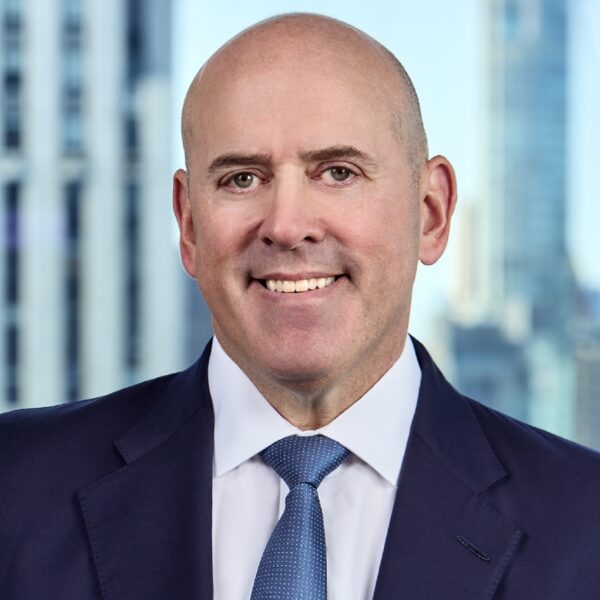
Harvey Schwartz is the Chief Executive Officer and a member of the Board of Directors at Carlyle, one of the world's leading global investment firms. Before joining Carlyle in 2023, he spent more than 20 years at Goldman Sachs, where he served as President and Co-Chief Operating Officer, Chief Financial Officer and Global Co-Head of the Securities Division. Harvey is also an advocate for mental health research and leadership development through his work with One Mind. He earned his BA from Rutgers University and his MBA from Columbia University.
Peter Mallouk
President & CEO, Creative Planning
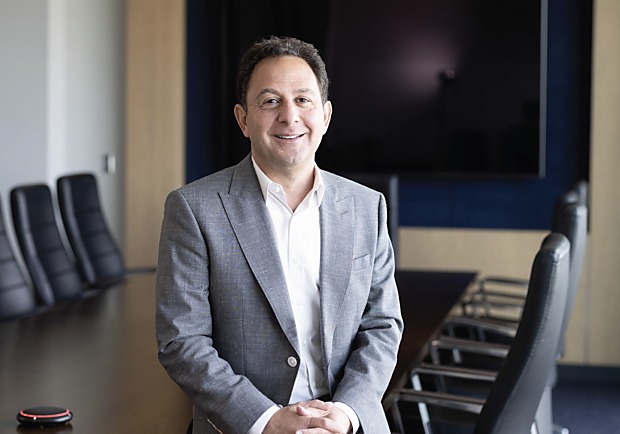
Peter Mallouk is the President and CEO of Creative Planning, one of the largest independent wealth management firms in the country. He hosts Icons and Ideas, candid conversations with the world's leading entrepreneurs, founders and changemakers.
Related episodes
 Ep · 18
Former Psychologist for the Navy SEALs Dr. Eric Potterat: How Elite Performers Train Their Minds
Dr. Eric Potterat · Former Psychologist for the Navy SEALs
 Ep · 17
70th Secretary of State Mike Pompeo: Iran, China, NATO and U.S. Foreign Policy
Mike Pompeo · 70th Secretary of State
 Ep · 16
Dimensional Founder David Booth: Investing, Market Uncertainty and True Wealth
David Booth · Dimensional Founder