Stocks, Inflation and America’s Future
Jeremy Siegel — Economist and Investment Expert
Question
What forces will shape the future of the U.S. economy and financial markets?
Answer
Jeremy Siegel discusses inflation, interest rates, AI, government policy and why stocks remain powerful long-term investments.
Explanation
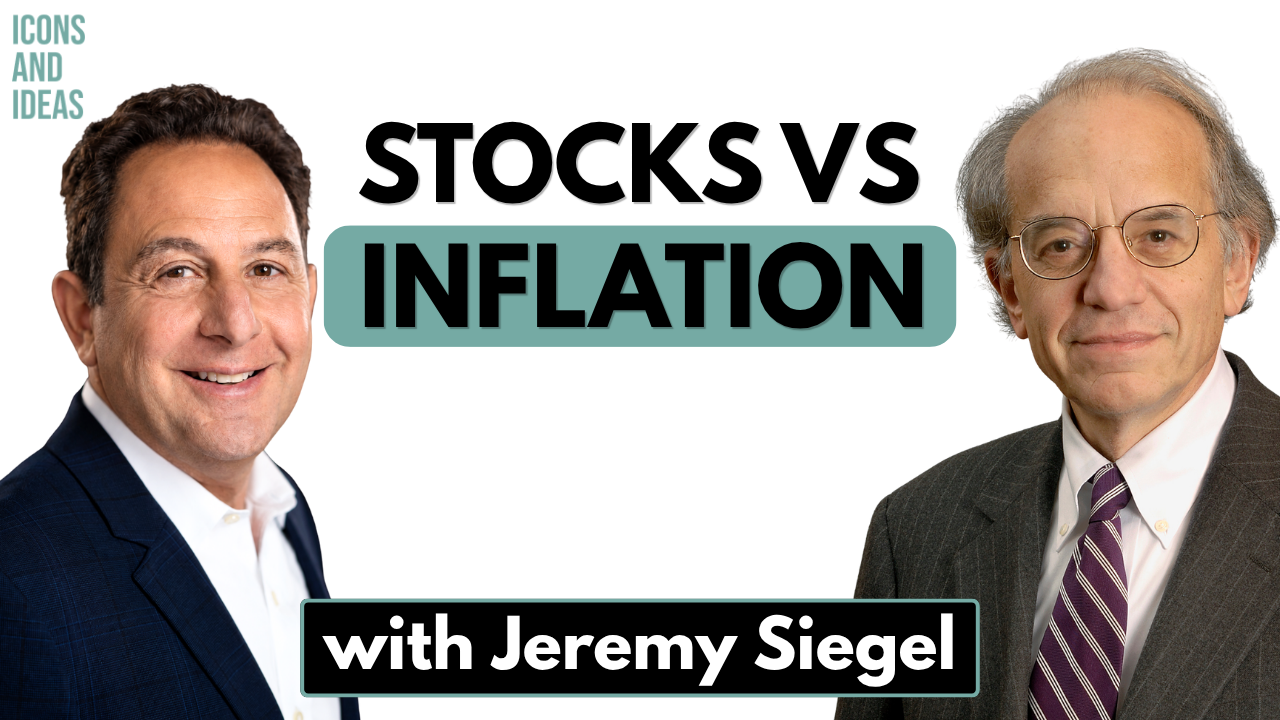
In this episode of Icons and Ideas, Peter Mallouk talks with economist Jeremy Siegel about inflation, markets, economic policy and long-term investing.
What You'll Learn
- Why stocks remain the best long-term investment despite short-term volatility
- How inflation, interest rates and government spending impact your portfolio
- Jeremy Siegel's outlook on AI, Bitcoin, tariffs, private markets and the U.S. economy
- Why cybersecurity may be the biggest financial risk facing America
Timestamps
Key Takeaways
- Long-term investors benefit from owning productive businesses instead of trying to predict short-term market movements.
- Inflation creates challenges for bonds, but quality businesses have historically provided better long-term protection.
- AI has the potential to improve productivity and strengthen economic growth over time.
- Innovation, entrepreneurship and free markets remain some of America's greatest long-term competitive advantages.
Transcript
00:00:00:00 - 00:00:20:08
Unknown
Hi. I'm Peter Mallouk, and this is Icons and Ideas. On the on this show, we basically meet with titans of industry and thought leaders. And today we're going to have one of my favorite guests, the author of stocks for the Long Run, a book I read when I was very young that shaped my thoughts around finance and the industry.
00:00:20:10 - 00:00:40:17
Unknown
We're going to be talking with one of the financial industry's greatest investors and teachers of all time. The Wizard of Wharton, Jeremy Siegel. Jeremy, thanks for being with me today. Happy to be here, Peter. So you're going to be speaking at our event tomorrow. There's a lot going on in the world. I'm so excited to be able to talk to you one on one about it.
00:00:40:17 - 00:01:00:12
Unknown
But I got to ask because I introduced you. I talked about that book. You wrote it so long ago. It was so powerful. I mean, everybody in finances read it. It's so accessible to even young investors. When you hear someone talk about that, or are you proud of that? Or are you like, oh my God, I've done 100 other things, like, what is your mind?
00:01:00:14 - 00:01:33:09
Unknown
Go, where does your mind go to when people talk about it is my signature work. I would say, I first did it in 1994. Stocks were long. I was an unknown author, right? I had trouble getting a publisher, actually. And, you know, finally, when I did find a publisher and put it out and there was, like, no advertising whatsoever, but a few people read it and it got reviewed in Businessweek extremely well.
00:01:33:11 - 00:01:56:05
Unknown
I got a financial post in, in, Canada, he said when I read that it was like, Eureka! I finally understood why I like stocks for the long run. He, And then all of a sudden, I was invited to so many conferences, and I loved that book. You know, where they passed out my book. And, now it's in the sixth edition.
00:01:56:05 - 00:02:19:18
Unknown
So we're talking about, you know, 1994, you know, almost 32 years later, and almost a half a million copies. So I'm very, very proud of what I did. And, I'm happy that people have found it so useful and mandatory reading for any even semi-serious investor. I wasn't just for the professional. I mean, I tried to avoid jargon.
00:02:19:23 - 00:02:49:06
Unknown
There's a few places where I'll introduce it, but you don't really need it. So what I'm proud of is that the intelligent investor can understand it, but it has also been used as textbooks at universities. For, for a, for equity study so that I could actually, you know, cross all those different angles because don't forget, I'm, I was a university professor for 49 years, and taught almost 10,000 students.
00:02:49:06 - 00:03:12:20
Unknown
So I'm that's that was my main profession and that it still it got such good reception not only among the, the professional down in the trenches that are actually working with clients to do well in their portfolio, but also got acceptance among the academics. Yes. And I mean that I mean, what can you ask for more? And that's been so gratifying.
00:03:12:20 - 00:03:32:15
Unknown
So the last guest on our podcast was Mark Rowan, who's the managing partner and CEO of Apollo, which is one of the biggest private investment firms in the world. The leaking of private credit in the world. And he told me that the only B he got was in New York class and so there I was. You're a tough, tough grader.
00:03:32:17 - 00:03:53:19
Unknown
He was a mix up grader. Well, so tell me the tell our listeners the thesis of that book, because what I want to do is talk about what's going on in the world today and what maybe you've thought you've maintained and what may have changed. I remember after the second edition, I, I had a, reporter once asked me, he said, did you know, Jeremy, this great book, there's so many ideas, 500 pages.
00:03:53:21 - 00:04:37:03
Unknown
Could you summarize in one sentence? And, you know, I got back to him and I said, I think I can summarize the thesis of stocks for the long run. Stocks are the most volatile asset class in the short run, but the most stable asset class in the long run. And that just came out of that chart. You know, that's in the first chapter of the book that I spent almost three years researching historical returns on stocks, bonds, treasury bills and all the rest that just just you see it right away and, you know, and it was published in, in, you know, very well-respected academic journals before I actually even produced the book
00:04:37:03 - 00:05:05:10
Unknown
stocks for the Long Run. And I think that that thesis that if I have that long horizon, I'm actually having a much more stable asset than all the headlines, you know, that, volatility that we, we we all know about, that stocks suffer in the short run. You know, it's interesting that when clients in newer clients that maybe aren't really comfortable with investing, they see the stock market as a casino.
00:05:05:12 - 00:05:19:11
Unknown
And the way I explain it to them as it is a casino, because if you're the house, you know, if you're the house that the odds are with you. That's right. One of the few things that the odds are definitely with, you know, the short run, you don't know what's going to happen. You play hand a blackjack, it's almost 50 over 50.
00:05:19:11 - 00:05:47:09
Unknown
What's going to happen? But the place where you got all of hands over a decade, if you're the house you are going to win. You know, that's the basically and you always won in the long run in the stock market. In fact, when I did the historical research, you know, with reinvested dividends, and after inflation, I found out that there was rarely a period more than 10 or 12 years where you weren't actually got a positive return after inflation.
00:05:47:11 - 00:06:13:18
Unknown
Right? And I mean, this chapter starts out with really talking about the stock market and in 1929 to 32, which you know, scared people away from stocks for over a generation. And and yet if you kept on investing in that, you surpassed all other investment assets. Is there anything from that book? I mean, because you're talking 1994 to now, a lot has happened that you've changed your mind about or that you see differently?
00:06:13:18 - 00:06:34:20
Unknown
Or do you see the last 30 plus years as more obviously it's validating, but is it more validating? Are there some exceptions? How do you feel now? Well, you know, it's interesting. When I finished the sixth edition of book, I went back to the first edition. I looked at the long term real returns on stocks, and it was 6.8% a year.
00:06:34:22 - 00:06:59:04
Unknown
And then there was 30 years in between. And guess what it was? It was about 6.9% per year after inflation. I mean, it was virtually the same. And look what happened over the last 30 years from 1994, the great financial crisis hit of the pandemic. You know, one could go on and on and on, ups and down, major bear markets and yet that long that 30 year return virtually matched the long run.
00:06:59:07 - 00:07:25:21
Unknown
Now there were there there's certainly, you know, are definitely changing. But I think some of the important truths that I had learned about how stocks, you know, give you that steady best return in the long run absolutely persisted over that period. I have one chapter called Count Calendar Anomalies. And some of the anomalies are not quite the same at comparing to what we had there.
00:07:25:21 - 00:07:54:04
Unknown
No one talks about, you know, how bad September is. The, you know, the the summer rallies, the Christmas effect and all the rest. And I go into some of those and some of those have shifted. But the most major theses are are definitely there. I think one of the things I, I did get to appreciate more as time went on, and is that people buy bonds as hedge assets.
00:07:54:04 - 00:08:29:10
Unknown
How good are they as hedges against stock market volatility? And it turns out that they're very good hedges against recessions, pandemics, financial crises, recessions. They're very bad hedges against inflation. Oh no. No. Yeah. And so as a result, a lot of when you take a look at bond movements, everyone's trying to talk about inflation. And they're, they're they're not considering the fact that if you really fear inflation risk, you want to be with equities.
00:08:29:12 - 00:08:55:06
Unknown
You cannot be with bonds. And certainly, you know, that is, you know, big concern. It's always been a concern under our fiat money economy that we, you know, that we really, got in, uncertainly since Roosevelt went off the gold standard. And then internationally, Nixon went off the gold standard in 1970. In 1972, where the world's on a fiat money standard.
00:08:55:08 - 00:09:17:13
Unknown
And there's a lot of advantages of it, there's no question, we've avoided great depressions as a result of having that flexibility, but the bias is to inflation. And that is bad for bonds but not bad for. Yeah. There's no consequences for short term spending. Some some future presidents some future Congress has to deal with those things.
00:09:17:13 - 00:09:38:00
Unknown
We've had a lot of bear markets since your book came out. We had 911. We had the tech bubble. We had a 8 or 9 crisis. But the one I want to get your thoughts around is the quick market drop. During Covid, stock market went down 34%. Average bear markets a 34% drop. Not only unusual, but for two things one the fastest 34% drop in history.
00:09:38:04 - 00:09:55:19
Unknown
And to we all thought we were going to die, right? So everyone was everyone was very, very scared. But the government intervened in a way, intervene in a way that really was I think we're still dealing with it today. How do you feel about the way Congress, the president, the fed intervened? Do you think they did the right thing?
00:09:55:21 - 00:10:14:17
Unknown
What do you think? What After Effects you think we're dealing with? And I have a whole chapter in the sixth edition called the, you know, the Covid pandemic. And so. Okay. And I, I go in and this is where my training, you know, my training was in macroeconomics and monetary theory. I got a PhD at MIT everyone thing.
00:10:14:17 - 00:10:39:01
Unknown
So where did you, you know, learn the finance and the the truth of the matter is I got into finance from macroeconomics. You know, I was very close. I was colleagues of Professor Milton Friedman when I taught in University of Chicago. His teachings influenced me. I knew him personally. I was personally friendly with him. He was the one who told me that, you know, persistent inflation is always caused by excess monetary expansion.
00:10:39:03 - 00:11:03:12
Unknown
And what really happened during that period. Now we really had for Trump had two stimulus. The first one is needed. We didn't know what you know what happened. We really did think the second Trump one was beginning to get a little accessible is okay. But under Biden, very honestly, it just went overboard. We didn't need I mean, $5 trillion worth of stimulus.
00:11:03:12 - 00:11:20:05
Unknown
Yeah. And this is the big problem. And this is why I criticized I, I said from the very beginning it was never temporary. You know, I was on I was the first one to write articles saying this is going to be permanent high inflation. I mean, it'll eventually tail off, but it's not going to go back. Here we are more than five.
00:11:20:06 - 00:11:41:08
Unknown
I mean, yeah, I mean, I Jay Powell just printed the money and handed the government, which is you know, again, it was like I was thinking back when I was a young assistant professor at the University of Chicago at the lunch table with Milton Friedman and, you know, you know, and he was saying, he said, Jeremy, if you're going to burst of the money supply.
00:11:41:08 - 00:12:21:03
Unknown
And we had the biggest two year burst in 150 years on my side, if I said, I guarantee you you're going to have inflation and there's going to be no way it's temporary and there's going to be no way around it. And so here I was, you know, or, you know, basically having just retired after nearly a half a century of teaching, remembering the lessons that I learned, at the lunch table with Professor Milton Friedman, in the, in the early 1970s, it was really, I mean, to be able to say what you learned in the past still has relevance today with the world changing so much was, you know, very, very gratifying.
00:12:21:05 - 00:12:45:23
Unknown
What's incredible, what we're watching now, we're still living with, with housing and the effects of that policy and. Oh, yeah, I mean, at the I mean, there was there was just no ease. What, you know, as the people said, well, what should he have done? I said that what the monetary policy, the, Monetary authority should have said to, to, Biden was you do your fiscal policy, but we're not going to hand you the money.
00:12:45:23 - 00:13:10:03
Unknown
You go to the bond market. Right? And then the interest rates would have gone up right away, and we wouldn't have anywhere near the spending, you know, boom, that was gone. I mean, we were buying mortgage backed securities at a time that we had, you know, the biggest two year increase in housing prices in our history was between March 2020 and March 2022.
00:13:10:04 - 00:13:35:04
Unknown
I mean, it it just and we were buying we were trying to support, the a sector that was, that was in a runaway prices. I mean I it, it just really upset me. Yes. I mean, I, I, you know, I said these people that have not, you know, I mean, I guess because of my age and I, I studied, Friedman I why was all this lost?
00:13:35:04 - 00:13:52:11
Unknown
You know, I think it was terrible because if you look at, like, the past bear markets, they said, oh, well, we've got to we got to do all this spending because. 0809 everyone's scared to do anything or 911 people are cocooning. It made sense to, to do this with Covid. People wanted to spend. They were inside because they thought they were going to die.
00:13:52:11 - 00:14:08:02
Unknown
They did not need stimulus. They just needed to know they could go outside. Absolutely. And they were going to spend. So then they went outside with big bags of money because I that would be the only thing that was done after the financial crisis was the cash for clunkers. Do you remember that? I do, and that was like 800.
00:14:08:02 - 00:14:32:19
Unknown
You know, billion. Oh, yeah. We're not going to make that mistake. We're going to go like a trillion. I mean, hey, come on. I mean, you know, once people, you know, saw that not everyone was dying and there was a vaccine within a year, right? Less than a year. And if there was no vaccine, there was if and, and yet we were still passing out trillions of dollars when I was traveling around.
00:14:32:19 - 00:14:55:10
Unknown
As soon as I got the vaccine and I was traveling around doing everything like that, and money was still flowing right? Yeah. It was yeah, it was a terrible monetary and fiscal mistake. And the hangover effect I think we have is you have this division now that's greater than ever between the working class and the wealthy, because the wealthy owned stocks they had for one case, they had a lot of and they had properties that went up in value.
00:14:55:10 - 00:15:13:14
Unknown
That's right. And the working class just saw the price of everything go up 30% and didn't have those things. And so if you don't have a home, yeah, you are now so disadvantaged and priced out of the market. I mean, it was like the haves and have done that. Now in the United States, we have a big homeownership, ratio.
00:15:13:14 - 00:15:33:17
Unknown
It's around 65%, which a bigger in Europe and many other places in the world. But that still means, you know, more than one third of the people don't have a home in a rental. And now there's like almost no chance that they can buy a home. With the current prices and the current interest rates. So that wasn't just the stock market that widened the gap.
00:15:33:17 - 00:15:56:09
Unknown
I think in many ways it was the housing market, right. That really began to widen that gap. So on the same theme, what do you think about the deficit spending now? We're adding almost $1 trillion a quarter. I mean, numbers that were unfathomable. I mean, just just 7 or 8 years ago. What do you think the impact is on the economy, the society, the stock market, the bond market?
00:15:56:12 - 00:16:15:08
Unknown
Okay, the long run is unsustainable. I'm not going to say. I mean, with Medicare and the aging of the society, you can look at them. However, I'm not worried about the short run or even the medium run. I think there's capacity. I and I, you know, I, I think I look at different ratios and its debt to income.
00:16:15:10 - 00:16:50:06
Unknown
I look at debt to wealth, and wealth is going to a lot more than income, because how much of the world of, of the U.S. portfolio is occupied by U.S. government bonds? That's not nearly as scary as the debt to income. And and also the projections of income. And this is where I comes in, you know, if if I can raise productivity a mere half, 4% a year, that really lowers the longer term trajectory of the debt to income ratio into the future.
00:16:50:08 - 00:17:11:19
Unknown
Secondly, you know, I don't worry about the debt, and that's the bond market worries about the debt, the starting to worry, don't you think? Yeah, I know it's not real. I mean, it's gotta worry like, well, you know, I often tell, you know, during the Reagan administration, when he cut taxes, Obama worried, went up 100 basis points.
00:17:11:19 - 00:17:32:12
Unknown
And, you know, backtrack on one of his signature policies. And, you know, then then once he backtracked, we had some of the greatest growth in those eight and next eight years that we've had. Bush has gone similar the biggest example is this said in the UK. Now she just cut taxes without any spending, and the bond market told her no and she was out of a job.
00:17:32:12 - 00:17:57:08
Unknown
She started serving Prime Minister in UK history. So you know what the bond market will tell us I don't see it. Yeah I know you know, we do see the 30 year. We see internationally a little ripple and we see the 30 year, you know, had broke five now down to four and three quarters. But you know, the ten year which I really look at as the benchmark is, you know, really just about four.
00:17:57:13 - 00:18:20:03
Unknown
That doesn't signal to me worry about it in the short run. Now, I'm not saying, you know, they'll never be a problem, but I don't think it is anything that I see as a near-term problem for the stock market. Interesting. So when you look at Japan and China starting to pull away and you don't view these as early warnings, you just view them as normal where they have could have their own problems.
00:18:20:03 - 00:19:00:03
Unknown
I mean, you know, just like what happened in the UK. And she was out and they didn't do those tax cuts. So the bond market, you know, the bond vigilantes has, you know, they're popularly called. They will they they'll change that. They'll don't hold a tune. All right. If we if I see the ten year moving up to five, five and a half without any other, you know, factor and I, you know, that, persistent inflation, that temporary inflation like tariffs, and all of a sudden you're going to get screaming, yelling from everyone in the housing market, the builders, people trying to finance long term investment, just like Reagan had to go back.
00:19:00:03 - 00:19:33:05
Unknown
Bush had to go back. UK had to go back in. Eventually the politicians must respond to the bomb. I don't see the bond. The bond market is whispering a little bit. But at this particular point, I don't see that as being a factor in the next 3 to 5 years. Oh, and I know I'm in the minority and people say I'm, you know, I'm playing glossy and glasses on and looking at a rose colored, but I've done a lot of research on this.
00:19:33:07 - 00:19:49:04
Unknown
And as I said, I'll, I'll, I'll, I'll, I'll let the bond market tell me. And then the bond market will discipline the government on that. Do you buy the argument, the bond market smarter than the stock market in the short run?
00:19:49:06 - 00:20:13:02
Unknown
It's populated by different group of people. Don't forget, earnings is a big driver, which had nothing to do with the bond market, right? Faster economic growth is good for the stock market and not good for the bond market, because it means higher interest rate. So, you know, inflation, which in the long run is not bad for the stock market in the short run could give it problems because the fed would have to react, is really bad for the bond market.
00:20:13:02 - 00:20:37:02
Unknown
So there's a lot of different factors. So the the people that are really spiking in the bond market, and, and those factors that they're looking at will will be better. But you know, stock investors are looking at earnings and the rates that they're capitalizing those earnings and which is related to the bond market and a lot of other factors, risk premiums and all the rest.
00:20:37:04 - 00:21:03:19
Unknown
So the group look at different factors. I wouldn't say one is smarter than the other. It's just that they look at different factors. However, that being said, I agree with you that in terms of a unsustainable longer term deficit, the bond market would would tell us first. Yeah. And right now, despite the these fluttering, I don't see it.
00:21:04:00 - 00:21:25:13
Unknown
I'm not saying it's never going to happen. But I really don't see that right now. Of all the threats to the American economy, what do you see as the biggest threat? I mean, a lot of people say it's deficit spending, the national debt. You don't seem as concerned about that. I'm concerned about that. So what do you what do you see of all the threats that are out there?
00:21:25:19 - 00:21:46:00
Unknown
Or do you see none of them as a serious. Well, I you know, I think I think there are threats, of cyber security. I mean, I think it would be a nightmare if everyone got up in the morning and tried to log on to their bank account or their, you know, their fund accounts and nothing came up.
00:21:46:02 - 00:22:16:10
Unknown
Yeah. I mean, who knows? I think we have to we have to treat that very much like, national defense. Yes. Because we can get a cyber attack is, can be as deadly as a as a military term. We also have an aging grid, which we have to worry about. We have we have power needs that we all know that we have, we have to take care of.
00:22:16:11 - 00:22:37:19
Unknown
I think that those are, to me, more threatening than the the government deficit interest. Right. Yeah. So I agree with you on cyber security. I talk when people ask me what I think the biggest short term threat is. I think it's exactly what you said. Even if everybody got up and knew that $1 was taken out of their account.
00:22:37:21 - 00:23:01:04
Unknown
Right. But it happened to everybody at one major bank. Yeah, that would be paralyzing to the US economy would be totally paralyzed. Absolute chaos. If something, you know, one of the big banks like JP Morgan or something like that 100 suddenly was was raided for money, it would be perfect. And another thing I think is, is going to be very important.
00:23:01:06 - 00:23:21:03
Unknown
And that is, identity theft with AI, you know, and can we be sure it's you who wants to do this transfer. And now knows all the questions that they try to ask you to make sure that they know that it's you and they got your voice and they got your voice and they got all your details.
00:23:21:04 - 00:23:43:21
Unknown
How, how are we going to identify people in the future. Right. We have to we have to work on that because trillions of dollars are transferred all the way. Right? Yeah. And you can see what what the potential of abuse and problems is in that area. Yeah. I think about AI a lot. I think about cyber a lot because I think we've made a lot of enemies.
00:23:43:23 - 00:24:01:22
Unknown
They hate us more than ever. And we're dropping bombs all over the world every year on somebody. And no one can defeat the United States militarily. But a lot of people can spend their money on cyber. And and this can be the way they can really paralyze how many. I mean, I think I know what I mean.
00:24:02:00 - 00:24:29:09
Unknown
Almost everyone I know has had some cyber problem. Right. You know, maybe, you know, they paid $50 to get back online with some attack or something like that. You know, when you get down to the data, I mean, it's not like they putting down the U.S financial system, but the number of people that have been scammed because of cyber and now AI has to run into the tens of millions for sure.
00:24:29:09 - 00:24:51:00
Unknown
And that's individual. But the second that happens across an entire institution. Yeah, like a JP Morgan. Yeah. You know what the press is good at about the the abs because I mean that so much is amplified by the press right now. I mean, you could even talk about Covid, you know, talk about the first pandemic. You know, stock market didn't react.
00:24:51:03 - 00:25:21:16
Unknown
Nothing close down. I mean, we just the information goes so fast and it gets to be amplified, that that's another thing that, you know, scares get amplified. That's right. That are not always real scares. Yeah. The and and that could paralyze the whole system in and of itself. Well, I mean, look, if somebody goes into a major institution and takes even $100 out of every account, that's a legitimate scare.
00:25:21:16 - 00:25:39:02
Unknown
A rational person, some person is going to withdraw all their money. You're going to have a problem. I think that's right. All they have to do is, you know, take a tiny amount out of everyone. Yeah. I mean, yeah, I mean, you know, we could, you know, look what happened to Silicon Valley Bank. We could write a rumor that the bond market was.
00:25:39:02 - 00:26:03:04
Unknown
And then they lost all their deposits within a matter of hours. Yeah. I mean, so you can see that sort of cascading behavior happening in this world of of instantaneous communication and, you know, and where, you know, let's face it, the media hypes up a lot of stuff because they get ratings, everyone hypes it up, you get more, you know, looks, you get more ratings.
00:26:03:04 - 00:26:27:20
Unknown
And, and that's supposed to be positive. So everything gets amplified. So even if something happens that someone says, just a minute, we can explain that that can happen again. That still could start a viral chain 100 panic. Right? Easier than ever today. I think it's easier than ever. Easier than ever today. That scares me much more than the government deficit.
00:26:27:22 - 00:26:42:12
Unknown
You, you mentioned Milton Friedman earlier. Yeah. And there's a video out of you've seen this video where he talks about a pencil and all the. Yeah, all the things that go into a pencil and how they come from all over the world free to choose his book. Right. And so, yeah, that that's the beginning of his book.
00:26:42:12 - 00:26:57:17
Unknown
Free to choose. Interesting pencil. I think it was in Hong Kong. Look, it looked at the pencil and said, you know what it takes to put together this pencil, you know, which at that time when they did it probably cost, you know, $0.05. Yes. You know, and he said that led to all of this and it goes into all these different things.
00:26:57:17 - 00:27:17:15
Unknown
I mean, and this is the, you know, the invisible hand of Adam Smith, right? Yeah. Everyone, you know, the intricacies of how everything works together. No government could ever master it. Only the market can do it right. And that the manufacture of the pencil gets all the pieces from all over the world to make the lowest cost, best pencil.
00:27:17:17 - 00:27:52:04
Unknown
So that brings me to tariffs, because tell me what you think about Trump's new policies, which really go directly against Milton Friedman, is teaching around a book, basically the globalization of making a pencil. Yeah. And basically, I don't like the tariffs. There are some bright sides, by the way. I don't think he went about it. Right. You know, I mean, I, you know, I, I think it kind of went to his head up his big victory and then, you know, it wants to take over Canada and Mexico and Greenland.
00:27:52:04 - 00:28:27:11
Unknown
And I don't think that set the right tone personally. And, and then attacking, you know, India is as a democracy and we're putting higher tariffs on that than China. But but let me, let me tell you a little bit about the other, a little bit about the other side. We we're in the the United States is the only major country in the world that doesn't have a value added tax, which is a consumption tax.
00:28:27:13 - 00:28:48:23
Unknown
We rely way too much on the income tax, which is very imperfect in many, many ways. And it actually taxes capital twice and three times. You go to other countries, they have dividend exemptions and also of others that we just don't have. Most economists that study fiscal policy said we got we should rely more on a consumption tax.
00:28:48:23 - 00:29:21:13
Unknown
Now tariffs are the kind of like a partial, imperfect consumption tax on foreign produced goods. Yeah. The discriminatory discriminatory. It's like yeah, I think here I mean, I would like it. And as part of a general system to go to a value added tax and lower the income tax, I mean, you know, actually theoretically do away with the income tax and just have a value added tax on all the goods.
00:29:21:19 - 00:29:58:11
Unknown
And, and, the tariffs are a very imperfect beginning of that, but, but very imperfect and not the way that I would start to introduce that. So I am not I think the tariffs are net a negative for the U.S. economy and net a negative for the U.S. stock market. But there's a lot of other parts of the Trump agenda that are sufficiently positive so that we can still do well in stock market.
00:29:58:13 - 00:30:15:12
Unknown
So, you know, people say, well, how could you be against tariffs? And I was on the media against terrorists. I mean, you may have seen me. I was really saying, you know, this this is crazy. Especially the beginning of these reciprocal tariffs, the Chinese 10% and 50. But I'll tell you, we have people said, you know, but then you turned bullish.
00:30:15:12 - 00:30:50:03
Unknown
And what made you you start to turn around, I tell you and I tell you, I know exactly the day I turned bullish when Besson had the meeting in Geneva with the Chinese trade representative, we had 100 and what, 35% tariff? We had 145 and they had 125 something crazy like that. And Trump, Trump was on the radio or on his tweets and saying, yeah, well, I think it's the best thing is going to be somewhere between 50 and 80.
00:30:50:05 - 00:31:14:18
Unknown
And what happened, at least in my mind, is Sunday night, Scott Besson called Trump and said, okay, you know, they're willing to, you know, go down to 15 on us if we go down to 30. He said, okay. I couldn't believe it when I heard that. By the way, the market rallied strongly, if you remember that.
00:31:14:18 - 00:31:38:03
Unknown
Remember? Yeah, I said, oh, this is the way it's going to work. Right? Then we have the taco trade like ever and ready to talk to. Well, it was the taco trade. You know, which he took great offense to see remember. But nonetheless, I said, oh, okay. It's not going to ever be like this. They go, yeah, it's all going to be a negotiation.
00:31:38:08 - 00:31:59:07
Unknown
And by the way, you know, you could see that that they were negotiating and we could see as soon as they, you know, stopped, you know, selling the rare earth to us. You know, we started you know, it turns out now it is quite, you know, I mean, surprising there is been no retaliation. I mean, except for the Chinese, right?
00:31:59:07 - 00:32:30:02
Unknown
That retaliatory wrote to get a very low rate on that. Basically, there's been no we I mean, even the Canadians, you know, took back some of their retaliation that they had on that side. So they really like our market as far as that concern. And there's a lot of exemptions in it's patchwork. Yeah. And I don't particularly like, you know, you know, you have to, you know, go to the, the court of you know, Donald Trump in Washington to get what kind of that's not good capitalism.
00:32:30:03 - 00:33:01:10
Unknown
That's not good free markets as far as I'm concerned. So, you know, I, I'm not particularly happy, but the amount of things that finally get exempted, are really pretty high. Now, that doesn't mean that the average tariff rate is still going to be 15, 17%, which is still pretty very high from post-World War Two standards. Although, again, I mean, we could eliminate the income tax or the 10% value added tax, both on all tariffs and on domestically produced goods.
00:33:01:12 - 00:33:28:20
Unknown
Also, you know, and we could probably eliminate the income tax, and, and still have a progressive system by exempting food and clothing or, or higher rates on certain boats or luxury items on lower on others. That's a, that's a much cleaner and easier way, especially when you consider that there's like 800,000,000,000 hours that the average person, the not the average person, the cumulative U.S. spends on trying to every April do their income tax.
00:33:29:00 - 00:33:43:17
Unknown
So you don't love the tariffs but you you think negotiate our way to a reasonable place. But you said you do like some of Trump's policies that you think are favorable. So tell me about tell me about that. Yeah I mean, first of all, I mean, and you know, that Biden was crazy antitrust like with no mergers. Yeah.
00:33:43:18 - 00:34:05:01
Unknown
You know, I mean, Spirit and Frontier are my no. One, no Kroger. And I mean, they're both bankrupt by that way. That that that that that's crazy. So he's much more than that. I mean, he's also lower regulation. I mean, he was in the first term. And and we do have I mean, the banks are overregulated. I mean, and it's, it's it's a kickback from the financial crisis.
00:34:05:03 - 00:34:30:07
Unknown
I actually say a lot of the bitcoin, the rise of Bitcoin is because of the overregulation, the banking system. But you know, that's a whole other we could do better now. Well you open the door. We can open the door on. So you know like I mean I mean you know I so I mean there's so there's a failure on a regulation and, and let's face it, the tax bill, I mean the is very favorable to capital.
00:34:30:07 - 00:35:00:01
Unknown
The immediate expensing of capital expenditures is very our for. So when you take the tax bill, the deregulation that that that is they the, the less fervent anti merger movement that offsets more than offsets the negative of the tariffs. I see. Makes sense to me. Tell me about the cryptocurrencies I'm curious how you feel. But I don't know that I've ever heard your take on cryptocurrency.
00:35:00:02 - 00:35:27:00
Unknown
Yeah. Well I okay so I I'm not an expert on it. You know let me let me say I mean, you know, I have some of my colleagues that, you know, explain, you know, all the, you know, the works on it. I'm not an expert on it, but let me I always said that, I mean, I, I payment system in the US is totally crazy.
00:35:27:02 - 00:35:53:09
Unknown
I mean, they charge merchants 3% for the credit cards, and then they give us 2% back. All right. I mean, that cost consumers like $900 billion a year. I mean, I get two of it back. Other people don't. They're paying 19% interest rate on their balances. I mean, it's crazy. In Europe they put a so they when the debit card became really popular, they were putting 1.5% on the debit card.
00:35:53:09 - 00:36:18:16
Unknown
You know, Congress stepped in and said, no, you can't do that. You know what credit card in Europe, the credit card limit is 30 basis points. And I don't I don't know, I think the debit cards like 10 or 11. I said we just have a terribly inefficient payment system. They're going to come up with an alternative payment system worldwide that's going to eclipse the dollar.
00:36:18:18 - 00:36:39:10
Unknown
And I think a lot of Bitcoin has to have an international system where you don't pay stupid, crazy fees, where you do it 24 over seven, which we should be able to transfer money. This idea, the banks close at three or they open at nine the close on weekends and every other house. I mean this is stupid in in a this is stupid in the modern world.
00:36:39:12 - 00:37:09:15
Unknown
We, we just and part of it is the banks are frozen because of all the excess regulation that resulted from the financial crisis. Sort of. I'm just doing, you know, what I need to do, and, and, you know, I mean, I know some are making money, you know, you know, Jamie Dimon, JP Morgan. I mean, they're making on tithing, but the transaction technology is unchanged from 50 years ago.
00:37:09:17 - 00:37:43:19
Unknown
We should we should have if we would have developed a transaction. Well, I we I'm I'm speaking incorrectly. We have the tools today to have a transaction technology that worldwide can transfer between businesses and individuals had 2 to 3 basis points anywhere in the world, 24 over seven. And we haven't even begun to develop it. And why it being blocked by the monopolies visa and Mastercard, American Express and no.
00:37:43:20 - 00:38:05:17
Unknown
Oh no no. We you know, it's working well and the banks love it because they get so much money from them too. I mean, so it's sort of a, I mean, it's not a conspiracy. It's it's it's it's it's. But if what the fed should have done years ago. Is that all right to the banks. If I were, if I were the fed, I said I'm going to have fed money that's going to transfer there.
00:38:05:17 - 00:38:21:10
Unknown
But, you know what? I'm going to give you guys a nut. If you want to do a private thing, I'll support it. Otherwise how come in, boy, that would have lit the fire under them. And then we would have 24 seven. And you know what? We beat Bitcoin.
00:38:21:12 - 00:38:40:13
Unknown
Speaking of 24 seven, do you think the stock market should be 25? It almost is. Yeah I mean it almost is with futures trading all except a couple of hours. You can't do it for you. But there's after hours on individual stocks. And you know I mean they trade during earnings. They trade after hours in earnings. That's all you care.
00:38:40:17 - 00:39:03:16
Unknown
You know I mean I you know I mean obviously the world world events you can trade in the futures market overnight. So you know there's not a lot of company specific things that happen during that. So you know they're basically it's 24 seven and you're talking about the banking system. And you know, now 85% of lending to businesses that have over 25 million revenue happens in the private markets.
00:39:03:20 - 00:39:21:14
Unknown
Well, private equity and that's part of it. Part of it is just overregulation of the banking system. I mean, I, I just think it's a pendulum effect. You need to go through history. So much of a history, it's just a pendulum. We we don't pay attention to something. And all of a sudden it happened and then we go overboard on the other direction.
00:39:21:16 - 00:39:38:11
Unknown
So what do you think about this? I mean, there were 8000 publicly traded companies. We're now cut in half to 4000. Yet the economy is trillions of dollars more. There's now thousands and thousands of private equity funds. The world has gone private. What do you think about private equity? Private credit. This emergence of those I think that might be getting too popular.
00:39:38:11 - 00:39:58:11
Unknown
I'm not saying, you know, I mean, part of it, you know, Sarbanes-Oxley and the the difficulty of going public. And some of that has been mitigated through subsequent legislation. That's, again, the reaction, the reaction to Enron. Yeah, yeah. I mean, oh my God, a public company has to do this and this and this. That's why did you want to go public right now?
00:39:58:13 - 00:40:23:12
Unknown
Some of that was fixed. They, you know, could go through it, but not a lot of it. It's it's hard to be public. It shouldn't be. Right? I mean, and that's another thing. So it's the regulation has created a lot of that problem with all the things we've talked about. What are you the most optimistic about?
00:40:23:14 - 00:40:48:18
Unknown
I'm most optimistic. And I'll tell you a story because it's it comes from being a professor for so long. I once had a really good Japanese student come into my office, and we started talking about it, and I was talking about education in Japan. I mean, they're very, very smart people. And I said, well, what surprises you?
00:40:48:20 - 00:41:13:04
Unknown
And he said, what surprises me is how the students question the professors that can challenge the professors. It he said, when I went to school, if the professors said one plus one equals three and put on a blackboard, you're not supposed to raise your hand, said, there's a mistake there. If you don't question, there's a there's a line of authority.
00:41:13:06 - 00:41:39:21
Unknown
We what I'm great about the American culture is that we can question people. We can question people, we can challenge them. And it's socially okay. And it's totally okay to build a mousetrap that destroys the previous mousetrap company that might employ 200,000 people, but should only have to employ 10,000 people to do the same thing. You know, in Japan, you know.
00:41:39:23 - 00:42:04:07
Unknown
Oh, Toyota. Oh, yeah. All those big companies, you don't want it. You don't want something that can hurt those companies, because those companies are employing all these people to in the United States, we almost cheer for those. Yeah, hyper people, that sort of creativity. We can you know, I'm thinking outside the box, you know, bust the tradition. We, you know, we could do it.
00:42:04:07 - 00:42:28:14
Unknown
And you're, you know, you're praised for doing you're you're a hero for doing that, or one of the few societies in the world that have that at it. And I think that spark is what's really at the heart of American exceptionalism going forward. Well, I love your youthful energy. Jeremy Siegel, one of my favorite people to follow in all of finance.
00:42:28:14 - 00:42:36:03
Unknown
Thanks for joining me today. Thank you very much, Peter. That question.
00:42:36:05 - 00:42:53:03
Unknown
How long was it like, what, like 40 minutes? Great. Did it work okay. It was okay. You were awesome. Were you crushed or do you want to look at these questions? Do you want it? I think you do. I don't think it's needed, but I want. I think this one. We'll skip it. Yeah, I know this was I.
00:42:53:04 - 00:43:13:02
Unknown
We covered a lot. I think we covered everything, and I think we did it. What do you think? Go at it. And I think we're good. Amazing. Okay. Oh thank you. All right. Perfect. You were listening. And you guys are amazing. I want to have you guys every time I need to do this. So can we just. Do you guys ever hear anything you shoot?
00:43:13:02 - 00:43:54:03
Unknown
Or. If you want to hear, I can, redo that one a few times. You don't have to stick around for that. I don't want you to just get. Can we get 20s? Yes. So everybody just get really. Everybody's quiet. Okay? Why? It is for that? It is for you. All right. And rolling room. So now.
00:43:54:05 - 00:44:09:22
Unknown
Back with. Good. All right. Awesome. What do you want to do a couple children. How do you want me to do. You want I can take the live off. Do you think we can use the one I did? Or do you think I should redo it? I did okay, I thought on it, but not great. But if you would want to do another one, you could let me.
00:44:09:23 - 00:44:30:19
Unknown
Let's read you a just him. Him? Actually, I'm rereading it again. I was going to say let's redo it and not introduce so that it's like a comment. I think you did a good job. All right. Okay, good. We'll go with that. I think it's week to get the. Have you have any kind of I think you're okay with good.
00:44:30:19 - 00:44:48:06
Unknown
Well thank you. Yeah. You're great. Fantastic. You know I'm going to turn 80 next month. You're amazing. You're amazing I hope I can I hope I can have the youthful vigor you've got when I'm there. The sharp mind. Thank you, thank you. Let's play. Yeah. Oh, boy. Oh, boy. Get up.
Disclosure
Investing in stock markets involves the risk of loss. Rankings and/or recognition by unaffiliated rating services and/or publications should not be construed by a client or prospective client as a guarantee that he/she will experience a certain level of results if Creative Planning is engaged, or continues to be engaged, to provide investment advisory services. For additional disclosures, visit https://creativeplanning.com/important-disclosure-information/.
Who's in this episode
Jeremy Siegel
Economist and Investment Expert
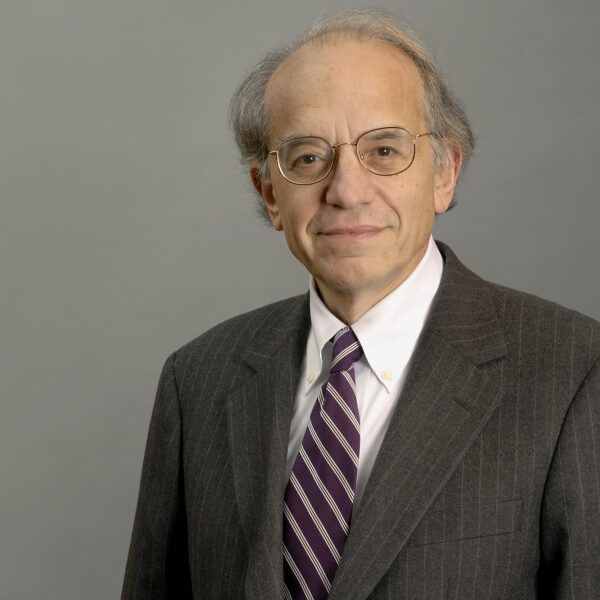
Jeremy Siegel is one of the world's leading economists and investment experts. A longtime professor at the Wharton School, he taught for nearly five decades and has educated thousands of investors and finance professionals. He is the bestselling author of “Stocks for the Long Run,” widely considered one of the most influential investing books ever written. Throughout his career, Siegel has become a trusted voice on stock markets, inflation, interest rates, monetary policy and long-term investing.

Peter Mallouk
President & CEO, Creative Planning
Peter Mallouk is the President and CEO of Creative Planning, one of the largest independent wealth management firms in the country. He hosts Icons and Ideas, candid conversations with the world's leading entrepreneurs, founders and changemakers.
Related episodes
 Ep · 18
Former Psychologist for the Navy SEALs Dr. Eric Potterat: How Elite Performers Train Their Minds
Dr. Eric Potterat · Former Psychologist for the Navy SEALs
 Ep · 17
70th Secretary of State Mike Pompeo: Iran, China, NATO and U.S. Foreign Policy
Mike Pompeo · 70th Secretary of State
 Ep · 16
Dimensional Founder David Booth: Investing, Market Uncertainty and True Wealth
David Booth · Dimensional Founder