Celebrated Portrait Artist Platon
What the World’s Most Powerful People Reveal When the Camera Clicks
Platon — Celebrated Portrait Photographer
Question
What can the world's most powerful people reveal when someone earns their trust?
Answer
Platon shares how vulnerability, curiosity and genuine human connection allow him to capture authentic portraits of world leaders and cultural icons.
Explanation
In this episode of Icons and Ideas, Peter Mallouk talks with celebrated photographer Platon about power, trust, photography and the stories behind his most iconic portraits.
What You'll Learn
- How Platon's Greek village childhood and dyslexia shaped his fearless approach to people
- What Clinton, Obama, Bush, Trump and Putin are really like behind closed doors
- The technique Platon uses to disarm even the most powerful people in the world
- Why business leaders, not politicians, are the real champions of our time
Timestamps
Key Takeaways
- True human connection requires going first — with honesty, openness and courage — regardless of who’s in the room.
- Power is a social construct, and the ability to see through it is what allows Platon to capture truth on film.
- Vulnerability isn’t weakness — it’s the only currency that creates real trust between people.
- Business leaders, not politicians, are the force most capable of pulling a polarized society back together.
Transcript
01:00:00:01 - 01:00:00:22
Platon
I worked with Trump
01:00:01:00 - 01:00:03:11
Platon
a long time ago before he ran for president.
01:00:03:16 - 01:00:04:22
Platon
I said, you know, Donald,
01:00:04:22 - 01:00:07:15
Platon
there's always tension around you,
01:00:07:15 - 01:00:09:14
Platon
it feels like you're always in a storm.
01:00:09:15 - 01:00:20:16
Platon
How do you weather the storm? And he calmly looked at me and he said, I am the storm.
01:00:20:18 - 01:00:27:17
Platon
I'm here with Platon. And this is, you know, we've done a lot of these, and I have really, really been looking forward to this one.
01:00:27:17 - 01:00:49:02
Peter Mallouk
I've seen Platon speak more than I've seen any speaker in my life. I think, you know, he's one of the most famous photographers in the world. That's what he's really known for. But to me, I know him as somebody that's just really incredible at emotional connection and finding common ground in a world where, man, everyone is really in their own corner.
01:00:49:02 - 01:01:08:13
Peter Mallouk
So I'm so excited to be with you. Thanks for being with us. It's great to be with you. So I am I don't know the answer to this, so I'm excited to start with this question, which is just understanding your upbringing, because what you're doing today is fascinating to me. But how did how was your childhood? What how did you evolve to get to the role that you're today?
01:01:08:13 - 01:01:38:19
Platon
Well, we're all made by our own unique journey informs everybody. I was born in London. Then my dad, who's who was Greek, got a job in in in Greece. He was an architect. So we moved to Greece when I was a baby. And I had the most beautiful upbringing, mainly in a small Greek village in the mountains.
01:01:39:00 - 01:02:12:08
Platon
My dad would travel to Athens to work, but I would be in this, in this little village in one of the Greek islands. And it was we didn't even have. I remember we had one phone line, which was in the post office, and all the old ladies that worked in the post office used to listen to your phone call, and by the time you've hung up your important phone call, everybody in the village knows, like word is passed through the window, through the doorway, through the alleyway.
01:02:12:10 - 01:02:38:07
Platon
And, you know, we had I remember when we got electricity and I remember when we got constant running water. What decade are we in here? We're talking about early 70s. Okay. So I saw life kind of before modernity. And I knew the farmers who were in their 80s then. So their life was. So I bridged it and obviously I saw things.
01:02:38:07 - 01:03:06:14
Platon
I mean, in London, obviously it was a totally different situation, but in a small Greek village. Modernity came late. But the beautiful thing about it is it's Mediterranean spirit. They love children. You're safe in the village. There's no old people's homes there, you know, like everyone's aging together. Growing together. Children are playing in the street. Everyone watches out for each other's children.
01:03:06:14 - 01:03:32:17
Platon
And you'll get smacked by the lady if you do something naughty. Who lives there? She's not your mother. No one's going to sue her for smacking you. If you've been naughty. It's like there's a village responsibility of love and respect. I remember there was an old lady called the postman Mrs. Postman, and she used to deliver everyone's letters, like, once a week, twice a week.
01:03:32:20 - 01:03:57:23
Platon
But when you got your letter, it was already opened. She'd read it. So? So there was not much privacy. But with that comes this sort of closeness and almost fearlessness of the human condition. So I had the warmth of that. And then when I was about nine years old, my father moved, got a job back in London.
01:03:57:23 - 01:04:19:09
Peter Mallouk
So we moved back to London. Are you speaking Greek?
01:03:57:23 - 01:04:19:09
Platon
Yeah, I was, I suppose you still see so my Greek as well. When I came back to London, I had a very heavy Greek accent. And I wasn't just a foreigner, I was a bloody foreigner, you know, like in the 70s in, in the UK, you know, times were different.
01:04:19:09 - 01:04:40:12
Platon
We weren't as sort of inclusive as we are now and children could be mean. And on top of that, I didn't know it at the time, but I was dyslexic, I'm dyslexic. So when I moved back, not only was I struggling with the culture, but I couldn't make sense of any of the lessons. I couldn't read very well.
01:04:40:14 - 01:05:05:18
Platon
Writing was a bit of a problem. Certainly couldn't understand mathematics at all. So I, I became more and more isolated. But and I remember one day I just had enough and I just ran away from school. Right. So this is kind of important. So I got in big trouble for that. And they called the fire brigade and the local police to finding out of school.
01:05:05:19 - 01:05:26:08
Platon
Okay. Yeah. Because they are just disappeared. I just walked out. I said, I'm not I'm not interested in this. This is not for me. You can't do that. So I so they found me. I was playing, you know, down the street after a few hours and they took me into the headmaster's office and they made me wait outside in the corridor, and I remember.
01:05:26:12 - 01:05:46:01
Platon
I still remember it. Okay. This is a really interesting place to be because I'm waiting to be called into his office, and I know I'm going to get in big trouble in a minute, but I'm not in trouble yet. So I'm in this no man's land. I'm not in class because all my all the kids are in class.
01:05:46:01 - 01:06:10:05
Platon
So I'm not in that system and I'm not in his system yet because I'm not in his office. I'm in this sort of empty corridor where rules are suspended, and I kind of like it there. And I've really been there all my life because my job doesn't really fit into protocol, doesn't really fit into standardized rules of behavior.
01:06:10:05 - 01:06:34:16
Platon
And I'm always thinking I'm symbolically in that corridor. I'm probably going to get into trouble for what I'm going to do because I'm going to be too human to honest with someone, and I'm not really having to play the same system as everyone else. I'm not in the classroom doing this. I'm doing my own thing. So that corridor of no man's land is where I just thought, this is cool.
01:06:34:18 - 01:06:57:07
Peter Mallouk
I like it here. Eventually I got into London. It's an amazing city, and I fell in love with London. And then I fell in love with art and design very quickly. And I went to the best art schools in the world. So I went to Central Saint Martins, where legends have gone before. And when you went in, did you expect to be a photographer or you just knew you were attracted to them?
01:06:57:08 - 01:07:27:19
Platon
No, I was my dad was always drawing as an architecture, always sketching. And I remember peering over his desk all the time as he's drawing these beautiful drawings of doorways, people, landscapes. And I remember the scratching of his nib on the parchment paper and the black ink, black and white ink. He never used grays. So this contrast and this idea of capturing the world through art, I emulated it.
01:07:27:19 - 01:07:51:21
Platon
And when I was in the Greek village, I would we'd go back each year for summer. I would take a sketchbook and I would start drawing all the old ladies, all the old men. And that's how I learned to study posture, character. Because when you're drawing, you've got this little notebook and you're watching the way your hands are, the way you lean, it's expressing something.
01:07:52:02 - 01:08:24:20
Platon
And by studying it over and over again, it's not like taking a picture, which is instant because you don't really study in the same way. But when you actually have to see it, process it, and then recreate it, you are learning how someone really is expressing themselves, right? So when I went to art college, I thought, I'm going to be a painter, but I started getting involved with graphic design, and then they gave us a camera to play with as part of the thing part of the course.
01:08:24:20 - 01:08:52:02
Platon
And it was in a student. We had a studio in the in, in the, in the classrooms. We built a little photo studio and they gave me a camera and I photographed a friend of mine and something happened. It was powerful. My friend felt a bit awkward and suddenly a bit self-conscious. I felt like the rush of excitement and adrenaline and it was put the camera down.
01:08:52:02 - 01:09:20:04
Platon
We're back to being normal again. Pick the camera up and there's a new dynamic here. And and it kind of all made sense because suddenly I knew how to help my friend find himself because I'd been studying the human condition nonstop, withdrawing. And there's this thing called contour drawing, which I used to do on the London Underground are still sometimes do it.
01:09:20:05 - 01:09:42:11
Platon
You have a little notebook, and you look at someone who's having a snooze across from you, or reading their newspaper or whatever, or on their phone, and you, you don't look down at your drawing, you just look at them and you draw without looking at your drawing. Interesting. And they can't then tell that you're drawing because you're not giving them the usual clues.
01:09:42:11 - 01:10:10:02
Platon
And I would travel on the trains and busses for days because you have all these amazing subjects. And by doing that, it gave me, I became fluent in how how we express ourselves physically. It became a language I didn't realize what I was doing, didn't understand it. You said something about your friend kind of maybe feeling good about you with the camera.
01:10:10:03 - 01:10:33:11
Platon
I think some people obviously probably feel the opposite. Right. Do you find that it it does create a reaction the second you pick up that camera and your subject. And what I observe like taking pictures all the time, my family, friends and me and selfies and all this with everybody. And, you know, in that moment, everyone projects, I think, what they want the world to see.
01:10:33:13 - 01:10:52:16
Platon
But you really don't let them do that, right necessarily. But I have to help them, you know, like, you know what it's like. You go to the dentist and you sit in the chair and then the dentist or the nurse presses the button and the thing starts going back, and you just you are being robbed of all your power.
01:10:52:20 - 01:11:13:02
Platon
You feel so vulnerable. Yes. Or you go to a doctor and they put you in that terrible smock, and they leave you sitting on that chair with the paper on it. And it's just you just feel you've been all the authority that you work so hard for each day and all the, all the respect you have in society has just been stripped away.
01:11:13:05 - 01:11:38:19
Platon
So photography can feel that that way when I have, you know, I build this set up wherever I go and it's exactly the same. And it's like a little chapel space. I call it like a chapel of truth, because you walk in and there's this little apple box that everyone sits on. And I've been told more world leaders have sat on that box than any chair in history.
01:11:38:21 - 01:11:59:02
Platon
So it's only a box. It's like a painted white box with a few scratches on it. But everyone sits on that and you walk in and you see the box there and you know you've got the lights and you've got, you know, all my assistants and it's it's intimidating and especially, you know, all the people who have gone in and out.
01:11:59:02 - 01:12:33:11
Platon
So you feel this sort of pressure of expectation. So my job is to help you get through that. And the last thing I want is any for any of my sitters is to feel stressed or tense. I have to then turn this around and make this space a safe space of empowerment. Because when you feel empowered and you feel inspired, that's when the truth starts to come out.
01:12:33:13 - 01:13:03:01
Platon
Then all your the tension starts to go. Your sense of self-consciousness, you know, your your all your body movements shift from guarding and protecting to expression. And I learned that one way to do that was before I start taking pictures. They sit on the box going back to the dentist's chair when the dentist peers over you. It's horrible.
01:13:03:01 - 01:13:27:15
Platon
So I figured out, okay, I the worst thing I can do is to stand over you while you're sitting on this little box and peer over you with a camera, and I'm higher than you. It goes back. I noticed all those chat shows on TV, you know, the Late Show and all those for me. They break all the rules of winning someone over post as always.
01:13:27:15 - 01:13:50:02
Platon
Yeah, because the host is higher. Yeah, it looks weird. It's wrong. Yeah. And the guest is lower. Right. And the guest feels like there's some kind of victim, and they have to perform like a, like a circus animal in this, in this sort of arena of power. It's horrible. So I don't, I don't, I don't do I reverse that?
01:13:50:02 - 01:14:12:11
Platon
So the first thing I'll do is sit on the floor by your feet, and I won't even pick up the camera. I'll just ask you some questions about life. Now, all of a sudden, there's a transference of power. Because I'm much lower than you. And even even more than that, I'm breaking all formality. I'm sitting on the floor, so I might even be leaning on your knee, you know.
01:14:12:12 - 01:14:40:22
Platon
And that totally breaks the formality and shakes both of us out of expectation. And then, without realizing, if you're talking to me and I'm down there, you're kind of starting to lean forward, and it's breaking that pattern of anxiety. And then eventually when I feel it's loosening up, then I'll gently pick up the camera and together we find that frequency you have photographed some of the most powerful people in the world.
01:14:40:22 - 01:15:01:20
Peter Mallouk
Was there a moment where you're where you're like, I, I think I can get I realize I can get these people to trust me that that that people of authority are going to let me capture them more candidly. Was there a very who was the break? What was the breakthrough session? Well, trust is a big word and we're not entitled to it.
01:15:01:22 - 01:15:32:15
Peter Mallouk
So you have to earn it every single time. I've always had a healthy disregard for power. It goes back to the corridor with the headmaster. It doesn't really work on me. I recognize what it is, but I see it as a social construct. You're not awestruck? Not interesting. I know that it's invented. Martin Luther King always said, beware of the illusion of power or the illusion of supremacy.
01:15:32:21 - 01:16:03:14
Platon
It's an illusion. It's. It's a construct. So that always made sense to me. So when I was, when I left college in London, obviously it's always raining in London. I was we were poor. I didn't have a lot of money. I certainly didn't know anyone famous. And at the time, in the early 90s, we were going through a recession left over from the 80s, so the chances of a bright career were very slim.
01:16:03:20 - 01:16:31:17
Platon
And I, I would look at what's happening in America and we'd see Annie Leibovitz and glamor and fame and success, and everything was glossy and I couldn't relate to it, to be honest. I couldn't see how I can get there. So me and a group of my friends broke away from emulating American culture, which the Brits have always kind of done.
01:16:31:18 - 01:16:51:18
Platon
We always looked to America as the as the pinnacle for us, except for the rock and roll. The other way, another way. Well, that was a dialog. That was a dialog because originally the Beatles were into blues. That's true. And so it's actually. Yes, you're right. Any Rolling Stones will all say it's the Americans who showed us how to do it.
01:16:51:20 - 01:17:26:10
Platon
So we broke away a bit like the early 60s in London, and we started doing something that was visceral and real and about our own self-expression. The Sex Pistols had done their first ever gig in my college canteen, so I, I grew up in that environment where we were very aware of style subculture. So we broke away, and it was the beginning of this explosion of creativity that came out of the 90s.
01:17:26:15 - 01:17:55:04
Peter Mallouk
You had artists like Damien Hirst, Jenny Saville, Tracey Emin, you had fashion designers like Alexander McQueen. You had music like Oasis and Blur, and then you had a group of photographers who were going to the heart, not the gloss. We wanted truth. So here's the crazy bit of the story. I started working for Street underground magazines. What?
01:17:55:09 - 01:18:22:03
Platon
Gradually in the in New York, a long, long way away, John Kennedy Jr decided he wanted to run a magazine. George. Right. George magazine. Now, he didn't know anything about photography, so he got his team together and he said, all right. Bring me a stack of 100 magazines of what's happening around the world right now. And he said, I just want to start to understand what magazines are looking like these days.
01:18:22:03 - 01:18:44:21
Platon
So they would be stack would be there, and you'd be browsing through it while they're talking, while they're eating their lunch. And he would tear out a page every once in a while if something that struck his eye and put all the tear sheets on a pile pile was about this big. And then after two days, he handed it to his art director and he said, I don't know who these people are who did these, but this is the look I want.
01:18:45:03 - 01:19:14:09
Platon
So turns out my work was almost 90% of the turkey's. So apparently what had happened is that John had grown up inside fame and power, not outside. To him, it was his. The president was his father. It wasn't the president. He was playing underneath the desk in rival office. So. And the World Inside fame. He wanted to show truth.
01:19:14:10 - 01:19:48:20
Peter Mallouk
When he did his magazine, he wanted he had this phrase that said politics not as usual. And he so he wanted a sense of real, authentic connection. Now then, it's bizarre how one of the most beautiful, powerful men in America had saw things the same way as me, this brat in London. So I get a call from the Kennedy family saying, we'd like to invite you to New York, and I can't use bad language, but I told them to f off on the phone.
01:19:48:20 - 01:20:10:09
Platon
And I said, well, I said, fuck off. I thought it was a joke. I thought someone was winding me up. So thank God they call back. And then I realized, oh my God, this is real. So they flew me to New York, I met John, I'd never been to New York. I'd never flown business class. He took me into his office and he said, I'll make a deal with you.
01:20:10:11 - 01:20:40:01
Platon
He said, you are clearly not qualified to photograph the kinds of people that I'm going to put you in front of. But he said, you have this gift of connecting with people and capturing that connection on film. And he said, that's what I want. And he said, but if I see that you drink the Kool-Aid of anyone I put you in touch with in front of, and you start to flatter them in a conventional way, the way other photographers have.
01:20:40:05 - 01:21:02:21
Platon
You said, you'll break the pattern and you're going straight back to London. But if you if you keep showing me what it's really like to meet these people, then I'll give you more and more opportunities. So the first job was the 20 most fascinating men in America, so I was that's a killer first. It was incredible. I went on tour with Marilyn Manson.
01:21:02:23 - 01:21:36:11
Platon
I photographed Rudy Giuliani when he was first mayor, Martin Scorsese, a congressman, governors, senators. He introduced me to Capitol Hill, and I fell in love with the circus of America. You know, politics in America is is just insane. It's fantastic. It's like it's a sport. It's like a blood sport. And I would go to presidential conventions and and because I was working for him, I just had instant access.
01:21:36:12 - 01:22:05:21
Platon
And when John tragically died, I was covering, I was doing his last job, and I think I got the last ever fax he sent was to me. He invited me to Warner Brothers to do to cover West Wing. Do you remember West Wing, the show? So they were making that, and he wanted me to do a whole photo essay on it, because his last facts to me said, do it good because it's a tribute to my dad.
01:22:05:23 - 01:22:33:00
Peter Mallouk
So when my plane landed, the FBI came on board when I landed in LA, and they called me off the plane because they, they, they said, looks like your boss has just tragically died. And the family wanted us to get to you before the press would say I did the I did the last job for John, knowing that John probably won't ever see it.
01:22:33:00 - 01:23:05:04
Platon
And then fortunately for me, I was able to carry on with this mission in America. And that's when I started working for other magazines, time and, you know, Esquire and other cool magazines. But I missed John terribly, and he was my first champion. And if it wasn't for that belief in authentic human connection, I don't think I would have had a path at this high level in America.
01:23:05:05 - 01:23:19:13
Platon
And of course, I've become now, over the years. I'm an old man now myself. I've become a tramp for the human condition and real, authentic connections. And I think that's under threat right now. Oh, there's no
01:23:19:15 - 01:23:29:18
Platon
So you've interviewed so many presidents and world figures. I want to go kind of around the world with you, but starting with with US presidents.
01:23:29:20 - 01:23:57:11
Peter Mallouk
The first one you photograph was President Clinton. Is that correct? Yes. Yeah. Yeah. What was that experience like for you? That was I'd never come into contact with that level of power before. You know, the magazine. It was a cover of Esquire, and they called me into their offices and they said, we're going to give you the biggest break we've ever given a young photographer, and we're terrified about doing it because you're not our first choice.
01:23:57:11 - 01:24:16:16
Platon
I was not their first choice. I think I was their fourth, fourth choice or just too busy to photograph. Everyone else was too busy, thank God for me. And they actually the brief was we want a nice, elegant head and shoulders portrait, hand on the chin, looking off into the horizons. Very noble. But they they said, look.
01:24:16:17 - 01:24:43:00
Platon
Well, we've seen that you sometimes go rogue and you photograph people from a low angle because I'm sitting on the floor by their feet, you know, distorted perspective, raw emotion. They said, this is the president, for God's sake, don't do that. So I said, okay, they sent me to hotel that they closed down to do the shoot. So the whole hotel was empty.
01:24:43:00 - 01:25:04:13
Platon
It was a bit like The Shining and for security reasons. And that's where we were doing the portrait in the presidential suite. And of course, you know, I'm setting up and the, you know, you hear cheers and screams on the street as the motorcade arrives and, you know, your heart's thumping. It's like it's terrifying. And in the room there's Secret Service agents.
01:25:04:14 - 01:25:24:13
Platon
Now I've got I know it inside out. I know all the sweeps. I know a lot of them. But in those days, this was like being in a movie, and they're all clones of each other. And one of them is like hearing through his earpiece, you know, security protocol. And and he insists on sharing it with me as the buildup increases.
01:25:24:13 - 01:25:49:08
Platon
And he says, president is in the building, and then your heart stops beating. And he says, president's having a Diet Coke break. The president's coming in in 10s ten nine eight. So he walks in. And I've never seen charisma like that. It was like unstoppable charisma. This was his last portrait as president. So he was about to leave office second.
01:25:49:09 - 01:26:23:19
Peter Mallouk
Second term. Yes. And you know, I think there was obviously the big scandal with Lewinsky and all that. But he was riding high at the time he got through it. And, you know, the the economy was pretty, pretty good shape. And it felt like a celebratory mood in there. And I did all those nice, elegant portraits. And then I thought back to that moment when John Kennedy Jr would have said, what are you doing?
01:26:23:21 - 01:26:47:10
Peter Mallouk
You're not following the promise. And so I had maybe three seconds left, put on the wide angle lens. And I shouted out, Mr. President, will you show me the love? And there was silence in the room, and his chief of staff said, Mr. President, whatever you do, do not show him the love. We've had enough love in this administration.
01:26:47:10 - 01:27:13:17
Platon
But Clinton knew what I wanted. He he says, shut up. I know what he means. Put his hands on his knees and gave me that charisma that he had. And I caught it on film and that, you know, he was a different kind of president. And I was a different kind of photographer. And you put us together and you're going to get a picture that breaks all formality.
01:27:13:19 - 01:27:44:13
Platon
But it was a picture that was about real human charisma. Now, of course, when it's a good picture, fans or critics both agree that it is a stimulant for a new kind of debate. So fans of Clinton said, well, it's a rock n roll president. You know, he's our president. He's our guy. He's smiling. He's just got this glorious look about him.
01:27:44:15 - 01:28:05:09
Platon
He's not sitting in a normal presidential way. He looks badass. He's rock n roll. The critics read into it a whole different thing, which I was not expecting. Not hard to read into, though. You know, the picture, you know, I mean, you know, the legs are spread apart. So I think it was on Larry King. They dubbed it the crotch shot.
01:28:05:09 - 01:28:34:15
Platon
And they, you know, there was this big program dedicated to it where they said the tie is an arrow pointing to his crotch. And, and and of course, this is where it gets really interesting because I'm a cultural provocateur, and my job is to stimulate that debate. I'm not selling anyone. I'm not there to promote someone. This goes back to my core beliefs.
01:28:34:15 - 01:29:04:11
Platon
I am holding up a mirror to society and saying, we need to talk about this and let's have a respectful debate and let's talk to each other and listen to each other, because different opinions are really interesting. It's much more interesting to hear an opposing view than the same view going over and over again. But somehow we have got ourselves to the point where we feel allergic to a different point of view.
01:29:04:12 - 01:29:31:02
Platon
It troubles tempt for it, contempt for it. It's almost everything that we believe has become our identity. So if someone disagrees, they are actually disagreeing with your identity. I think politics has become the new religion. It really has really get more defensive about their politics than religion has a huge cultural shift from a few. It's huge, and it's done so much damage in society.
01:29:31:04 - 01:30:00:18
Platon
Families at Thanksgiving can't talk about certain subjects now because there's going to be a row, or certainly in the business world, it's made everyone very guarded about what they should and shouldn't say. And, you know, I. We've got to find a way to start listening to each other again, you know, to listen to someone who thinks fundamentally different in different way to you is so interesting.
01:30:00:20 - 01:30:24:14
Peter Mallouk
And and it's much more interesting to say, well, look, well, that's, that's really interesting that you think that. Why tell me, how did you get there? I'd really like to know. And what's the worst that will happen is it will confirm what I already believe, but it might even help me change my mind. Or it might teach me things I'd never thought of.
01:30:24:16 - 01:30:50:19
Peter Mallouk
And, you know, in this time of polarization, I've spoken to so many Democrats and so many Republicans who don't have any friends who are from the other side of the aisle, and so they never have their political conversations with someone from the other side. And I find that bizarre. So they're really baked in with their beliefs, but their beliefs have never been tested, stress tested.
01:30:50:20 - 01:31:09:12
Peter Mallouk
Right. So their beliefs are actually quite fragile on both sides. I think it's really nice to just test yourself. I think if someone's never changed a belief about anything over the last few decades, then you just then they're not thinking critically, right? They're not absorbing other. Winston Churchill said if you don't change your mind, you don't change anything.
01:31:09:14 - 01:31:36:07
Platon
Yeah. And I think there's there's some really interesting in that, something very interesting about that. So yeah, through this, this, this journey of photographing people with immense responsibility in society, I've learned so much about the human condition and I've learned about leaders in business. I see this a lot. I really feel for someone who's a business leader right now.
01:31:36:10 - 01:32:15:01
Platon
I actually think that there are so many powerful forces ripping us apart. Politicians, as you say, almost their job description is to pull us apart. Certainly social media has done a lot of damage, but business leaders, their job is to bring people together. You can't write off half your customer base because of your political beliefs. If you want to be successful and you can't upset half your team and your staff because you've all got to work together, especially if you're going through bumpy times.
01:32:15:05 - 01:32:47:15
Platon
So business leaders are probably the only leaders in society who are actually trying to pull things back together. And that's why I care so much about supporting business leaders. They really are the champions of our time. And I mean, I get the privilege to meet so many people. Having worked with you for nearly a year now, I've met so many amazing people, and I look out into those audiences when I'm speaking to your audiences that you pull together in the room.
01:32:47:15 - 01:33:15:00
Platon
And, and I just see people who are just trying to build something beautiful. Now, that is an extraordinary thing. At a time of great cynicism and uncertainty, you have this optimism that everyone's driven by. That's their fuel. That's why I fell in love with America. There is an optimism here that does not exist anywhere else in the world.
01:33:15:02 - 01:33:39:02
Platon
The Europeans might think it's a little naive compared with their cynicism. I don't think American business leaders are naive at all. I just think they are driven by ambition and hope to build and to belong to something beautiful. And I find that really inspiring. It never it never gets dull. I mean, for me, it's just a joy to be around.
01:33:39:02 - 01:34:00:02
Peter Mallouk
That energy is there? Who have you photographed that the perception of who they were versus what you received in the room, like maybe they were much more optimistic or positive than you expected, or much more relaxed, or maybe much darker. There's so many, especially if you approach people the way I do.
01:34:00:03 - 01:34:24:22
Platon
I remember one time I was asked to photograph Dustin Hoffman, and I was told in advance, look, he hates having his picture taken. He's going to be difficult. He could be mean. It's not going to be easy. So the shoot was in Hollywood. So I went to Hollywood in big photo studio. Dustin Hoffman is a little guy like me.
01:34:24:23 - 01:34:45:17
Platon
He walks in the room flanked by two Amazonian women who is his publicists, and the three of them looked so mean it looked like they had not had a hug in 200 years, you know. So you're just filled with this. Okay, here we go. It's going to be rough. So I said to him, Mr. Hoffman, before we begin.
01:34:45:18 - 01:35:08:09
Peter Mallouk
I just have a message for you. I said, my mom thinks you're amazing. And I said, and this was true. And she's followed your career since The Graduate. She thinks you're the greatest actor of your generation. And she thinks you're kind of cute, too. And he looks at me and he says, where does she live? So? So I said, she lives in London.
01:35:08:09 - 01:35:31:14
Platon
And then he said, can we call her? So I said, I don't know, Mr. Hoffman. It's like late, you know, she's probably getting ready for bed. Eight hours time difference. LA to London, he said we must call her. So me, Dustin Hoffman, his two mean looking publicist who were becoming more and more human by the second. We all gathered around the phone, I dialed my mom's number and she picks up.
01:35:31:14 - 01:35:48:16
Platon
I said, hey, mom, I've got someone who wants to say a quick hello, pass the phone over, and he says, hello, my dear, I want you to know you have a secret American admirer. And when I come to London next time, I'm taking you to the Ritz for high tea. And she said, who the bloody hell am I talking to you?
01:35:48:17 - 01:36:19:03
Platon
He said, This is Dustin Hoffman, and she freaked out. Oh that's great. So he wasn't a difficult man. He was the sweetest guy you could ever spend an afternoon with. He was magical. And at the end of the shoot, I took him aside and I said, Dustin, I need to level with you. I said, you don't know this, but my father passed away one month ago and I said, tomorrow, it's my mom's birthday and it's her first birthday without my dad in 40 years.
01:36:19:03 - 01:36:45:14
Platon
And it's going to be a really hard day because we know that birthdays are normally a celebratory thing. But if you've lost someone that you love, sometimes those anniversary dates can be very painful. So I said, but you've distracted her, I said. She's never spoken to a movie star like you, let alone someone she worships. I said, you're going to help her through that day because of your beautiful distraction.
01:36:45:15 - 01:37:06:17
Platon
She'll be buzzing after talking to you. So I said, as a son and as a human being, I want to thank you for being a good person. So it gives me a hug. He gets in his limo with his publicist, drives away, and without me knowing, one of his publicists calls my agent back in New York and secretly gets my mum's address in London.
01:37:06:19 - 01:37:32:10
Platon
The next morning, at 8:00 in the morning on her birthday, there's a knock at the door and she comes down in her dressing gown, really upset that someone's woke her up that early on her birthday. Call the door. What the hell is. You know. And she opens the door and it's a bouquet of 200 white roses. Wow. With a with a card saying happy birthday from your secret American admirer.
01:37:32:12 - 01:38:13:15
Platon
That's people power. And that only happens when you dare to be human with someone. And we have been taught to show vulnerabilities. Weakness. But if you've got the courage to show your vulnerability its strength. Oh, it's definitely it's incredible. And we have to find a way now to do that again in society and rise above the risk and rise above the judgment and put curiosity first, and we'll find out that the person that you were told is really mean.
01:38:13:17 - 01:38:43:05
Peter Mallouk
The person who votes differently to you, the person who believes something differently to you, could turn out to be such a lovely person, and your judgment has reduced your capacity to live a full life because it's reducing the options of discovery. Whereas when you suspend judgment and you become much more curious, things open up and you learn more, you discover more and you have a better life.
01:38:43:07 - 01:39:13:10
Peter Mallouk
I've had a blessed life purely because I'm curious. I want to know. I want to know what all of these sometimes dictators think. I want to know what human rights defenders think. How much courage does it take to be a human rights defender or an activist? A lot, and they tell me that, you know, I've had people who won the Nobel Peace Prize tell me, we think that they're so courageous and invincible than was scared than anybody.
01:39:13:12 - 01:39:36:19
Peter Mallouk
The risks are so high that they know the risks, but they do it anyway, in particular today. But they do it anyway because they care. So actually they know the risks. They are afraid, but they still do it. Which means that's real courage. If they didn't know the risk, there'd be less courage. It would just be reckless. That's right.
01:39:37:00 - 01:39:54:13
Platon
So are you able to get the human part out of everybody or sometimes do you struggle like you've you photographed Putin, for example, right. Were you able to get a little bit. That's a very famous photograph. But were you able to get a little bit of his humanity, you think from that session. Yeah. I mean look everyone's a human being.
01:39:54:14 - 01:40:24:12
Platon
Yeah. And I again, I go back to this judgment. It took me quite a long time to get rid of judgment in my mindset. And and I think he realized I'm not there to judge him. It's for history to judge him. I'm there to capture his character and present that back to the world, to stimulate the debate. So, I mean, but that was the first time.
01:40:24:13 - 01:40:50:07
Platon
I mean, if Clinton was my first experience of working with a US president and experiencing the the sort of showbiz of politics, Putin was the first time I'd experienced intimidation. So he stayed in character well before he walked in the room. It was a process of, you know, I talked about the dentist's chair going down. I mean, it was like that on steroids.
01:40:50:09 - 01:41:11:16
Peter Mallouk
And it went on and on and on. And I remember, you know, being driven, you know, former KGB, BMW to the gates of the Kremlin. The the driver was an agent. I was told it's going to happen in the Kremlin. And then he does a hard turn and drives out of the streets into a forest. And, you know, am I going to get whacked?
01:41:11:17 - 01:41:36:20
Peter Mallouk
You don't know. And then we get to this really sinister building in, you know, deep snow. It's his private residence, his private dasha, and it's a two storey security wall with snipers all the way along the top. And you get out of the limo and there's orange dots on your body. And then, you know, I'm led into the building at gunpoint.
01:41:36:22 - 01:42:01:07
Platon
After I have to open all my cameras, there's a guard with a gun pointing to each of my cameras, and he says, open, open, open in the snow. And my hands are shaking. My nose is running. And I mean, you know, I'm in a suit, not a coat. It's like. It's like a Cold War movie. But eventually, you know, he comes in the room and you've got to snap out of it.
01:42:01:07 - 01:42:23:19
Platon
You've got to snap out of that illusion of supremacy again, and you've just got to say to yourself, be human here. That's my job, that's my mandate. So that's when I said to him, you know, I want to ask you if if you've ever liked The Beatles. I said I was brought up by my mum and dad listening to the Beatles.
01:42:23:21 - 01:42:46:09
Platon
My dog's name is Sergeant Pepper. My my son's name is Jude. After Hey Jude. I'm a proper Beatles fan, so it was natural that I would ask him about music. So I asked him about the Beatles and he sends all his advisers out of the room, all his translators out of the room, who are constantly whispering to him.
01:42:46:10 - 01:43:07:12
Platon
They out, the bodyguards stay, and then he turns to me and he says, I love the Beatles. I said, I didn't know you spoke English. He said, I speak perfect English. So I said, well, who's your favorite Beatle? He said, Paul, and then, sorry, but the humor comes out. And I said, what's your favorite song? Is it back in the USSR?
01:43:07:14 - 01:43:31:22
Platon
And then he gave me a really stern look, and I thought, at that point, I've blown it. You don't say that to him. And then he he sparred back and he said, no, my favorite song is yesterday. Think about it. And I thought about it, and I realized he's sending me a subliminal message about the old days of power of the Soviet Union.
01:43:32:00 - 01:44:02:00
Platon
Now, that connection allowed me in, and I ended up an inch and a half away from his nose. As I took those pictures, he let me do whatever I wanted. It's the power of him knowing that I'm not going to play that game, but I'm not out to get him either. So he feels not judged, and it allows him to express himself on his terms.
01:44:02:00 - 01:44:06:23
Platon
And the picture is.
01:44:07:01 - 01:44:57:12
Platon
Both sides. Love that picture. Putin loves the picture because it shows him as a tough nationalist Russian. He wants Russia at the seat of the table. Reject strength, project strength under any circumstances. But his opponents in the human rights movement particularly, also love the picture, because I gave them a banner to use at demonstrations and they would photoshop horns on it and Hitler mustache and rouge on his cheeks for the LGBTQ community and, and and so much so that it became like the face of dissent in Russia, that he issued a decree that anyone caught circulating my picture in connection with human rights will be sent to jail.
01:44:57:12 - 01:45:20:22
Platon
And that picture is now deemed extremist material in Russia. Wow. But it's on his desk. Wow. So it's the same picture. And it goes back to the Clinton thing of it's the same picture. You know, the people who love Clinton say, that's our guy. The people who dislike Clinton say he he shamed the presidency. It did. But it's the same picture.
01:45:20:22 - 01:45:52:16
Peter Mallouk
And both images stimulated debate. And that's that's a great privilege. Was there ever a time you were scared about taking a photo, or was that it? Or have there been other times where where you felt uneasy?
01:45:20:22 - 01:45:52:16
Platon
There have been many, particularly with human rights work, because I was in the Egyptian revolution and I built during the Arab Spring, and I built a photo studio in the middle of Tahrir Square.
01:45:52:16 - 01:46:24:07
Platon
And I was photographing leaders of the revolution. And they were many of them were women, elderly men. There were families, their children, as well as the violence that was going on around us. And there were snipers firing into the crowds from the buildings. So I remember one time when we were shooting at night time, the authorities wanted to create, wanted to shut down the crowds and disperse them, but they wouldn't go.
01:46:24:07 - 01:46:50:03
Platon
So they circled the whole of Tahrir Square with armored cars. And then they shut off the power in Tahrir Square. So you have, I don't know, a million people, families there. Women start screaming, children are crying, no one sure what's about to happen. And we had my my, I built a little background and I was in the middle of all this.
01:46:50:05 - 01:47:12:09
Platon
And we there is no power. So we were using a battery pack for our strobe light. So I looked at my assistant and, and I said, let's just carry on working. So we flipped on the light and it was the only light in Tahrir Square. Everything else was pitch black. So it was like a candle in the middle of a black veil itself would have been a cool photo.
01:47:12:12 - 01:47:46:07
Platon
It's incredible. And people would sit in the middle of this chaos, and the crowds formed a circle around us to protect me photographing all these people, in case, you know, armed guards came to disrupt us. So we expected we expected the worst that night. But we were so committed to, you know, capturing courage and capturing a sort of very fragile hope of freedom and democracy.
01:47:46:09 - 01:48:11:17
Platon
And it was a it was a great privilege to do it. So I've had lots of moments like that. I've worked in the Democratic Republic of Congo dealing with sexual violence and the rape as a as a weapon of warfare, which is one of the darkest epidemics in, in history. I've been chased by secret police in Burma after I smuggled myself in to photograph Aung San Suu Kyi the day she was released.
01:48:11:18 - 01:48:40:10
Platon
Wow. So I've seen, I've seen some crazy moments, but, you know, I have a family now, and I. I don't really want to be. I got lucky, you know, and I have friends who weren't lucky. You know, a friend of mine was killed by gadhafi's forces. In Libya, photographing the chaos that was going on there. So I'm not naive, you know, especially nowadays, it seems like journalists.
01:48:40:10 - 01:49:06:16
Platon
Photographers. Yeah, they're actually being targeted. So I try to be we always try to be cautious. And we always worked with. I've worked a lot with United Nations or Human Rights Watch and we've they always give us security briefings and we always notify the State Department if we're going somewhere. But still, you're in the field, you know, you're taking chances, but touch, touch wood.
01:49:06:16 - 01:49:26:23
Peter Mallouk
I've been I've been lucky and I've had a blessed life, you know, and it's so far it's always been worth it because, you know, I'm in the presence of greatness when I'm photographing people in these situations. Is there a photograph that means more to you? You've had so many famous photos. Is there one that maybe we're not thinking of?
01:49:27:00 - 01:49:35:13
Peter Mallouk
That means more to you than it does to everybody else? There are so many.
01:49:35:15 - 01:50:02:08
Platon
I mean, the ones that mean a lot to me are the ones that it was a life lesson for me, that it was a it was a moment where I grew because I was in the presence of someone who took time to teach me. And I'll give you an example. I've once photographed the little Rock nine. So as an Englishman originally, I mean a US citizen now.
01:50:02:08 - 01:50:28:03
Platon
But, you know, I knew a bit about the civil rights movement, but we weren't really taught the great details in schools. So we knew about some key people. But I didn't know much about the little Rock nine. And I read about them, and I thought, what a powerful story that these nine teenagers went to this mixed race high school for the first time and changed America's conscience in that part of the country.
01:50:28:05 - 01:50:54:08
Platon
So I persuaded the New Yorker to get to to reform the little Rock nine as elderly people in front of their Gothic high school all over again, still around. And this was the last time they were all still alive. And they all the last time they all stood side by side. And I caught it on film. And I remember for a moment again I slipped.
01:50:54:09 - 01:51:15:11
Peter Mallouk
You have these slips of concentration where I stopped thinking about the human connection, and I just was thinking about the photograph. And so there was a lady in the middle of the group, and she was standing with her head. Awkward, a bit awkward like this. So I said, scuse me, my dear, would you mind lowering your chin to get in line with everyone else?
01:51:15:12 - 01:51:43:00
Peter Mallouk
Just, you know, get the balance, right? And she said, young man, don't you ever ask me to lower my chin? My head is high because of pride for what we did. And at that moment they all raised their chin to her level, and then they all held hands. And I caught it on film. Oh it's brilliant. And that was a transformational moment for me.
01:51:43:00 - 01:52:25:17
Platon
And as I apologized to her afterwards, because I certainly never meant any offense, she reminded me that I wasn't photographing people standing in front of a building. I was photographing sacrifice, bravery, and compassion. And that picture now hangs in the Smithsonian. But much more importantly than that, it also hangs a big mural of it above the school canteen in little Rock High School to inspire a new generation of kids to remind them that they are part of a beautiful legacy of America, correcting itself through every generation.
01:52:25:19 - 01:52:47:07
Platon
Beautiful work in progress so that that experience was captured on film. But it's the experience that will never leave me. I mean, it's fascinating that that sounds more impactful than even when you've you've not just photographed Clinton, who we talked about, but Obama, Bush, both bushes. Right. And Trump.
01:52:47:09 - 01:53:20:17
Peter Mallouk
Those other presidents. How would you describe the differences between there? There's such different personality. They are so different. Everyone is completely unique. Carter, I photographed at his childhood home. We took him back there, and although I put up a white background behind him, you can feel that it was a humbling thing for him to see where he had come from and where he the whole journey of his life.
01:53:20:17 - 01:53:40:04
Peter Mallouk
And he was wearing head to foot denim. And I remember saying to him, you're not dressed like a president. You look like James Dean. So I and he took that as, as a compliment, which is, which is how it was meant. And he and I then I said, okay, so if you were James Dean, how would you stand?
01:53:40:04 - 01:54:06:22
Platon
Give me an impression of James Dean. So he puts his thumbs in his denim jeans and his stands like, you know, in his cowboy way. And I caught it on film and it captured his informality. He's so humble. Yeah. So that that was really interesting. W I struggled with it. He had recently left office and probably not in a good mood the way he loved.
01:54:07:00 - 01:54:37:16
Platon
I mean, if you look at what was happening in the country, Iraq, we were mired in that. We had the economic collapse crisis. And I think also just on a human level, I think the pressure of the presidency is so extreme that it's it must be a relief for everyone to leave, maybe with the exception of Clinton and possibly Trump.
01:54:37:21 - 01:54:56:19
Peter Mallouk
Well, we'll see about that. I got to interview Clinton recently, and I asked him, you know, I'd asked Bush what what was it that you missed the most about the presidency? And he said, oh, I would bring my friends out there and they look around and go, I can't believe that you're even here. And he goes, I had so much fun with that.
01:54:56:19 - 01:55:03:03
Peter Mallouk
And I loved going to a lemonade stand and coming out of a presidential car. And I asked Clinton the same question, and he said, the power.
01:55:03:04 - 01:55:29:17
Platon
Our this is just a this year, he said. The power is intoxicating. And he goes. And I'd be lying if I didn't say that's what I missed the most. And I thought, wow, that that far removed from the presidency. The difference, you know. Yeah. W also again, it's much worse now. But even then there was this political divide between the left and the right.
01:55:29:17 - 01:55:59:17
Platon
And generally the legacy media is on the left. Right. We all we know. So I'm sure w suspected that I am there to catch him, to make him look mean and and and as I've got older, I really understand his position as a human being, whether we agree with his presidency or not or any of the presidents. I've tried to have empathy for all of them at different points.
01:55:59:17 - 01:56:20:11
Peter Mallouk
And I suspect, you know, he was now he'd left office. He had something he didn't have before time. He had time to reflect, time to think about his legacy. What did he get right? What did he get wrong? And all of us will go through that. When your time is done, you will go through that. I will go through that.
01:56:20:12 - 01:56:48:04
Platon
We'll look back and say, did I get it right? Did I didn't get everything right? What mistakes did I make? And he was I think he was going through that at the time. And to sit for someone who he suspects is trying to catch him in that moment, a vulnerability. It it put him on the defensive. So, you know, I remember he insisted on smiling in every picture and I felt I was getting a mask rather than the truth.
01:56:48:04 - 01:57:07:05
Platon
But sometimes the mask tells us more about the truth than the truth does. So it's very interesting. His father I got on very well with and his father was very polite, very gracious, with a very cheeky sense of humor. He he was, you know, he sort of gave me a hard time about coming from the same country as Margaret Thatcher.
01:57:07:05 - 01:57:27:23
Peter Mallouk
He said she was a bit of a bully, wasn't she? And I was like, yeah, she was a bit. But you know, I know he did love Thatcher, but he said she was a, she was a bit strong. So that was, you know, you have these bizarre conversations with people. Clinton was power of charisma, power of seduction.
01:57:28:02 - 01:57:54:08
Platon
And his greatest strength was also his Achilles heel, that there was no stopping. There were no brakes on his powers of seduction. And, and I think Obama was very interesting because I worked with him the first time. I think it was before, just as he announced his running for president. So it was the beginning of a very long journey all the way up.
01:57:54:12 - 01:58:18:15
Platon
And he was reading a self-help book on his desk, and it was called Be Quiet, Be Heard How to Raise Delicate Issues with an Opponent and Still Find Common Ground. It's kind of a book on how to compromise, and I find that very interesting because as we look back at his legacy again, supporters will say, well, that's good to compromise.
01:58:18:16 - 01:58:54:04
Platon
But critics might also say, well, maybe he compromise too much. Or maybe sometimes you can't compromise. Sometimes you've just got to fight. So that's all very interesting to me. You know, I felt that Obama likes harmony, which is why he works so hard with his powers of speech to create that feeling of harmony. And it's not just to inspire the crowd, but I think he functions best in the room when there is natural harmony in the room.
01:58:54:04 - 01:59:20:20
Platon
He doesn't like discord. It puts him off kilter, whereas Trump actually likes discord and he he will create it if it's not there. He says he's I like I like the disturbance, kick up the dust and out of that perfect storm he will rearrange things. And that's very much in Trump's character. I mean, when I worked with I worked with Trump twice.
01:59:20:22 - 01:59:45:15
Platon
First, a long time ago before he ran for president. And I remember saying to him, you know, I photographed him in Trump Tower, and he was very charming and he was very charismatic. And I said, you know, Donald, let's just be human together. I said, I followed your career for a long time. No one can doubt it's an extraordinary career path, but there's always tension around you, an air of controversy.
01:59:45:21 - 02:00:09:02
Peter Mallouk
It's got to be intentional on your part, but it feels like you're always in a storm. How do you weather the storm? And he calmly looked at me and he said, I am the storm. I had those words ringing out in my brain through the entire election campaign when everyone wrote him off, and I kept thinking, well, this is the storm.
02:00:09:07 - 02:00:41:09
Platon
And he he is the storm. He's the center of it. He stays calm through it, through it all. He creates all this around him. And and it's interesting, when I worked with him recently, you know, he has he was playing me music before the shoot at Mar a Lago. And when he walked on set, I was taking note of all the music he was playing because, again, as an artist, I'm seeing the world not in the way a journalist sees Y.M.C.A. they are, man or whatever.
02:00:41:13 - 02:01:01:04
Platon
It was. All the all the songs that you've seen on the news that they play at his rallies, write the most famous pop songs in history. And I said to him, you know what? Tell me about the music. And he said, oh, that's my playlist, my personal playlist. I asked them to play it for you. So I said, well, Mr. President, it's a long playlist.
02:01:01:04 - 02:01:26:03
Platon
I've been here six hours. He said, there's 2000 songs on it. So I said, well, what made you choose those songs? And he says, each song tells a story, our story. And at that moment a new song came on and it was by Elvis called Suspicious Minds. And if you listen to the words to all your viewers, do a bit of homework.
02:01:26:04 - 02:01:50:09
Peter Mallouk
Download the lyrics to Suspicious Minds. It will let you into his mindset because on the one hand, he says, we're caught in a trap. I can't walk out because I love you too much baby. Why can't you see what you're doing to me when you don't believe a word I'm saying? And then it flips to something more hopeful.
02:01:50:09 - 02:02:20:20
Peter Mallouk
And he says we can't go on together with suspicious minds. And we can't build our dreams with suspicious minds. So you get these two sides of Trump the, the, the discord and then the, the sort of hope to build something and those, those kind of buzzing around each other all the time. And I can picture him listening to the lyrics at night and saying, oh, I'll, I'll definitely choose that one that's going on my list.
02:02:20:21 - 02:02:48:21
Peter Mallouk
You have these great memories around all these photos. So my last question for you, which photo or shoot lingers for you the most? The first one. The first one I was I was 19 and I was a liar and a hustler, and I persuaded magazines. I was a professional photographer and I was an art student. I'd never done a day's work in my life, and I was.
02:02:48:23 - 02:03:09:23
Platon
But one magazine gave me a job foolishly, and it was a film magazine. And they said, it's it's an actor. And I said, this is my big break. This is it. I'm on my way. And and I said, well, who is it? And they said, it's an actor who's just made a breakout movie. And there's even Oscar whispers.
02:03:09:23 - 02:03:30:03
Platon
And they said, the actor is called Anthony Hopkins, and the film is silence of the lambs. Wow. So I didn't know who he was. I hadn't seen the movie, so I didn't care. It's a famous actor. This is this is this is what I want. So the day before the show, I was practicing at my mom and dad's house because I was nervous.
02:03:30:03 - 02:04:04:07
Platon
So I had a chair a bit like this, and I had my camera, and I laid out my lenses, and I was rehearsing, shaking a famous person's hand. Should I bow, should I curtsy?
02:03:30:03 - 02:04:04:07
Platon
I don't know, I never met anyone famous before. So, I put the news on for a bit of company and it was lunchtime news flash on BBC Lunchtime News, and the anchor said today, in a fit of rage, the actor Anthony Hopkins attacked a famous photographer.
02:04:04:09 - 02:04:26:08
Peter Mallouk
So I thought, oh shit. This is going to be a nightmare. So I called up the magazine. I said, is there only one Anthony Hopkins? And they said, yeah, I said, he's on the news right now. And then I confessed that I was fraudulent, that I was a student. I didn't want the job. And they said, if you let us down the day before the shoot, it's too late to get someone else.
02:04:26:08 - 02:04:47:12
Platon
We'll make sure you never work again. You have to do it. So I said, okay, I'll go. So I went to the shoot. It was at the Grosvenor House Hotel in Mayfair, very posh hotel in London, and I'd never been to a posh hotel like this before. And I set up my lights in the in the suite where they were doing a press thing for the movie.
02:04:47:14 - 02:05:09:03
Platon
As I rehearsed, door comes in and in walks Hannibal Lecter Incorporated. It was like it was, I mean, the presence of the biggest psycho killer you ever met in your life. And I pick up the camera as he sits in front of me, and something happened that I didn't know what it was at the time. I now know what it is.
02:05:09:04 - 02:05:30:05
Peter Mallouk
It's called a panic attack. I don't know if you've ever had one. Don't. If anyone listening has ever had one, it's horrible. So you're a stranger to yourself? Your first one. It's my first one because it was nerves and I started to sweat. My voice went strange. And then I felt this pain with my heart beating against my ribs.
02:05:30:07 - 02:06:01:02
Platon
I dropped the camera. I shouted out cardiac arrest and I fainted. I fainted so the cookies were knocked over the tin coffee. His his publicist was saying, this is just the worst publicity campaign two days in a row. Anthony Hopkins said, I didn't touch it this time. I didn't touch him. So doctor comes, wakes me up. I'm on the floor, camera by my side, and the doctor says it's a panic attack.
02:06:01:02 - 02:06:24:08
Peter Mallouk
Calm down. There's nothing wrong with you. You're just very stressed. I look up and I see Hannibal Lecter leaning over me like this. And at that point. Can you imagine? You're broken, man. There's there's no comeback from this. You've lost all sense of self-respect, respect in the room. I'm just an embarrassment to society. So I had to be honest.
02:06:24:08 - 02:06:44:23
Platon
And I looked up at him and I said, Mr. Hopkins, I'm going to be really honest with you. I said, I'm a fraud. I lied to get this job. I'm an art student. I've never done a day's work in my life. I lied, I've told everyone I'm a big professional. And I said, I thought this was going to be a cool life photographing famous people.
02:06:45:01 - 02:07:05:01
Platon
I might get famous if I spend time with them and rub on their shoulders. I said, but this is just a nightmare. Overwrite trying to deal with my fears, trying to make friends with someone who seems really mean. I said, I don't want to do this for a living. This is hell. I'm going to do something else. So I'm quitting while I'm ahead.
02:07:05:02 - 02:07:24:19
Platon
I'm sorry I wasted your time. So he says to the doctor, get him to his feet. Get me to my feet. He says, come here. So I nervously stepped closer. I thought he was going to hit me. And then he says, give me a hug. Oh, wow. And he gives me a huge bear hug and a wet, juicy Hannibal Lecter kiss on the cheek.
02:07:24:19 - 02:07:49:05
Peter Mallouk
And he said, did it not occur to you that I'm scared, too? He said, look at me. I'm an ordinary looking person. I have so many insecurities. And he said, that camera freaks me out. It plays on all my anxieties. And he said, the photographer yesterday may be very famous, but he didn't treat me kindly and he didn't treat me with respect.
02:07:49:05 - 02:08:11:10
Peter Mallouk
And it brought out the worst side of my character. But he said, you have been honest with me. He says, you're on the floor. He said, it's allowing me to be honest with you. He says, pick up the camera, young man. Finish the job you were born to do. But together we make the picture. You need me as much as I need you.
02:08:11:14 - 02:08:38:18
Platon
So I took one picture. I didn't die, took another frame. Not so bad. And within five minutes, he's doing Marlon Brando impersonations. And I had him. And I realized that day the most important lesson in in life above everything else. If you want to reach out with the open hand of friendship, you have to go first. And that takes great courage.
02:08:38:20 - 02:09:05:17
Platon
And today it seems to take even more courage. But we have to do it because our society depends on it. So that's the first picture I ever took, and it taught me the most important lesson. And Anthony Hopkins turned out to be an absolute legend for me. And he was, again, very kind person who dared to reveal to me what I reveal to him.
02:09:05:17 - 02:09:16:08
Platon
It's an exchange of humanity. That photo of that experience, you could see that influence through everything that you do and everything that you talk about. Becky Platten thanks.
Disclosure
Investing in stock markets involves the risk of loss. Rankings and/or recognition by unaffiliated rating services and/or publications should not be construed by a client or prospective client as a guarantee that he/she will experience a certain level of results if Creative Planning is engaged, or continues to be engaged, to provide investment advisory services. For additional disclosures, visit https://creativeplanning.com/important-disclosure-information/.
Who's in this episode
Platon
Celebrated Portrait Photographer
Platon is one of the world's most celebrated portrait photographers, known for his iconic images of presidents, world leaders, activists and cultural figures. Born in London and raised between England and a small Greek village, Platon studied at Central Saint Martins before being discovered by John F. Kennedy Jr. for George Magazine. His work has appeared on the covers of TIME, The New Yorker, Esquire and Rolling Stone. His portrait of Putin is classified as extremist material in Russia — and sits on Putin's desk. He’s a passionate advocate for human rights, authentic connection and the power of curiosity over judgment.
Peter Mallouk
President & CEO, Creative Planning
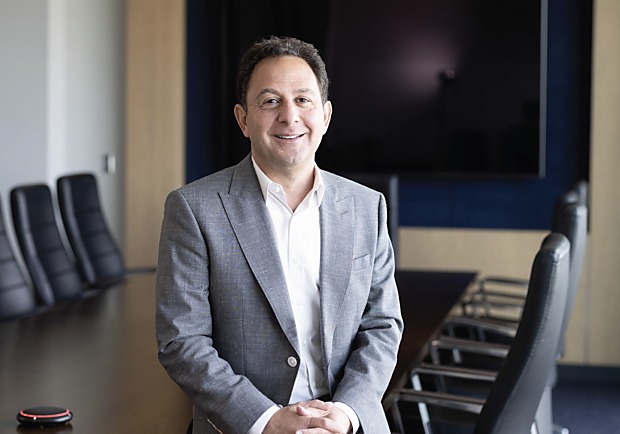
Peter Mallouk is the President and CEO of Creative Planning, one of the largest independent wealth management firms in the country. He hosts Icons and Ideas, candid conversations with the world's leading entrepreneurs, founders and changemakers.
Related episodes
 Ep · 18
Former Psychologist for the Navy SEALs Dr. Eric Potterat: How Elite Performers Train Their Minds
Dr. Eric Potterat · Former Psychologist for the Navy SEALs
 Ep · 17
70th Secretary of State Mike Pompeo: Iran, China, NATO and U.S. Foreign Policy
Mike Pompeo · 70th Secretary of State
 Ep · 16
Dimensional Founder David Booth: Investing, Market Uncertainty and True Wealth
David Booth · Dimensional Founder