Crypto, AI and the Shifts Impacting How We Invest
Rick Wurster — CEO, Schwab
Question
How are AI, crypto and demographic shifts changing the future of investing?
Answer
Rick Wurster explains how technology, digital assets and evolving investor behavior are transforming wealth management and financial advice.
Explanation
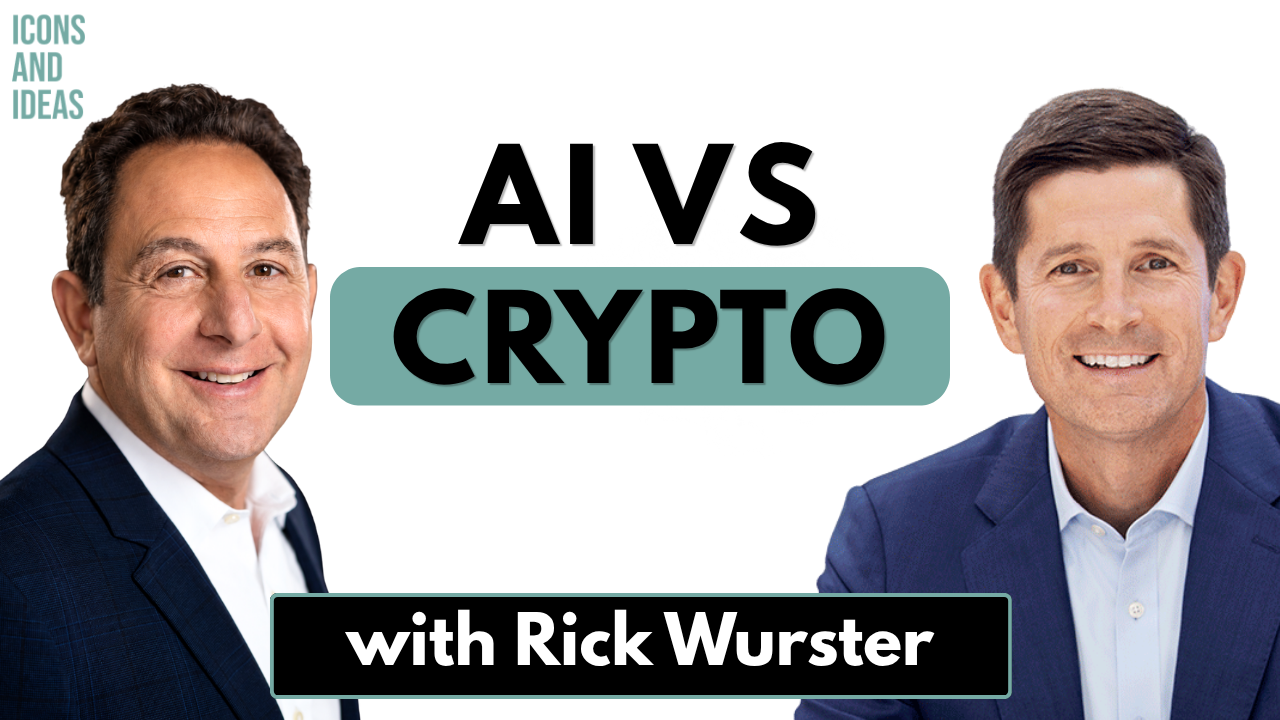
In this episode of Icons and Ideas, Peter Mallouk talks with Schwab CEO Rick Wurster about AI, cryptocurrency, innovation and the future of investing.
What You'll Learn
- Why AI will transform investing and financial advice without replacing human advisors
- Charles Schwab's strategy for Bitcoin, Ethereum, stablecoins and digital assets
- How Gen Z investors are changing investing, wealth management and financial markets
- Why convenience, innovation and client-first thinking are shaping the future of financial services
Timestamps
Key Takeaways
- AI will make financial advice more efficient, but trust, relationships and human judgment will remain essential.
- Digital assets are becoming an important part of the investing landscape, even as their long-term future remains uncertain.
- Younger investors are entering the markets earlier than ever, driving innovation across financial services.
- Firms that simplify investing while putting clients first will continue to lead the future of wealth management.
Transcript
Peter Mallouk — 0:05
Almost 30 million Americans have an account at Charles Schwab. It’s a company that you don’t have to be in financial services or an investor to be aware of, one of the most prominent names of any corporation in America. I’m sitting here today with the CEO of Charles Schwab, Rick Wurster. He took over the seat a little over a year ago and has not been shy about putting his mark on the entire industry. Thanks for being with me.
Rick Wurster — 0:31
Peter, it’s a pleasure and an honor to be on your program. Thank you.
Peter Mallouk — 0:35
Well, first, you did so much in the first year. Recap for me what your initiatives were and what momentum you plan to carry forward going into the new year?
Rick Wurster — 0:44
Yeah. Thanks, Peter. The biggest thing was just to make sure we continue to emphasize putting the client at the forefront of everything we do, whether it’s one of the 16,000 RAS that we serve, or one of the individual retail investors or a client through our workplace business, we always want to make sure the client’s at the center of everything we do. So we continued that in 2025, did a lot on that front in terms of innovating and making things easier for our clients. Hopefully you saw that in your business. So that remains at the forefront, just putting the client first and doing everything we can for them.
Peter Mallouk — 1:17
And I think a lot of probably our listeners don’t understand that half your business or more is retail, right? Where the average anybody can come in, do business with Charles Schwab, and then you also serve firms like Creative Planning that have clients that have accounts
Rick Wurster — 1:31
At Charles Schwab, yeah, we have three parts of our business. We have our advisor business. We serve 16,000 advisors all across the country that are in their local communities, and serving individual individuals and bringing independent advice to those clients, like Creative Planning, which has been arguably one of, if not the most successful RAs in the country. We have a second business where individuals all across our country can operate with Charles Schwab in a more independent way, in terms of being self-directed investors, or wanting to work with someone in one of our branches, and that’s a really large and important part of our business. And then the third part is we support employers, so we have a retirement plan business, and we support the stock plan capabilities at a lot of public companies.
Peter Mallouk — 2:22
So, when you watch CNBC now, Fox Business now, they’re big on themes, all of these themes in finance. What do you see from your seat running one of the most ubiquitous companies in financial services? What do you see as the key themes going forward?
Rick Wurster — 2:39
There’s four themes I see in our industry. Number one is what I call a bull market for convenience. And I think you see that bull market for convenience in every aspect of our lives. For me, I need to order something that comes in a brown box and shows up on my doorstep. If I’m ordering food or even getting groceries, it’s showing up at my doorstep. In everything we do, I think people are looking for convenience, and our industry is no different. The average person in our country that’s 50 years or older has more than seven financial services relationships in their life. I think one of the great things about Creative Planning and the independent advisory community is I think you’ve leaned into that theme strongly for many years. The great thing you work with Creative Planning, you have one relationship that matters. You’re going to take care of someone’s trust and take care of their taxes. You’re going to handle their financial planning, their investing. That makes it really easy on a client. I don’t think there’s any end in sight for people wanting more ease, which is great for independent.
Peter Mallouk — 3:41
I agree with that theme. I think that, like, as you look at people just have put a premium on their time. They just, they don’t want to deal with anything that they don’t have to deal with, and they’re really willing to trade money for minutes all the time. And it’s this new awareness, I think, and the world’s become more complex. I mean, nothing’s as easy as it used to be. And so I think you see people yearning for simplicity for that reason too. I couldn’t agree more with that.
Rick Wurster — 4:07
And I think it’s likely to continue. A second theme that has really emerged is the role of the young investor. Young investors are getting engaged in markets far earlier than prior generations, and that’s having a big impact on markets, because they’re investing in different ways. I think they’ve been part of what’s driven the rise of digital assets. Certainly, they’re a big part of the prediction markets, which are gaining a lot of attention. So meeting the needs of the young investor has never been more important. The third thing we see is the role of AI. I think that AI is going to impact our markets in big ways. Information will be easier to come by, and so we really think the individual will continue to have a really important role in advising individuals and helping them, but it’s going to elevate what they need to bring to the client, because there’s going to be so much information readily available that makes it easier on the individual. So I think AI will play a role, and then we’ll see what happens with digital assets. That might be the fourth theme I would highlight in that if you told me digital assets 10 years from now had taken over everything, and everything was on the blockchain, and Bitcoin was a million dollars, I would say, OK, that’s possible. And if you told me nothing’s on the blockchain and Bitcoin’s worthless, I would say, well, that’s possible too. And so I think what happens with digital assets is potentially a big driver, a big theme in our industry.
Peter Mallouk — 5:33
Those themes are interesting. I did not expect you to say the prediction markets, which I think is fascinating, but, I mean, that’s getting more and more attention. How do you see that? I mean, hearing that tied to investing, tell me more about how you or Schwab is actually thinking about this. Is this a space you can see yourself entering?
Rick Wurster — 5:50
I break prediction markets into three components. First, there’s the information you get by being able to see the odds of events happening. And so I think it’s great for the general public to be able to see what’s the probability of a certain individual winning an election, or of the employment report being hot or cold. So there you get these odds, or you get to see really clearly what the truth is, or where people are voting on where things can be. And I think that’s better than polling. And so I think for us, we’d love to be able to provide that information to our advisors and on our website, so that people have access to those probabilities. And that’s something at some point we may do.
The second role I see for prediction markets is there are prediction markets that are tied to investing, where you could take a position on what’s happening in the employment report, inflation report, the election. Those things are tied, it could be tied to your portfolio. And so if you wanted a hedge or an accentuated position, I could see the role of prediction markets in financial markets.
Peter Mallouk — 6:52
So this seems like something you’ve thought a lot about, and that maybe is moving its way down the field. This would be, I could go into my Schwab account, maybe, and then go and I can actually see not just stocks, bonds, I can see the prediction markets and potentially invest, potentially.
Rick Wurster — 7:08
Here I want to draw a distinction. The third role I see for prediction markets is sports gambling, right? And what’s interesting about that is that if you actually look at the volume in the areas of what people call prediction markets, it’s 90% plus sports gambling. So the distinction for us, those first two things, I think we could get our arms around: providing to our clients the probabilities of events happening, and then events that are tied to financial markets.
The third one, sports gambling, which is where all the interest is today, 90% plus, is counter to our mission. Our mission, whether we work through an advisor, through an employer or through an individual, we want the client to live their best financial life, and getting them enrolled in sports gambling, right, it’s the opposite of that. We know that less than 5% of people that put money into a sports gambling app pull out more money than they put in.
Peter Mallouk — 8:21
I can’t believe it’s that high, for real.
Rick Wurster — 8:23
Well, to me, it’s fine if you treat it as entertainment, right? You go out to dinner, you end up with less money in your pocket, and you enjoy dinner, and you had a good time, right? If you treat it that way, fine, but we don’t want it thought of as, “Hey, I’m going to make money doing this,” right? Because you make money owning stocks. You make money owning bonds, probably not in betting on a sports game.
Peter Mallouk — 8:21
Well, one of the trends that you brought up was with the Digital Trends, yeah, and more and more people wanting to invest in digital assets. Directionally, where do you see Schwab headed with all of this?
Rick Wurster — 8:32
So I’d love to get your take on digital assets. Our view is that there is client demand for it. We think we’re meeting a lot of that client demand today through ETFs, closed-end funds, futures products that we have, so clients are getting access to it if they really want it.
We also hear from some clients that they would love to own spot crypto, right? And in particular, our retail clients that hold most of their assets here, but have some at Coinbase, or some at one of the other crypto firms, they would love to hold their positions here, and we want to allow them to do that. So we will launch this year Bitcoin and Ethereum and make that available to our clients, and add capabilities over time, and add it to what we offer to advisors over time as well. But it’ll be really fascinating to see how this area plays out. I don’t know if you’re wanting to share how you all are thinking about it.
Peter Mallouk — 9:28
So, my people at my firm, Creative Planning, have very different opinions, but my opinion is that you as a financial services firm have to offer these products, because they’re considered investments by people, and nobody knows with certainty, like you said earlier, what’s going to happen. If you told me Bitcoin was 10x, I wouldn’t be shocked. If you told me it was zero, I wouldn’t be shocked either, right? But you could also say that about a lot of startups, right? And people still want the ability to invest in small companies and micro cap companies. You can’t decide not be in that space. I just put it in the speculative category. But this speculation is still in the realm of the investor world. There’s a difference between offering it, which I think Charles Schwab should be doing, and recommending somebody have a large allocation to it, which I would say we should not at Creative Planning be doing.
Rick Wurster — 10:17
Yeah, it sounds like we’re incredibly philosophically aligned on this. What you just said, I believe exactly. And we are not going to recommend it. So we have recommended asset allocations that we put out publicly for, “Here’s what a reasonable asset allocation mix looks like.” We’re not going to put it in those recommendations, but we’re going to make it available for the client that wants to speculate in it. Because, like you just said, I think perfectly, we don’t want to judge, or make a decision about what clients should invest in. We want to make it available to them. They can choose.
Peter Mallouk — 10:48
That’s right. If a client asks for it, we never say no, right? But we’re not going to say, “Hey, we need to have 6% in cryptocurrency.” So I think we are very much aligned.
A big part of Creative Planning is we custody so much of our client assets at Schwab and have for so long. And you have a program that you referenced earlier where you refer to advisors, and I know a lot of advisors follow this podcast, and you recently raised the minimum from 500,000 to 2 million, meaning that if somebody’s working with one of your consultants, that consultant can refer out only if it’s over 2 million. So tell me about the reasoning behind that, how you see how this has been playing out for you in the direction.
Rick Wurster — 11:30
Yeah, sure. Let me start with the advisor network has been an incredibly important part of our ability to delight our retail clients, and the capabilities that folks like yourself, Creative Planning, can bring to those clients are impressive and help the client live their best financial life.
If you come back to our goal, our goal really is for our clients to be as well off in their financial life as they can be. And when a client walks through our door and says, “Hey, I’ve been with you for 10 years. I’ve got a little more money than I thought I might have, and I need a little more help, and here’s what I need,” if the right answer for them is Creative Planning, we’re thrilled to make that introduction, because that’s going to put the client in the best spot that they can be in.
So that’s the number one guiding principle. We always want for our clients what’s going to be best for them.
Number two, in terms of why we raised the minimum, there’s a bunch of reasons, but we really hadn’t touched it since the program started. And if you think about where markets were when the program started, they’ve gone up way more than four times. So raising the minimum from 500,000 to 2 million was, at that point, really in the spirit of aligning it to the original intent of the program. And when you look at the capabilities that you all bring to bear as you go up in wealth, they become even more impactful. And that was the thinking, that for the needs, some of the needs, the 2 million under some, we can keep those and handle them at Schwab. And as you go up in wealth, the expertise that you bring can really make a big difference and help clients live their best financial life.
Peter Mallouk — 13:08
And so, speaking of in house, you do have your own in house program. This is what’s so fascinating about the industry, is people ask, “Who do you work with, and who are your competitors?” And in reality, like, our organizations are friends and cooperating, and sometimes we’re competitors, and I know that’s the case with the 16,000 different firms that custody at Schwab. So how do you see being in the business of advice? Because you obviously have custody, do a lot of things, but you have an in house team that gives advice themselves, right? Kind of run your own RIA, and then you’re also referring to RIAs. How do you navigate all of this?
Rick Wurster — 13:45
Yeah. Well, number one, we do everything we can possibly to support the success of our advisors. Your success is so critically important to us. And whether it’s custody, the platforms we provide, the consulting that we do, the fixed income support that we provide, we want to do everything we can to make your business successful, and the other 16,000 advisors on our platform successful, and that’s at the front of everything we do in terms of navigating relationships.
Putting our advisor network into perspective, we have less than 1% of the advisors that we work with that are in the program, and less than half, about less than half of a percent, about 0.4 of 1% that get a meaningful amount of assets through the program. So the overlap is very small. Maybe I just notice it more than you notice it, because you’ve for a long time been at the top of the list of the advisor program, and so it is a bigger deal.
But in terms of navigating competition, we want to do everything to support you. We try never to directly compete with you. When we find a client that said is, “Hey, we’re talking to Creative Planning,” we stand down, and we want to support you in that regard.
Typically, the program, the way it works is these, the majority of clients have been a Schwab client for a long, long time, and they’re coming to us and asking, “What should I do now that I have more money and I need more help?” And we say, “Well, we’ve got a bunch of options for you. We could handle it internally, or we can refer you out to a partner.” So we just want what’s best for the client. We love being able to work with firms like yourself that bring so much expertise to our clients and help them live their best financial life.
Peter Mallouk — 15:34
How do you think you guys got over 50 million accounts? I mean, just this incredibly dominant brand. What steps along the way do you think, I mean, part of it’s been being a great partner of advisors. Part of it’s being an incredible advocate for the American consumer, fighting the brokerage houses with lower fees. All of these are, but what keys do you think, because you’ve been here a long time, I know you’re a CFA as well, you’ve got a diverse background. How do you think Schwab got to where it is today?
Rick Wurster — 16:02
The key ingredient, to me, is putting clients at the front of everything we do. If you start with that simple premise, just as you’ve done in your business, you’re going to have success.
I think number two, willing to be innovative and disrupt yourselves. And there’s been lots of times in our history where we could have made more money sticking with a certain way of doing business, but we realized that wasn’t the future, and we had to make a change. And so it might have hurt profits, but it was the right thing to do for the industry and for our business. Going away from commissions on equity trades is a good example of that. We made a lot of money doing that, but we felt like it was the right thing for clients and for young investors to remove that final barrier. And so we did it.
And so I think being innovative, but the biggest thing, far and away, is putting our clients front and center of everything we do. I want you and the 16,000 advisors on our platform to feel like Schwab’s a part of my success. And if you feel that way, you’re going to do more business with us. And when you do more business with us, we’re going to grow and benefit from that.
Peter Mallouk — 17:10
That cutting trades to zero, I think, is a great example of that, because obviously that benefited every American, because everyone else had to follow, right, and everyone wasn’t financially capable of following, and it really created separation for you all.
Rick Wurster — 17:24
It did, and you could contend that that’s part of the reason we were able to do the deal with AmeriTrade, because trading economics were a far larger part of their business, and they were a much smaller part of our business. And so we could take the hit in a way that they couldn’t. And that allowed us to come together and create a bigger firm, more at scale, with more capabilities. And AmeriTrade allowed us the ability to work with a whole new set of advisors we hadn’t worked with before, and in our retail business, added a lot of trading expertise that we didn’t have. So that was, I think, a strategic move that has really helped us in our business.
Peter Mallouk — 18:03
So that’s the most fascinating topic for me, but I know for our viewers and listeners, they probably prefer the digital asset discussion. You talked about Bitcoin, Ethereum. What else do you see on the horizon in the digital space?
Rick Wurster — 18:15
Well, I think the big question for us is, what’s going to happen with the blockchain, right? And will the blockchain be a way that people want to engage in markets. You talk to certain folks, and they say this whole industry is going to be on the blockchain in five or 10 years. And then there’s others who say, well, the blockchain doesn’t add that much. It gives you 24 by seven trading, but we have 24 by five trading today, and less than 2% of the trades happen outside of market hours. So maybe that’s not a huge benefit. And then the other benefit people talk about is immediate settlement. And there’s some pros and cons to that. So I think the big thing will be, does blockchain really take off?
The other thing outside of Bitcoin is stablecoins. And I do think that stablecoins will likely have a long-term future and become a bigger part of the way people move money around the world.
Peter Mallouk — 19:06
Just for a person who does nothing about that, how does practice, how is, in a practical sense, does that work?
Rick Wurster — 19:11
Stablecoins? Yeah. The great thing about stablecoins, you can put them in your account. If you need to move money to someone sitting in Germany, Asia, wherever, you can do it with a click of a button. It makes it a lot easier than the current way where you’ve got to wire money. It’s expensive often to wire money internationally. It can be cumbersome. It takes time. Stablecoins just allow things to move seamlessly across the globe. And so it’s an appealing way to move money.
Peter Mallouk — 19:35
So, so many people familiar with all this are younger, and a huge percentage of your clients are under 30 that are opening accounts. Now, walk me through that statistic and what do you think is attracting them to Schwab, and what are you trying to do for them?
Rick Wurster — 19:48
Yeah, about a third of our clients are now new-to-firm clients last year were Gen Zers, which is ages 13 to 28, a third. So a lot of young investors are getting invested earlier, which is great to see. And the reason we’re winning with them is because I think the young investors that like working with Schwab have something in common with our broader investor base, and that is they want to do as well as they can in their financial life, and they want the right platform, the right support, the right research education, in order to make the right decisions, to get invested in the best way for their future.
And not every investment firm catering to young individuals is doing that. Often they’re trying to generate transactions. They’re putting their own interests at the forefront, rather than the young investor’s. And so I think that’s a big part of why we’re winning and who we’re winning.
We also go to where they are. I love following your social media presence. You have a lot of insightful things that you put out there. We’re big on social media as well. We’re actually the most followed firm on YouTube.
Peter Mallouk — 21:28
Wow.
Rick Wurster — 21:29
Most followed financial services firm, yeah. Who knew Schwab was hip with the YouTubers? And we’re big on, we’re growing our presence on TikTok and Instagram, and we do somewhat crazy things like go and participate on gaming sites with gamers, and talk about, while we’re gaming with the professional gamer, we’ll talk about financial markets, and we’ll talk about saving and investing. So it just allows us to get out there to a new audience and talk to them about being an investor.
Peter Mallouk — 21:28
That’s fascinating to me. And these new investors are driven so much by digital, crypto prediction markets, all these things that you’re starting to offer.
One of the things you brought up at the top was AI, which shook our industry over the last couple weeks, as the markets really are trying to figure out, is AI going to help firms like Charles Schwab and Creative Planning and everybody else, or is it going to hurt them, or is there some separation of who’s going to do well and who’s not? How do you see AI coming into play here for Charles Schwab?
Rick Wurster — 22:00
Well, I’ll share my thoughts, and you’ve got to be close to this and have a view too. But I think that investing can be an emotional thing. Passing along money is an emotional thing. Talking to your family about your wealth and what you want to do with it, and how you want your kids to be able to access it, all of those things go beyond what AI is likely to solve for.
That said, I think AI can play a really important role in the wealth management business. We’re already working with wealth.com to help deliver trusts and estates to our clients that need that work. I think it’ll be big in a tax base. I think it’ll allow, I think it’ll be able to deliver basic advice to clients. And we are working on creating all of these things, like avatars.
I think agentic AI, you’ll be able to call in and have a discussion with an agentic advisor that will be able to answer questions for you and move you along in your financial life.
I don’t think, though, that that’s going to replace the role of people. Because I do think, particularly as you go up the wealth spectrum, these are complex emotional decisions that people are making. And even getting all that information from some kind of agentic experience, people ultimately, I think, like looking someone in the eye and saying, “What do I do?” And that’s the value of what you all bring to the table. And I think you’ll be aided in the future by AI, but I don’t think it will replace the role of the advisor.
Peter Mallouk — 23:41
So at Charles Schwab, you see a world where you call in, you’re talking to an AI agent that’s basically answering most of your questions for you. If it gets more complex, you work your way
Rick Wurster — 23:51
Absolutely. We have partnered with a firm to build an agentic capability. I saw a demo of it last week.
Peter Mallouk — 23:58
How far along was it?
Rick Wurster — 24:00
It was much stronger than I thought it’d be, given the amount of time that we’ve put into it. But a client called in. This isn’t a pilot, a client can’t do this today, but a client called in and had some basic questions, and they were able to have a conversation about that, then transitioned to their retirement goals and had discussion about what their lifelong goals were, and this agentic experience was able to create it just like a person could.
So there’s no question AI is going to play a powerful role here, and there will be an efficiency component to that, and there will be some clients that may gravitate towards just an agentic experience, much like 10 years ago when robo investing came along. There were some clients that preferred robo. But in the big thick of things, look at what’s happened since robo investing came along. It grew at a nice pace, but the independent advisor community has way outgrown the robo investing community. So I continue to think the role of the person is going to be invaluable, just like when you go to the doctor. All that information is online, but you sure like having that doctor telling you what you need to do.
Peter Mallouk — 25:07
Yeah, I agree. I think we’re going to see AI help the consumers and help all of us do business more efficiently, lower the error rate, make things a little faster and easier. And then there will be full AI operating firms that, just like the robos, some people will be attracted to that, or some variant of that in the spectrum, and there will always be a home for in person professional sitting with a couple or a person or a family. But it’s going to be, I think the difference between this and the internet coming on board is this velocity of this is just stunning. I mean, the speed with which change is coming is fascinating.
Rick Wurster — 25:46
I totally agree. I’ve never seen something move this fast. And I completely agree, it really is mind blowing how quickly things are going.
Peter Mallouk — 25:58
I mean, it’s impossible to predict four years from now, right? 15 or 20.
So speaking of things moving fast, Schwab is growing fast. Earnings doing well. You’re projecting 10% growth. What do you think helps achieve that? And what do you see as potential threats on the horizon?
Rick Wurster — 26:16
I think what helps us is delivering for the clients. We nail it every day for you and the everyday interactions. Those, what we call Brilliant Basics, are critical.
We’ve got to drive scale and efficiency in our business, so that your interactions with us are as easy as possible, so that our retail clients, their interactions are seamless. It comes back to the bull market for convenience. The more efficient we make your experiences, the individual’s experiences, the better for you and for us.
I think we’ve got to use the gains we can drive in efficiency to invest in our growth. So investing in our growth will be a big part of our future. And that’s investing in local relationships, investing in more capabilities to support advisors in different ways, investing in AI is a big area of emphasis for us, whole team dedicated to that.
We do lots of people, and we want to support what we’re doing daily and how we support you. And we also potentially would love to be able to offer the technology into your business that you need, because you may be able to, given the size of your firm, be able to manage some of the needs related to AI, but not every advisor will be able to do that, and we want to be able to help make that technology available. So we’ve got a very exciting agenda for 2026, lots going on.
Peter Mallouk — 27:31
You didn’t mess around in 2025. I mean, you did a lot of things.
Rick Wurster — 27:34
2026, we’ll launch spot crypto. We’ll get some AI deliverables out there. It’ll be exciting. We’ll open a bunch of new branches to support local investors in our retail business, and we’re doing a lot to make, hopefully, your lives easier at Creative and our other advisors. So it’s going to be a busy year.
Peter Mallouk — 27:52
Well, you’re one of the busiest people in the business, and I get the opportunity to meet with you every now and then, but I appreciate you carving out extra time for this.
Rick Wurster — 27:58
The pleasure is all mine, and it’s an honor to serve Creative Planning. And I can’t tell you how much I admire how much you’ve grown and how much you’ve done to make your clients live their best financial life. When you think about the roles we get to play and the way we touch people and families, it gets you up out of bed early, because we really do make a difference. And I know you see it every day in your business, and we do as well. So we’re thrilled to be in partnership with you, and look forward to continuing to support all your success.
Peter Mallouk — 28:25
We share the same sentiment. Thank you, Rick.
Rick Wurster — 28:27
Yeah. Thanks, Peter.
Disclosure
Investing in stock markets involves the risk of loss. Rankings and/or recognition by unaffiliated rating services and/or publications should not be construed by a client or prospective client as a guarantee that he/she will experience a certain level of results if Creative Planning is engaged, or continues to be engaged, to provide investment advisory services. For additional disclosures, visit https://creativeplanning.com/important-disclosure-information/.
Who's in this episode
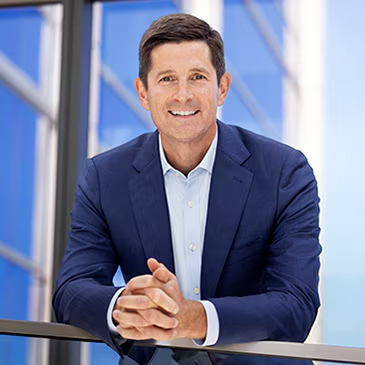
Rick Wurster
CEO, Schwab
Rick Wurster is the President and Chief Executive Officer of Charles Schwab, one of the world's largest financial services firms, serving more than 30 million client accounts. Since becoming CEO, he has focused on expanding innovation, improving the client experience, embracing artificial intelligence and preparing Schwab for the future of digital assets, wealth management and financial advice. Before becoming CEO, Rick held numerous leadership roles across Schwab's investment, trading and wealth management businesses.
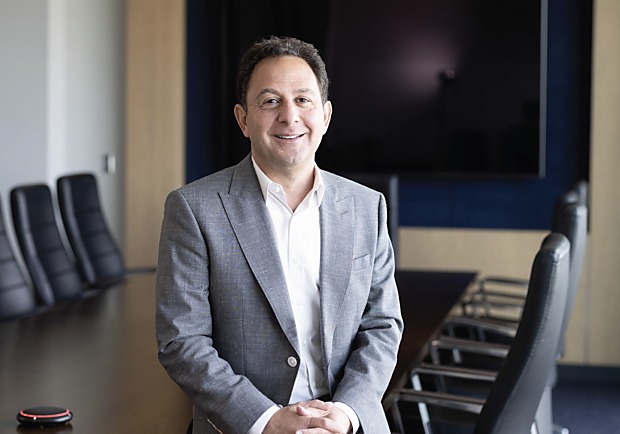
Peter Mallouk
President & CEO, Creative Planning
Peter Mallouk is the President and CEO of Creative Planning, one of the largest independent wealth management firms in the country. He hosts Icons and Ideas, candid conversations with the world's leading entrepreneurs, founders and changemakers.
Related episodes
 Ep · 18
Former Psychologist for the Navy SEALs Dr. Eric Potterat: How Elite Performers Train Their Minds
Dr. Eric Potterat · Former Psychologist for the Navy SEALs
 Ep · 17
70th Secretary of State Mike Pompeo: Iran, China, NATO and U.S. Foreign Policy
Mike Pompeo · 70th Secretary of State
 Ep · 16
Dimensional Founder David Booth: Investing, Market Uncertainty and True Wealth
David Booth · Dimensional Founder