Unshakeable Impact, Transforming Lives and Building Legacies
Tony Robbins — World-Renowned Entrepreneur, Bestselling Author, Philanthropist, Business Strategist and Peak Performance Expert
Question
What mindset creates lasting success, wealth and fulfillment?
Answer
Tony Robbins argues that beliefs, identity and emotional mastery play a greater role in success than talent or circumstances alone.
Explanation
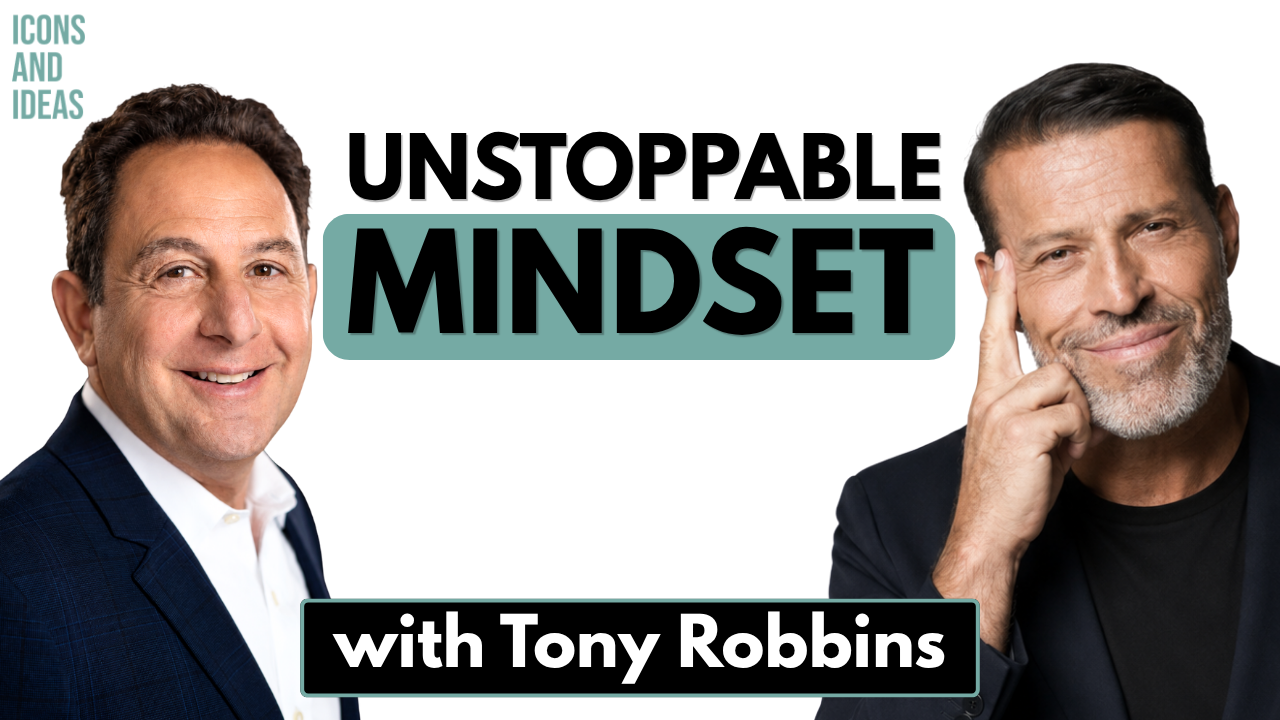
In this episode of Icons and Ideas, Peter Mallouk talks with Tony Robbins about success, money, AI, personal growth and peak performance.
What You'll Learn
- Why your beliefs, emotions and identity determine your success more than talent
- The investing principles Tony learned from Ray Dalio, Jack Bogle, Paul Tudor Jones and other financial legends
- How AI will reshape careers, business and the future of work
- The daily mindset shifts that create lasting happiness, wealth and fulfillment
Timestamps
Key Takeaways
- Your identity and beliefs influence every decision more than your circumstances.
- Long-term wealth comes from smart asset allocation, disciplined investing and continuous learning.
- AI won't simply replace jobs. People who learn to use AI will outperform those who ignore it.
- Lasting fulfillment comes from contribution, gratitude, growth and creating value for others.
Transcript
All right guys,(...) take it away, action. Let me tell you a story about my guest today. He's probably not even gonna remember this because it happens to him all the time, but we were traveling together for a book that we written together called "Unshakeable" and I was on his plane. We landed in the airport in New York and a pilot came across the tarmac and said, "Tony, Tony, Tony, I wanted to tell you "that you changed my life. "I was going through this hard time "and I was listening to your tapes, reading your books, "and turned my entire life around."(...) And Tony took some time with this person, went inside and thought, "How neat that is "that that happens to this guy every now and then." But then we went to,(...) we were at Bloomberg, we were in a waiting room waiting to go on set and a famous author went up to Tony and said, "You totally changed my wife's life "and had this whole conversation about the impact "that Tony had had on their lives."
(...)
Tony took some time with him as well. I thought, "Wow, twice in one day." So we're going to dinner that night, we're all at dinner, and a woman comes over and says, "I'm sorry to interrupt. "I know people bother you all the time, "but I gotta tell you, I was going through "all of these different things." And again, Tony took some time with her. I remember going home after that 24-hour period with Tony and telling my wife Veronica, I go, "I don't know who else on Earth I could have been with "that would have had that many people come up to them "and with tears in their eyes, have personal connection "and talk about the impact, the trajectory "that he had on their lives." I had a good friend and his son was suicidal.
(...)
And he told me the story about him and his wife would take turns sitting by their son's bed because they were so worried about their son and they'd gotten the best therapy that you could possibly get. But the husband needed a break and he wanted to go to one of Tony Robbins' events.(...) And the wife said, "That's fine, I'll stay." And the son said, "You know what, I'm gonna go with you." And the son came back from the event and stopped going to therapy, went back into school, here we are, it's eight or nine years later, college educated in the workforce.(...) I mean, the impact is real and I mean, it's really sort of hard to overstate it. And the other thing that I'll say about Tony is in most businesses you can say, well, this is who's number one at this. And you can look at almost anything, the number one radio station, the number one musician, the number one politician.
(...)
In Tony Robbins' space, who's number two? And what space are we even talking about? Are we talking about best practices, business coaching,
(...)
health and the best selling book? He's written about that and all the initiatives he has around healthcare and advancements. Are we talking about finance? He's written the best selling books of this century(...) on finance, it's really hard to categorize him. I am incredibly excited to be with you today, Tony. Thanks for taking the time. I'm on a ground winner's action, thank you, brother. So great to be with you. You know, my respect for you is through the roof. You don't have to do any things you do at this stage in your life, you built the most successful investment business, independent business in the world, I think, it's certainly United States, 350 billion. I've been on part of that journey with you. And I tell people,(...) my experience of you, which is you don't have to do a damn thing when you are constantly out there educating people. One, you show people the answers and I just have so much respect for you because you care so much. And you also built the business that, second to none in my opinion, and not just my opinion, Bloomberg, everybody has given you those kind of accolades because you didn't just say, how can I provide these investments? You'd be, how do I holistically provide everything? How do I bring in the legal, the accounting, all this? And do it at a price point, no one else is doing it. So I'm just really proud to have you as a friend and I can't thank you enough that, yeah, I do remember that day, those are my days fortune. That's outside my wife and my family, that's the greatest gift of my life is getting every day to having half dozen or more people come and share with
me how their life's changed. So that's nice that you got to see that. I didn't even realize you took that in. Oh, thank you, thank you. Now you have a, I gotta start with your inception story. I know you've shared a little bit. You have an inception story, it's kind of a superhero inception story. What does it tell you about emotional needs, the human state, what did you learn from your upbringing that has influenced what's happened today? Well, I had four different fathers. They were all good men, but they were all financially challenged. And my mom was a beautiful soul. She's the most loving human being you could imagine. And I wouldn't be who I am today without her. She's since passed. However, when she drank alcohol and prescription drugs, because she was always stressed,(...) a lot of anxiety in her and stress, and she got very violent.
So, she made me really, you know, a therapist, if you would. She made me kind of a practical therapist. I had to figure out in the real moment how to change her emotional states. Because I have a brother five years younger and I have a sister seven years younger and I needed to protect them.(...) So, I took some physical experiences until I got smart and learned how to change. And boy, I think what I learned was that, you know, human emotion, a lot of us think it's our intellect, but it's emotion that moves everything.(...) It's an emotion that starts a war. Isn't it a pragmatic thing that starts war, right? It's an emotion that gets you married or divorced. It's an emotion that makes kids show up, right?
You know, and most of us, I don't think really have learned to master it. So many people in the world talk about being stressed all the time and they've just missed having building an emotional fitness. I hear so much about mental health today and so many people talking about self-care. And there's nothing wrong with taking yourself. I think it's an important thing. But the more you focus on yourself, the weaker you become.
(...)
And so it's like if you look at the greatest generations, they're the ones that were challenged at the highest level. What we call the great generation, the one that was born in 1910, we just won World War I and they thought they were going to have the greatest life because they're in the middle of the roaring 20s when they're teenagers. And then 29 hits and what happens? You know, they didn't get a--and all this technology like now is happening. Cars, you know, planes, you know, music, all this stuff is happening. And they thought they were going to go party. They were the flappers. They were the kids everybody looked down on. And then, boom, overnight they had to deal with the depression. People jumping out of buildings, the Midwest, you know, the dust storms. And then after 10 years of depression, they make it to 29. And what happens to the man? World War II, right? It looks like we're going to lose that thing. And those people who were so weak became challenged. And so we need more challenge to our lives. We need new beliefs about who we are. And the way you get those beliefs is by new experiences. But we live in a very pampered stage, at least our children do for sure, and that's not their fault. But like they can pick up a phone and get the answer to any question they ever thought of in humanity. They can dictate something, have it turned into a product, a vibe code, you know, instantaneously. They can have 100 million songs for $10 a month. You and I, remember we paid $16 for like 12 songs, right? So I learned a lot. And it changed my life, I think what you're alluding to was when I was 11 years old,(...) forefather, no money, I'd say no money, no food. We had crackers and peanut butter, but it was Thanksgiving.(...) So it makes it really intense. We're not having a turkey dinner, right? And everybody else is having one.
(...)
And my dad and mom were screaming at each other. We had this little house, but my mom had this room and she'd close the door. My dad would scream it out through the door and she'd yell at him about what a loser he was and how he didn't take care of his family and just stuff he can't take back, unfortunately.(...) And then there's a knock on the door and I opened the door and there's this tall guy standing there with two bags of groceries, one in each arm. And then he had an uncooked turkey on the ground, frozen.(...) And he goes, "Is your father here?" And I'm like, just one moment. I was like, this is like Santa Claus showed up, right? So I go to get my dad. He goes, "You answer." I said, "No, it's for you, dad." And I'm waiting there, like, beaded breath, so excited to see his face and think like, this is the gift from God. And he got angry when he saw the guy.(...) He said, "We don't take charity." And he went to slam the door. I mean, this man had both these groceries and he had leaned in and hit his shoulder,(...) bounced open again, which didn't make my dad very happy. And I said, "Sir, sir, I'm just the delivery guy." He said, "Look, somebody knows you're having a tough time. Everybody has tough times. They want your family to have a great Thanksgiving."
(...)
My dad said, "We don't take charity." He went to push again. But because the guy had bounced him there, his foot then got in the way and it backed open again. So now my father's really animated. And then the guy said something. I thought my dad was going to punch him in the face. He wasn't trying to be mean. He didn't say it harshly, but he looked at my father and he said, "Sir," because he saw me and he just head towards me. He said, "Don't make your family suffer because of your ego."
(...)
And my dad, I mean, never forget the veins inside of his neck. He was deep red. I thought he was going to punch him. And then there was this moment where I'll never forget his shoulders just dropped.(...) He took the bags of food, threw it on the table and he slammed the door and didn't even say thank you.(...) And I was shocked. I didn't know what to think. I was like, "Why isn't he happy? What's going on here?" And it took me years to figure it out, but it became a gift in my life because my father left shortly thereafter. It was, to me, I thought the worst day of my life. It became the best day in many ways. One reason was that there's three decisions we're making every moment in our life. Your viewers or listeners are experiencing it right now. You and I are experiencing it. Every moment. You don't do it consciously most of the time. You have to decide what to focus on. You can focus on what your next question is.
You can focus on what I'm saying. You can focus on what are you going to have for lunch? You can focus on how does this relate to my life?
(...)
We don't experience life.(...) We experience the life we focus on.(...) And what's wrong is always available, so is what's right. Whatever you focus on, that's going to be your life. But the minute you focus on something, the second decision your brain makes is what does this mean? It has to make a decision. Does this mean the end or the beginning? Does this mean this person is dissing me? Are they challenging me? Are they coaching me? Are they loving on me?
(...)
Whatever your answer is, the meaning produces emotion. And as I said, emotion produces your actions. Or the third decision, which is what am I going to do?(...) If you're angry, you're going to do something very different than if you're feeling grateful, obviously, or excited or loved. And so I looked at that a few years later. I was like, that's what happened that day. My father focused on how he had not fed his family. It was obvious. He said it over and over again, muttering it. And the meaning he gave it was the worst part because he said,(...) therefore I'm worthless.(...) And he decided to leave.
(...)
And the only difference in me, I wasn't any better. I was just fortunate, I guess. My brain focused on it was food, like what a concept. But the thing that changed my whole life, Peter, was the idea that this means strangers care because my father, we grew up in an environment I thought was a wealthy community and we were poor, but it was a lower middle class community and we were really poor. We were on the other side of railroad tracks, quite literally.(...) And it didn't look like anybody cared. Everybody treated you like crap.
(...)
And all of a sudden I'm looking at this and saying, somebody delivered food for my family an entire dinner and they don't even want credit. I don't even know who it is to this day. I don't know who did it.(...) And think of what that would
mean. So in that day, I was like, I made a decision. My decision was someday I'm going to do this for two families. I'm going to pay this forward. I was just 11. So when I was 17, I fed two families and I'm bored with all the details. But the experience was so moving. One of the families,(...) his Hispanic family, he didn't speak English. I had written this note for him. I had it in Spanish too. I went as the delivery boy because I wanted to see it, not to be thanked.(...) And long story short,(...) these four kids, this one with the four kids, her husband had just left three days before with no money and no food. And I show up with all these groceries and they saw the pumpkin pie. They went a little crazy. It was just, it was one emotional experience. So the next year I did four and then eight and then I got to a million people and then eventually two million. And then about 12 years ago, when we were working together, I decided, you know, I called my office because I saw so many people still suffering. And I said, how many people have I fed in my lifetime? And I said, 42 million. I was like, wow, that's pretty cool. But I thought, what if I've scaled businesses, what if I scaled my philanthropy? What if I did as much in one year as I've done in my whole life? What if I did 50 million meals in a year? And I was like, what if I did 100 million a year? I went up to 100 million a year for 10 years and did a billion meals. And I wrote Money Master the Game, which is how we met. And I donated all that money and I started that.
And then I'm proud to tell you, I did it in eight years. And now I'm doing 100 million meal challenge because the issues around the world are much larger. And when I came up with it, I got Governor Beasley, who was the head of the World Food Program, he was on a partner, he left the U.N. because of all the bureaucracy. And I said, we're going to feed people no one else does. Like in Sudan, there were a million people just recently surrounded by rebels and they were cutting them off from food, men, women and children. MBS from Saudi Arabia provided money. U.N. provided money. They killed the drivers, took the food. So no one would give any money. So I said, I'll provide a million people food for a week. Cool match. And a bunch of people stepped up, we had about 40 million. But how are you going to get the food in? I said, we're going to hire some military contractors to fly C-130s in and we're going to use drones and deliver it. And we delivered 22,000 meals to people who are starving. Anyway, we're doing the same thing in Gaza. Last night I got a video of what we're doing in Gaza. But we've delivered 62 billion meals in three years. And no one thought these numbers could ever be done in 10 years. So I've learned that if you understand how to harness human emotion, not let human emotion stop you, if you understand human needs at a different level, there's nothing you can't do. You can build a business, you can build philanthropy, you can have an extraordinary life. That's incredible. So it's all about beliefs. What one belief do you think would, if change, would most improve people's quality of life? I think most people, there's several. You know, a lot of people are trying to be perfect, they're afraid to fail. But I think the biggest belief that I hear is comes from like the therapy world that I think it's sunk into people's heads, which is I'm here today because of something that happened in my past, that my past equals my future, that my biography is my destiny. And it's total bullshit. You and I both know you can have pretty rough background and you can make new decisions. And the decisions control your life, not the past. The past can be a trigger, the past can be a filter, the past can feel heavy. But you can change that. You can make a decision right now, change it all. I always tell people, it's like, you don't let your body change it. You don't let your relationship change it. You don't let your business change it. If you're going to change your relationship, I'm going to change you first or you'll take the same person along with you, right? But it's like all you have to do is decide. Decision is the power that everyone's given. We are a given choice.(...) I always tell people, it's like, why are people so stressed?(...) Everybody I know, I mean, how many of your friends talk about being stressed? I'm curious. It's a very big topic of conversation for everybody. Everybody. It doesn't matter how much money they have, doesn't matter how much business they have, doesn't matter how successful. So stressed. I'm like, why are people stressed? Are you going to try and tell me that it's more stressful today than the dark ages or I want a tiger chasing you? Come on. The reason we're stressed is because most of us have fallen into managing what we have.(...) And that's a survival technique.(...) Managing what we have, keeping what you have. Make a living instead of design a life. And when you do that, we're not made to maintain. We're not made to just manage, to be here and then die.
(...)
We were created by a creator, I believe, something. And whatever you believe spiritually, you don't have to be religious to say something created me. And we were given the power to create. And when you're creating, all that stress and anxiety disappears because it's no longer about you. You're about bringing something to the world instead of what am I going to get or what I'm going to hang on to. That puts you in scarcity. We both have people who've got 10-figure net worth plus and who are still living in scarcity.(...) And it's like, and you know people who have nothing that feel like they have abundance. I remember I asked Sir John Templeton, we came to Sir at the end, I got to interview him when I was 30 and then I interviewed him in, I think it was 2008, like two weeks before he died. And I'd
asked him, I said, "What is the secret to wealth?"(...) And he goes, "It's what you teach." I said, "Well, I teach a lot of things. Which thing?" He said, "It's gratitude." He said, "Tony, if somebody's got a billion dollars but they're pissed off every day or frustrated,(...) their life is pissed off and frustrated." He said, "If you have three perfect children, you've got a beautiful husband, a beautiful wife, but you're living in worry all the time, your life is worry."(...) He said, "Gratitude is the secret to wealth." And he said, "The second thing is tithing, by the way." He said, "I've never met anybody, and I've experienced this myself, who didn't tithe at least 10 percent. It doesn't have to be the church.
There's something outside yourself who did it for at least a decade who didn't become incredibly wealthy." And I did, I've done 17 percent for the last 12 years, which just, I had a couple of big things I succeeded in and did some nice pieces, and I've been blessed at a level that's completely totally insane. Insane.
(...)
It's fascinating because I see with our clients, the people that give the most,(...) they're the happiest. We'll have it out. They usually start doing it because they feel like they need to give back and then they stretch themselves to give back and it's hard to part ways of the money and then they become addicted to the giving. And they feel lighter to me than other folks. Well, there's, you know, these studious now to see what actually creates lasting pleasure in your body because they can take, you know, your saliva and they can see what's happening to your hormones and they can take your blood, but they can do it just for your saliva today. And I remember I was reading a study when I was doing Money Master the Game. If things will give you a certain amount of pleasure, but the lasting period of pleasure declines pretty quickly, doesn't mean you can't have the things you want. Of course you can. But experiences, those have a much lasting effect. But the one that's the most is contribution. And it's not even just the people you know. A person standing in line at Starbucks who says, "I'm going to buy the next ten people their coffees who don't even know I am. I don't give a damn. The level of surprise in people and the joy they get, actually they found had a longer lasting effect for something that wasn't that expensive. It was the creativity of the giving. It was the spontaneity of that element. It was the surprise of that element. And biochemically it's even more. I actually was doing an interview with someone yesterday, this very wealthy guy, and he succeeded everything except you can clear he's not fulfilled.
(...)
You know, he's talking about, "You know, I know I've done it. I've helped lots of people." He goes, "You know, and I talked to some of my friends and they're very wealthy and they say contribute, so I wrote these checks. And I just felt four million dollars cheaper." Or whatever. Like, "I have four million dollars less money." I said, "Well, what did you donate to?" He goes, "Well, kids after school." I said, "We don't have any kids." So it's like just contributing and writing a check to try to feel good is not it. You've got to find something you have passion about. Something that matters to you, right? You know, if you do that, it's life changing. Yeah. What do you think, what line do you think people tell themselves?
(...)
So many.(...) We call them BS beliefs, right? BS stands for many things, including belief systems, right? (...)
I think one of them is, "I've tried everything." (...)
It's probably the most common one. I'm sure you've heard that too, but I tried this already. How many times? At what level? At what intensity?(...) And when they say, "I've tried everything," it's like somebody's saying, "I can't lose weight."(...) Somebody's saying, "Okay, well, what have you tried? Oh, a thousand approaches. Name them." Well, you know, hundreds. Name them. I did do these two stupid things that don't work over and over and over again, right? So when you tell yourself you've tried everything, it just shuts everything off, right?
(...)
I think the opposite belief is like finding, I have a belief that everything that's happening in your life is happening for a reason and it's your job to find it. That life is happening for me, not to me. It doesn't feel that way a lot of times. But I don't know, in your own life, can you look back and think of anything five, 10, 15 years ago that happened that's like the time was brutal. You didn't want to go through it. It was horrible. You never want to do it again.
(...)
But with a few years of perspective, you go, "I wouldn't want to go through it again, but thank God I did because it made me stronger or it made me care more." Of course. Yeah, you do appreciation for certain things and it forces you to fight through and makes you tired. That's right. That's right.(...) And people don't realize that. If you realize that, if you look back at your life and you can see that multiple times, in my case almost every time, then after a while you start to say that maybe life is happening for me. It doesn't feel like it, so let me figure out what the higher purpose in this is. And that, when you give meaning to something, the pain disappears.
(...)
You don't have no meaning. This happened to me randomly. I'm a victim. (...)
Then, tomorrow I'm interviewing Anastasia, the woman who does eyebrows. I don't know if you know, familiar with her. She's an entrepreneur. She came from Romania.
(...)
Her family's money, their family, everything was taken from them. Their home was taken from them. They were forced into group housing,(...) forced into labor they didn't want to do. Her father was a smart businessman, so they took everything from him. And her mother just refused to give up. And so she, on the side, built this business, such as illegal, to provide dresses. She'd get these dresses from designers. She'd get the patterns. They used to have patterns to cut things out and make these fancy dresses in this place. Her clients were all the heads of the Communist Party's wives, so she was somewhat protected. And she watched these women come in so depressed and they become so lift up. All of her experiences of massive pain. She comes to America with nothing. Her husband defected. In three years, they interrogated her until finally she got out of the country. And she comes here unable to speak English, no money in her pocket, nothing she can do. And she builds a $3 billion empire around eyebrows, because she looks at women and figures out the golden ratio, what makes you look good. And she's got every famous actress and actor on the planet that she's done this for. It's like your worst experiences, your best experiences, you just have to figure out how to use them. And you've got to believe that there is a use for them. Yeah, reframe. That's right.
(...)
So a lot of your business conferences, like the one that was just happening this week, I hear you talk about how emotion comes before logic when it comes to money. I see this all the time. You write about it in your finance books, too.(...) Tell me how you see that.(...) Well, first of all, money is one of the most charged emotional things. Some people love it. Some people hate it. Some people resent it. Some people will trade something 100 times more valuable for it, like their health. Right? It is a charged experience. But when someone says, I want a million dollars, a billion dollars, whatever they say they want, I always say, you want a billion pieces of paper with dead notables on it? And I go, no. What do you really want? And it's always emotion. They'll go, well, I want freedom. Or I want security.
Or I want the choice to do whatever I want. It's always an emotion. Everything we do as human beings, we do to change how we feel. We think it's our intellect. You can rationalize anything. Like, you want something bad enough? You've seen this with clients, I'm sure. That's a fascinating statement. Everything, every decision we make is to change how we feel. Or enhance how we feel. If you feel terrible, you want to feel good. If you feel good, you want to feel better, right? And then give me an exception. Like, I ask people, well, you know, what's life about? And it's like, I'm here to unify with God. Why? And they'll eventually say, well, that made me feel fully alive. Or I want my kids to have this great life. Why? What will it do for you? And eventually it's like, well, I'll be proud. Or I'll be grateful. Or I'll be excited. Or whatever. It's an emotional state. But we are so intellectually programmed that we think the mind is. The mind is a tool to be used.(...) Otherwise, it will use you. Your mind won't even allow you to enjoy an apple. It's organic.(...) You know? It's like, you know, it's like you have to learn to train the mind because the mind is a reduction system. It's always comparing. But your heart, your soul, your spirit is something much greater. And it gives you a different level of intelligence. There's a heart intelligence and there's a head intelligence. I'm sure you've seen heart math, you know, where they've shown how the heart and brain work together. You can change how you're breathing, your focus on your heart, and change how your brain functions. But most people, they don't realize it. So to me, money is portable power. It's like, I can help somebody in another country, in another place. I can put resources like I'm doing right now. Today, I'm sitting here with you and in Gaza, I'm feeding all these people that were starving. It's pretty cool. You know? It's like, that is portable power. I look at it as that. I see it,(...) money does not, and by the way, I think people say money changes people. It's total bullshit.(...) Money magnifies who you are. It's just an amplifier.
You think it's like alcohol for people to drink. Well, yeah, alcohol can also make people extremely that they aren't normally. But like, if you're mean, if you've got a lot of money, you'll be really mean. Right? The first thing is somebody who doesn't care about people a lot of money, right? And they're disgusting, right? But if you're giving, you have more to give, you're more generous, you just do more. It doesn't change you. It just, and when you magnify something, you just see more of the character. That's all. Right. Oh, I couldn't agree more. We've both seen so many successful people in the lines of work that we're in. And we've seen so many people have this enormous success in the business and then really struggle with money. Yeah. How do you see that connection or what's the disconnect between those two? Well, it's interesting. When I was interviewing those 50 people from the original book, Money Master the Game,(...) everybody from Ray Dalio, Warren Buffet, you name it, Paul Tudor Jones,(...) Carl Icahn, who's a total crazy man, I asked them all the same question because I said, I know a lot of very smart people, business people, and they're terrible investors. Like, why? And Kyle Bass is the first person to give me the answer. He took $20 billion and turned it into $2 billion in 2008 in the worst market in a year. And he did it because everybody thought the real estate would go up forever and he'd bet against it with synthetic investments. But he did an asymmetrical risk reward. He risked $0.06 on a dollar. So he could be wrong 25 times, or 15 times and still make money, right? So anyway, he said, Tony, they're terrible because if you're a really good business person, you want to know everything you can about an investment. And by him telling you, everything you can about an investment, the opportunity is gone.(...) He said, so they're going to get terrible returns. Also, they think because they're smart in business that they're smart in investing and there are different rules, right? And a lot of business people can get by with taking a big swing and they're lucky enough to hit it. But as you and I both know, if you don't have your right asset allocation, you take a big swing. Most people think they're going to become a billionaire by having this one big swing. And you and I both know the most successful billionaires all are-- they're playing the game of how do I have asymmetrical risk reward? How do I do the least amount of risk with the most amount of upside? Paul Tudor Jones, when I first met him in 1987 when the market dropped 20% a day, still the largest drop in a single day, he made 100%.
(...)
And then he-- it's like he went to the moon and had the ticker tape parade. He shook the president's hand. Now what do you do for adventure after you've been to the moon, right? So then he got depressed. So anyway, they brought me in and turned him around. And we've been friends and I've worked with him for 25 years. And one of the first thing I dug under is what was he doing that is best? And one of them was he said, I don't make an investment unless it's a five to one. And so what does that mean? He says, unless I really believe-- he said, I'm going to be wrong. But unless I really believe if I risk a dollar, I can make five.(...) He goes, now if I'm wrong, I can risk a dollar and make four. And he goes, I can be wrong four times and still be OK.(...) He goes, but the guy that's risking for 12%, a big risk. And he doesn't have enough asset allocation. He met the farm. You know, the biggest thing I learned talking to these investors, one of the things that shocked me, the best investors in the world-- because I was just an average guy. I'm
a little bit more sophisticated now. And I was like, most investors are trying to figure out how to maximize their investment. Their first rule is, how do I not lose?
(...)
Because they know if I lose 50%, people think, oh, I've got to make 50% more. No, if you had 100,000 and you lose 50%, you've got 50% more. You've got to make 100% more to get even. And I don't have that many markets and places that most people make 100% in a period of time. So you're losing years.(...) And so they do it all through asset allocation. Your company and you are one of the best at making sure happens for people, because that's so critical. But I saw that.(...) I learned asemitical risk reward from going on that journey, because I didn't think that way. And then I learned, of course, the four distinction of trying to be as tax efficient as you can, because that's important. But then the simple one we all know of a diversification, but not just different assets, different asset classes, but different countries, different time frames.(...) And Ray Dalio was the master of that. Yeah, I mean, I found, I look at creative planning's clients, you've got a lot of people that are starting out. You've got the multilinear next door, and then you've got 2,800 people up, 10 million up, 25 million up, and then 100 million a billion. The centimillionaires and billionaires, they're doing exactly what you did. It's all asset allocation.(...) They're trying to make sure that they're in different places, different countries, different asset classes, private, public, owner, lender, US abroad.(...) And people that are starting out, they want to place big, big bets. And they think that the people with a ton of money are more sophisticated, and they are more sophisticated. They're sophisticated enough to not be swinging for the fences every day. That's right.(...) They're really much more into the allocation that you think about. But you know what? Ray Dalio, out of all the people that I interviewed,(...) I love them all. A bunch of them have become really good friends of mine. But Ray's become a good friend too. But I remember asking him, because he's the most successful investor type in history, returned more money from investors than anybody else in 2008, made 8% when everybody else was eating the ground. Anyway, I asked him one of the questions. I went to him for a 30-minute interview, and it was four hours. I over-prepared, so I built a lot of rapport. I understood his business. But I said to him, what's the single most important investment principle you've ever learned in your life? What is it? If there was just one? And he said, Tony, I don't have to hesitate, because I've been thinking about this for 10 years. And he goes, I've got one for you. I call it the Holy Grail Investing. I wrote an entire book based on that, right? And it's what most people understand. He goes, Tony, if you can find a minimum of 8 to 12 uncorrelated investments,(...) you can reduce your risk by 80%.(...) He goes, think about it, Tony. The game is about how do I get returns and have those returns continue and not lose. You reduce your risk by 80% just by having that diversification. And you'll increase your upside usually by a small amount as well. But the 80% reduction is flat out solid. So I remember leaving there and I thought, wow, it's really important with the principle. And then I got invited to speak at JP Morgan's Ultra Investment Conference for the first time. I've done it like four times now.(...) And you've got to be a billionaire to go there, right? So I'm watching people. They're not taking notes. And Ray Dalley gets up there. And they go through about an hour interview speaking right before me. And one of the last questions, a guy asked him one very similar to mine, like, what's the most important thing? And he said this. And it's the most simple principle. And all of a sudden, I see 200 heads drop and they take out their pens. And everybody's writing it. It's such a simple principle. Investing 101. But people don't-- they don't know what's going to mean at 80% reduction, right? And so-- but then I went to try to do it. Now, that's another game, right? Like, you'd have the sophistication to do that. At that stage of my life, I'm like, well, I'm going to do that because one of the things I noticed is in 2008, 2020, you know, people go, oh, bonds and stocks, they're not correlated. But no, they are correlated then. What does your-- this guy tell you, well, I don't know. It just happened, right? It happens every time of that nature when it's extreme. So it's like, I need more tools. And they've got synthetic investments. So I began to realize I really need to have private equity. So, you know, I've got good reputation. I know a lot of people. So, you know, some of the best people in the world, you want to be with the best. But it's like buying an SP3, you know,(...) these days Ferrari. I want to go get one. It's like they're all sold for $4 million before you even get one, right? You got to know the right person, be in the right place. And it's behind the golden rope. So I got into some of these. And then I came across frustration because, you know, I get in, but I get a little slice. And I'm paying the 2 in 20 like everybody else, but, you know, great investments usually. And because, you know, I don't know if most of your listeners know this, but I know you know. For the last 39 years, private equity has beat every stock market in the world. Average private equity, not the guys I wrote about that are, you know, the kings of this, right?(...) The average on the S&P has been 9% of those 39 years. It's been 15.7% for average private equity, 75% per year compounded.(...) So if you put a million bucks in the S&P and left it there and never did anything else, you'd have $28 million, right? Nothing else. You put a million dollars in private equity, you have $293 million, 10x. Now, obviously, you have to diverse your assets.
You're not going to have as much liquidity there, obviously. But to not have that in your portfolio, you'd have to be an idiot. Now, the problem is I'm trying to get in and then I'm thinking, I have a hard time getting in. I'm the average person. Like, the best return, they have the lowest drop during stock markets, so they don't have to sell, right? They have the quickest return. All this is statistically accurate. I want in. I have little slices. How do I help Susie over here or John Smith or over, right? And then I don't know if you know it. You probably know it, but I'm sure your audience doesn't because it just happened three weeks ago.
(...)
Two weeks ago, the House just put out legislation. I knew they were going to do it, so I wrote about it in the book. And they made it so it's like, no, you don't have to have a million dollar network. You don't have to be a credit investor. You don't have to be a qualified per-truth with 5 million. You can take a test because, as you and I just said, somebody might have that net worth because they inherited it. They're not sophisticated investor or they're a great business person, but they're not sophisticated investor. So you answer the questions and now you've got access. But the best thing that happened to me, and I think you know this because we're able to do business together on this, is I'm talking to one of Paul Tudor Jones's former partners and a great guy, very, very smart. And he's a friend of mine. And I was lamenting about, man, I want access to more of this. You know, he goes, Tonya, I want to tell you where I put most of my money. And he's a very, very successful guy, a 10 figure plus guy. And so I said, I'm leading in. And he goes, it's a place in Houston, Texas. I go, Houston, Texas. I'm thinking Singapore, right? New York, you know, London. He goes, yeah, they're off beaten path. But he says, they buy stakes,(...) general partnership stakes.(...) So they're not buying, like you're trying to get in the fund and you're paying two and 20 to get a title piece. How would you like to own the company that owns all the funds? Be right beside them, make the two and 20 beside them. And so like you can do that. And so anyway, I met, you know, the founders of CAS and I was it was really amazing because it turned out that Christopher, the founder, had been to business mastery 20, six years ago, 27 years ago and started his business because of it. Was living all his principles over the last 25 years. He's had a 96 percent success rate, meaning profitability on realized unrealized returns.(...) And so I got involved with him and now I partnered with him. But it's pretty exciting to have people be able to bring that to the table and add that to their portfolio. And then we got into sports teams. So like I'm actually working with one of the drivers, but Aston Martin, you know, we own part of the F1. I worked my tail off a lifetime because I wanted to have a sports team to make enough money to go through the microscope, which I think you've gone through recently, so they can get you on board. So I did the L.A.F.C. Football Club in L.A. I was one of the original investors and helped build it and design it and get the stadium, did all those fun things. And then it's like, do I want to go through all that again for another sports team? And now the rules have changed and you can buy pieces of them. And so like I got a piece of the Golden State Warriors, the L.A. Dodgers, the Red Sox, the Pittsburgh Penguins,(...) Aston Martin. I mean, it's it's really wild. And again, these are the reason I mentioned they're all non-correlated.(...) So now I have that capacity of reducing my risk when I'm doing things that are fun and also somehow just really dynamic returns, to say the least. So people need to educate themselves about all that's available instead of just this is it. Yeah, there's public and private. That's right. And I think you're talking to a lot of the other historic clients about that all the time. In your books, you've got to interview a ton of unbelief. I mean, the greatest minds of finance. I don't know that there's other books where people have gotten to talk to as many great minds as you. Many of them are in private equity, but you also had Buffett and Bogle. Yeah. Who of all of them, who is the one that just blew you away the most? Was it Dalia or or I know he's been a big influence or somebody else?
(...)
Just because the way his mind works and he's such a precision guy, you know, he uses meditation to make sure he says steady. He's the best macro guy in the world by far.(...) But Carl Icahn is crazy. Mo phone. Some of them are really fun. Paul Tudor Jones is one of my dearest friends.
(...)
So they all contribute something given Bogle for his absolute commitment to the investor. Like, I mean, I mean, just the same thing with him. I went in for 30 minutes with him. He wrote a quote. He goes, Tony Robbins came in for 30 minutes to interview me four and a half hours later. He said I had the most detailed analysis of my life that's ever
occurred. Right. And he's the one who really pushed me towards helping people with 401k, which you ended buying the company that I built there. Right. You know, America's Best 401k. We took it from zero to like a billion two and then you purchased it.(...) But I did that because so many people are taking advantage in that area. And once again, you saw that's why you're bringing it to your clients. So he's the one who pushed me to that. So each one, I think, brought me something different. But I'll tell you, when I did Holy Grail investing,(...) Robert Smith of Vista. He's the first I interviewed next. Oh, you're kidding. Oh, you do you know Robert? I do know. Oh, yeah, he's phenomenal. The guy is amazing. And I'm going to see him in Austin a couple of weeks. He is. He is a force of nature. I won't run it for your audience because they're going to tune in to hear it. But I mean, to build a hundred billion dollar fund, he comes from nothing like you and I do. And you just see if you get his life story, how he persisted and what he did. And the genius of looking at enterprise software and now with AI, I mean, he's on steroids, right?(...) But he's produced like, you know, you can't say the exact number as you well know, but it's more than 26 percent compounded for 25 straight years. I mean, so there's some people in there that I just look at and I just love him. I just think he's just a solid, incredible human being and great philanthropist. And so there's so many good human beings. It's hard to say, but I love them all. I've learned from all, but probably the most influential outside Paul Tudor because he's a dear friend would be Ray just because understanding how to reduce your risk precisely and simply. And that led to me being in private equity, which I love so much and private credit and sports.
(...)
I have to give him, you know, such such a salute and such a thanks. We're going to have to talk to Ray about how to view things differently because he's feeling very negative about the outlook.(...) Well, he's he's a session with you. And he might be right about it. I'm unfortunately I think he might be right about some of those things. He's a student of history and, you know, in history it's not exact, but it rhymes and he's seeing certain patterns. But the the dice part is we still have will. We still have choices we can make. And I think some of the choices I hope are made different, but he's worried about the debt, obviously.(...) And yeah,(...) and but he also is very worried about it because he doesn't see a serious response out of government to dealing with it. You know, Trump's original thing was doge to cut several trillion and then supposed to be around four trillion like we used to be. Right. That's what our receipts are tax receipts. And now we're spending six. A whole other we got a whole other way. Yeah, that of cutting it. We're spending more. We're going to spend a trillion dollars this year on interest. It is the second largest payment. It's higher than defense now and it's higher than health care. They're trying really hard to make defense be higher than it. Break a new record. A billion dollars, you know, one and a half trillion dollar budget for the Pentagon. It's insane. Yeah. I share a dollar.
Yeah, me too. So all these people are these are elite individuals. It's not just in finance. It's in health care and it's in all the entrepreneurial things you do and the people that have come out of your events. I've met many of the multibillionaires and sat in a room and said, I changed my whole life course coming out of the room.(...) Everyone likes to talk about motivation. I think you get mis-categorized all the time. Yeah. As focused on motivation.
(...)
But I think we you definitely know motivation fades. What is it that happens with elite people with after the motivation that makes you Yeah, well, first of all, you know, and I hate that word. I've never been a motivator, but I do know how to produce energy. Yeah, that's for sure. And without. You're only fired up. There's no question. Yeah, but without energy, nothing changes, right? When you're low energy, like you don't feel like doing anything. You're not going to fall through. You're not going to make anything up. And so I know it's energy first. And so since these 20,000 people in this crazy energized state, like, oh, he's a motivator, but you know, I'm a strategist. But the answer to your question because strategy is way more important than motivation other than it's not enough if you're not in the right state.
(...)
Like I always tell people, if you want to create a breakthrough, you need three S's, but I'm going to give you them a reverse order first and they'll answer your question directly.
(...)
Most people when they're trying to make a change, let's say you finally get fed up. I'm going to lose weight. What's the first thing you do? You ask the question. How? It's a natural question.
(...)
How am I going to lose weight? What's the strategy? (...)
But in reality, 70 percent of Americans are overweight. It's the most in human history. (...)
Is it really a strategy problem? Is it really that difficult to figure out how to be fit and healthy or strong? I mean, is it only reserved because it's so complex for the 1 percent or it's so expensive? No, you have to work to avoid all the strategies. They're available everywhere. When you have to get out of your chair, you have to get your phone and download it all, right? You can get a trainer to come to your house. It's just ridiculous. But we don't do it because it's not really a strategy problem. Now, for some people it is they don't know what to do. I don't want to make that sound impossible. But I remember when it was 10 years ago, they had a cover of Time magazine. It was the Atkins diet. And 14 percent of Americans supposedly doing the Atkins diet. Well, clearly that's the wrong strategy. When yes, it'll work. But when you've taken so much protein, you have to pee on a stick and your breath is that horrible, it's not hard to figure out this is not a useful strategy. Come on. It's not sustainable. Right. So some people it's a strategy, but the real problem usually is they focus on how and since they've never done it before, Peter, they they they get uncertain.
(...)
Like what makes an athlete incredible? What makes, you know, somebody coming down that aisle and stuff the ball and, you know, you know, they're King James. There's no hesitancy. There's absolute certainty. What I'm going to do when you watch Steph Curry shoot from almost half court, he doesn't mean wait. He turns and chomps on his thing and looks back and celebrates and shoots through the hope. Right. That's certainty. When you're uncertain, you don't act. Right. So I call it the tyranny of how you can't start with how, even though everything your instincts say that the real problem is the S before that, which is there's a story. I've tried everything or all the good ones are gone, but I'm gay and they're not or they're gay and I'm not or some story like that's why I don't have a relationship. When we tell ourselves a story, which is nothing but a belief we tell ourselves or a set of beliefs over and over and over again,(...) we eventually feel certain about it. When you're certain, that's all you see. That's all you can experience. The brain reinforces what you believe. Right. But what's behind your beliefs is a state.
(...)
So when you're in an ever been pissed off at somebody and then suddenly remembered everything they ever they ever done, the pissed you off. Right. Or if you're totally in love, what's wrong with the world when you're in love?
Nothing. We have nobody who cares. We're in love. Right. Doesn't matter. Right. So your state controls your story. And your story controls your ability to find a strategy. I can and you've done this. I'm sure hand someone the perfect strategy right in front of them and they don't execute it. Why? They got a story about I've tried this or it doesn't work. I don't have this or I can't do that or something. My past means that or you don't care about that. They got some story.(...) The real problem is their state. So I start with state and that's why people think I'm a motivator because I know that if I don't change your state, you're not going to change your story. And I don't matter what strategy hand you, I can hand it to you and you might even nod your head and write it down. She's not going to do it. And that's why I do seminars with immersion is because I change their state. I get them to shift their story and then I give them the strategy and they get them to do it while they're with me so they know it works. So when they go home, it's not like, oh, did that work or not? That's the combination. But the answer to your question about, let's say, a great athlete or
someone who what do they do when the motivation disappears because I was sitting across somebody with that yesterday. That guy's very, very wealthy guy. And what I tapped into was his identity.
(...)
Identity is the strongest force in the human personality. Identity means we all have a way of defining who we are. If you believe that you're the person that finds the way no matter what to win and someone tells you, oh, by the way, Lance Armstrong, you have cancer in your brain, you have it in your lungs and you have your testicles, which is inconvenient riding a bicycle. Right. And you're going to die. His brain says his identities. I always find the way to victory. And he did live strong. He's alive today. Turn around. It's also why he used drugs to win because he broke the law of the rules and hurt his reputation because I find whatever it takes to win. His identity in one part saved his life. Another part hurt his reputation. Right. So if your identity is, oh, it always happens to me. This always happens.(...) You will find that happening. You will find the way to that component. It's like when someone has an identity crisis, you know, typical 40 year old and they're going to go by a Ferrari, right? That type of thing, you know, are going to get divorced or do whatever it is. What they're searching for is who am I today? I have this old identity and I've lived it forever. But is this life is limited now? What do I want to do with my life? When you don't know who you are, you can't make a decision.
(...)
So identity enhancing identity is there. And what I do, I give you an example, be Clay Thompson working with Steph because we're the Golden State Warriors and we won the championship in 22 and I was working with him. Right. And he had gone through a massive injury, not played for two years,(...) came back several times and got re injured and people just said his career is over. And so the team asked me if I'd work with him. I worked in this session. And I talked into he talked about it on the interviews because like Mr. Evans tapped into my soul, the power of my soul, you know. And what he means by soul is who he is beyond his performance, who he is inside, who he was made to be.
And an athlete like that who's made it to that level, they have that identity somewhere in them. They may forget it, but you reawaken that. And sure enough, he went out and he was one of the stars against Boston. And you know, one down there was such an unbelievable celebration. It was a blast to be and poured Jimmy over in the room and thanked me and hugged me because he like tapped back into that. In spite of the moments like the biggest problem I think people have is they forget we are more than this moment. You are more than anything could ever happen to you. If you start believing this happened to me and that's the defining factor of my life, then your life is over. But if you can remember there is something inside me, spirit soul would even want to call this part of me that's unconquerable and athletes have that if they've made it to that level, then I don't have to worry about motivation. That's like I've never been a motivation. If you eat, you're you know, you're if you're overweight, I should say you're motivated to eat. OK, it's pretty obvious. I'm looking for your drives.(...) Drives don't go away. They may fall off for a moment, but they're inner and they can be awakened. And when you awaken that drive, that's what I do. I find people's deepest drives like what do you value most? Is it God? Is it your children? Is it, you know, taking your life to the next level? Is it being the best human you could be? Is it pushing through anything? What is it that will push you beyond the limitations of your mind or the pain that's in your body?
(...)
That's incredible. I want to bottle that up and replay it. (...)
You mentioned a couple of things throughout this interview, you brought up a couple of times. There's a lot of people that feel like they're doing all the right things. They're motivated, consistent. They're they're they've got this plan and they're scared to death. The A.I. is going to disrupt their job, their livelihood, their future. What do you think is coming? What advice do you give people for how to prepare for it? I don't think they're wrong to be scared, to at least be concerned. Scared is not good because a decision made from fear is almost always the wrong decision. Right.
Because your brain overloads something. But they have to be concerned. I had this conversation with President Obama 10 years ago. I was just someone was bringing this up to me in an interview recently. And I remembered I sat down with him and I was saying to him, Mr. President, I said,(...) I said, you know, I'm sure you know that, you know, 150 years ago, 80 percent of us are farmers. Now it's three percent. We take care of the world. I said that transition. No one thought of being a webmaster in those days. An example I gave him, I said, plenty of jobs. But I said, that change was 150 years.(...) I said, and I wasn't the big thing yet. But you know, Ray Kurzweil is a good friend of mine. And he was telling me in 2029, we're going to have general intelligences. And I'd like I didn't know what it was. I didn't want him to. We're going to have machines that are more powerful than all human minds combined.(...) And that we don't know what's going to do. He told me that. And he's the most accurate forecaster. He carried MIDI. He created all digital music. He created Siri. I mean, he's he's the Edison of our time.(...) So I said, I said to the president of the time, I said, you know, I was just looking at automated cars. And I said, you know, you inherited an economy where eight million jobs are lost. 2008, it destroyed the economy. Everybody's freaked out in some ways, worse than 2020, because the government didn't print money and give it to anybody, although printing money will make it worse long term, as you and I both know from inflation. But I said,(...) how many years before we're going to have automated cars and automatic trucks? I said, 10, 12 years, 15 max. I said, my bet is 10 to 12 years. I said, I don't know what your bet is, but I want you to think about this. I said, because I asked him, what are you doing to prepare people for the changes that are coming with technology? That's how the conversation started. And he was saying to me, well, Tony, you know, we think that's going to be over a 20 or 30 year period. So that's why I was giving these examples.
And I said, if we just took Uber drivers, taxi drivers and truck drivers. (...)
There's eight million in the United States. That's all the jobs that were lost, one sector. And I said, so let's just say that's the only technology. That's 2008. I said,(...) am I as a businessman going to hire a truck driver to drive eight hours a day? Well, I've got to pay health care for it's going to be more expensive every year. Who's going to bitch about his quality of life. When I got to pay for a truck that can do 24 hours a day, the insurance will be cheaper. It doesn't get an accident. And guess what? I get to depreciate the asset.(...) I said, there will be no truck drivers at some point. I said, so what are you guys talking about doing?(...) And the end of the conversation, he took his head and said, Tony, I mean, you know, I think you're exaggerating the tempo of change.
(...)
And I'm like, you're the president of the United States. Is this what people are telling you? Right. You know? And so look, here we are 10 years later. And look, Waymo is in how many cities now? And we're on the verge right now where that there's some trucks, automated trucks that are happening. We're right at that verge.(...) That's eight million jobs by itself. And no one is retooling these people. And so by the way, right now, AI already just in the last 12, 24 months has changed something, a pattern that's never happened in modern history. High school students have a lower unemployment rate than college students.(...) College students are the first time they're coming out of jobs and all those starter jobs.(...) Like what do we tell people to become for the future, become a software engineer? Talk to Robert Smith about software engineers. He used to tell me that was the choke hold on his business. Now,(...) secure job to now the most in jeopardy. And they were high paying jobs. They weren't like little blue collar jobs. Two hundred thousand dollars a year. Three hundred thousand. Great one. Three fifty vibe coding. I mean, it's ridiculous.(...) So the chance. So here's my answer to your question. What do they need to do?(...) So I think about them from my own kids. I have five kids and five grandkids. My kids are adults. They're going to be fine. Like my grandkids will be great economically, but I want them to work. I want to become dependent.(...) Plus I want to have meaning. Right. That's why I don't think UBI is the answer because UBI will never be enough money. And then where do you get your meaning? Right. You still have to do something, right? Universal basic income. Yeah, universal basic income. Now they might have to do something like that as a stabilizer, but it's not going to be enough. So I thought this and I've taught this to all my kids and I'm teaching it to my grandkids that are old enough. I know that even the 12 or 13 year olds I've had these introductions to, I said the number one thing in your life in the next three to 10 years, there'll be more change in humanity than all of human history. Yvonne thinks in three years we have absolute general intelligence and robots. And so now he's usually early. And he's pretty big things like zero poverty globally. He's saying labor will be like electricity. Right now you don't think of electricity. It's so cheap. It's everywhere. That's what
labor will be. And we're not going to have to have the same job. So I think he's one of the smartest men on the planet. I think he's also usually a little early. Ray Kurzweil though has been the most accurate forecaster of every technology for almost 40 years,(...) 10 years ago. And he still says 2029. That's four years. The oldest, the longest that I've hearing anyone talk is Hinton. You know, Hinton is the founder of AI. He's saying 2030,(...) you know, basically four years to maybe 2040 at the outside. So you can probably say realistically in the next three to 10 years, there'll be more change. Now, by the way, that's not counting nanotechnology.(...) Right. That's not counting all the things that come out of AI as well.(...) So if that's going to happen, your number one way of having a great life is you have to become a learning machine. You're not going to be placed by AI. You're going to be replaced by someone who understands how to use AI. That's where you're going to get replaced. And so there are three skills that I think every human has to learn now. They are the skills that have made you a very wealthy and successful man, a very happy man, your family life as well. Done the same thing for me. Skill one, pattern recognition.
(...)
Every person who's not in fear is not in fear because it's not random. They see there's a pattern here. And if there's a pattern, I can start to predict and anticipate instead of react. Having to react is where all the fear is. Right. And that's my concern is like we have a whole generation of people. We're not retooling. We're not telling them. And so all they're hearing is I'm losing jobs or I could lose my job and we're not showing them another path.(...) It's like it's like politics. You use the example I stole it from you because it's one of my favorite examples of politics. You've shown that little forum and people have seen your speeches. I showed too. It's like it's like people say it's the worst time in the history of America. We're at civil war. Republicans, Democrats have never been like this. And then there's that little those two placards from John Adams and Jefferson. And the stuff they say makes Republicans and Democrats look like they're the sweetest people on Earth. Right. You know, it's like it's it's a cycle. Right. We always think, you know, if it's bad today, it's going to be bad tomorrow. It's great to be a great tomorrow. No, that's not how it works.
Right. It's a cycle. So when you know a pattern, then you're not fearful. The number one thing happens is you now have some anticipation power. Anticipation is great power. Business, it's everything.(...) Second skill, though. It's one thing to recognize a pattern. What makes you powerful is you do powder utilization.
(...)
And that's how I show my kids. You can't just know this is happening. You got to say, how do I use that?(...) So, you know, you know, the Starbucks are started by a man. He didn't come up with the idea for these coffee shops. He was in Italy and he saw a pattern. Like people needed a place to go between work and home to decompress. And they didn't want to always go to a bar and they go to these little coffee shops. You'll do expensive coffee. And they had these conversations and he went, oh, I'm going to take this back and did it here in the United States and made more money than God. Right. That's just, he didn't just recognize the pattern. He used it. You were a genius in what you do. I'm not blowing smoke your way. You and your organization, you saw the pattern. What's in your industry. You said, no, I'm going to add more value. I'm not just going to help people manage. I'm going to bring in the legal. I'm going to bring in what I can do on the county. I'm going to put it all in one place. I'm going to do it at a price point. I'm going to do it in Kansas City. I'm going to do it at a price point that nobody can beat in New York and other places and I'm going to crush them and you have. Right. So Robert Smith, right? Pattern recognition, but using it. But the third level is pattern creation.
(...)
And that's when you will never have fear again in your life.(...) Because when you become a pattern creator, you become the goat of your industry, of your business, of your family, of your life.(...) What I mean by that is like, if you're going to learn to play a piano,(...) you got to learn the patterns of what it creates. How do you do it? You model someone else. Big Tobin Bach, pop singer. You play their music. If you recognize the pattern or to use it, you can make beautiful music too.
(...)
It's beautiful music, but it's not yours. And many other people can do the same thing. It's just like in my life, I learned all these patterns, right? You always stand on the shoulders before you. But after a while, then all of a sudden I've done this for 50,000 hours, not 10,000 hours. And my brain started seeing things that I saw that were never been seen before. I started creating patterns that didn't exist. That's how I was able to do things like, you know, I've not lost, I think you know, I've not lost one person, you know, who's suicidal. Stanford did their study on me. I haven't lost one of my history, right? And it's not because I'm so brilliant. It's just there's a pattern to someone committing suicide. And we know the patterns, you can change it. There's no fear about it. But when you create patterns, then there's no stress again. Now you're a creator and you're a creator. You've created this business. You've created this opportunity for people's lives. It's one of the things I respect about you. And it's like, you didn't just do what everybody else was doing.(...) And you don't have to be gigantic changes to be a creator. Sometimes just little changes. But the little changes that matter, that's what will give you the advantage in business, the advantage in life. So all my kids, it's like, what's the pattern here? How could you use this, right? You know, how can you create it, right? Because if you do that, then every tool that comes out will be yours to use as opposed to you being used by it. So you've got this great way to look at things with patterns. They generate ideas. And you're constantly sharing your ideas. Yes. What idea have you shared? Do you think people underestimate the most?(...) Sure. A lot of ideas, but a lot of subjects, your body, your mind, your emotions, your finances, I think maybe the simplicity of living in a beautiful state.
(...)
You know, what I mean by living in a beautiful state is what's a lot more rare than a billionaire and there's only a few thousand, 3,000, 3,500, maybe in the world, much more rare as a human being that can live in a good state when it's not going their way, right? If you can decide that, you know what, no matter what happens, I'm going to live in a beautiful state, doesn't mean you don't get angry or frustrated. It means you don't stay there. You just snap out of it and you go, okay, let me use this. Let me find the benefit in this. You know, if I asked myself questions, I think questions are the way you get new answers. Better questions get better answers. And so one of those questions is like, okay, how can I use this? What's great about this? I don't sound stupid, but what's great? I make myself actually answer that question. What's not perfect yet?(...) Okay, what am I willing to do to change this? What am I willing to no longer do to change this? Sometimes like, what else am I going to change, right? And then what needs to happen now? Those are like some of the questions that I'll ask myself. And I think people don't understand questions are the answer. And I think people don't understand that if you can manage your emotional state, you're going to have the greatest quality of life, no matter what your economics are, no matter what happens with the Trump administration, whether you like them or don't, no matter none of this matters if you're in a beautiful state, because you know, it's like if you can find joy in the littlest moment, you know, my daughter walks in and like my whole world changes. Right before the interview, you could just see that. Yeah, it was just like, you know, I just like if I miss out on that, because I got some business problem and you know, I've got a 21 companies now, we're doing $12 billion in business. What are the chances that right now someone's screwing up somewhere in the world at one of those companies, 100% of screwing up is different than I think they should do. And by the way, they might be right. I might be wrong. So we end up reacting when we think people don't behave the way we think they should or we don't think we behave who should, but human beings are variable. So it's like I look at it and say,(...) ultimately, I want to have an extraordinary quality of life. That requires extraordinary emotions.
(...)
You can have shitty economics and have I know people have no money and, you know, go to Fiji and they're the happiest human beings over me. I don't give them a lot of money and they're miserable as you know what. And it's like, so there's no correlation. It's a choice.(...) And if you draw a line in the sand and you know, I think you and I were talking before we got it on the air here about your family as immigrants. You know, immigrants come here. They love America. They want to take advantage of the opportunity. They are grateful to scrub a floor in the beginning to do that because they didn't have that freedom before. And we have kids today that live in this country and they want communism because they think it just means free stuff. I went to the USSR when it was the Soviet Union. I was there at 24 years old because I was doing firewalking and I wanted to know how this was happening. The group of scientists are brought over and I watched. I became a capitalist because every city we went to, Peter, you'd stop.
We'd be having caviar of these Russians. They're living like kings and they're all supposed to be equal. Everybody's a common. We're all supposed to totally equal. That's communism. Nobody gets more than another. Right. And we'd stop at every town freezing. And you'd see people around the block multiple times in these buildings, all the same gray, ugly building in every city. And it's the place they'd get, stand for 45 minutes in the cold, so they'd get a quart of milk and a half a loaf of bread. And these people have the caviar. And I was a young man. I was like, "Boystress." I'm like, "What is this? You said it's equal." I came back as a capitalist. You live in a society that gives you every choice. But the problem is most people are not owners. We haven't taught our kids to be owners. They got an iPhone. I figured this out the other day. If you bought every iPhone since the beginning, you spent 22 grand. If you bought the stock on that day, the same stock, or bought the phone and the stock, right? You'd have $327,000. Now that's not billions, but it's more than losing 22 grand. It's like we got to teach our young people to be owners. We got to teach people to be in a beautiful state no matter what. And I think if you combine those two things, you're going to have an extraordinary quality of life. You mentioned at the beginning of that questions that people ask themselves. What's the one question that you wish people would ask themselves if they don't do it? Are they rarely do it? I'll tell you something. I'll answer your question, but I'll tell you something that's really important.(...) And my date with Destiny, I figured this out 30 years ago.
(...)
Remember it said, "We don't experience life. We experience life we focus on." So while you and I are focused and we're focused on what we're talking about, we're not thinking about what happened yesterday or whatever. We're here. This is all we're experiencing. If you think about things that piss you off, that's what you'll remember. If you think about things you'll love, that's what you're going to remember, right? Your focus is controlled by your questions.
(...)
So what is thinking? One day I was like, you know, most people's problem is their thinking. So what is thinking?(...) I'm like, okay, I'm thinking now. I'm asking a question. I said, well, is thinking nothing but answering asking questions? And I said, well, that's a question too, isn't it? It's like, well, they're all, not all thinking is asking, asking questions.
(...)
Isn't it? I did this for about 45 minutes. So I realized that's all thinking is. So if you change the quality of your questions, you'll change the quality of your thinking.
(...)
And everyone has one question. I call it the primary question that your nervous system has learned at a very young age to ask more often than anyone else. And it controls the quality of your life. Some people's question is what's wrong with me. They can go to 10 hours of a seminar, but if we don't change that question,(...) questions,(...) you only believe something because you don't question it.(...) Like I believe you and I are friends. If somebody came and told me, but Peter's talked behind your back. You're bullshit. You know, it's like you misinterpreted it. Or maybe Peter got pissed off of me of something I don't know about. I'm sure he'll work it out. Right. But if five people tell me that I might go, holy shit, Peter bullshitting me. Like I know he's my friend, but in a minute you ask the question. There's doubt.
(...)
So I learned this when I was working with the CIA. When I was 24 years old, I did this piece. I went through a year's worth of top seed clearance. I watched the guy quote brainwash. All he did is get this person to believe their name wasn't their name.
(...)
It took him less than 45 minutes. It was spooky, but we do it to ourselves all the time.(...) So some people's question is like my primary question in life has been, how can I make it better?(...) Everything in my life I got to make better. It's tied to believing at some level. If you don't match this question, you don't have a reason for being. I can explain it more, but take longer to explain. But the essence is it's tied to the ultimate pain and pleasure. Somebody's question is, um, why don't they like me?(...) How can I show them?
(...)
Um, you know, why does this always happen to me?(...) And whatever you question, it constantly brings you the content. It's kind of like if I said to you right now, look around this room, do a lecture. Oh, you've done this with me. Probably after they look around this room and see anything that's brown and people all look around, brown, brown, say, close your eyes. And then I'll say to them, tell me everything you saw that was red. And people laugh. I said, open your eyes and look for red and look for red, look for red. And they go, okay. I said, did you find more red? They said, yeah, how come? Because of what you're looking for.(...) Your questions control what you look for and you will find it. And I said, by the way,(...) in order to succeed to find brown,(...) you lied to yourself.
(...)
How many of you saw beige stuff and called it brown just so you can feel successful? How many saw burgundy called it red just feel successful? People laugh nervously. So our questions control everything. And so one of the most important questions I think is I'm always trying to make it better. I have an alternative that because sometimes there are things that people don't want to make better.
(...)
So I. I was a relationship woman, I was trying to always help her be better, even more to be better. She felt like, "You don't love me for who I am." So I finally developed a new question, or also it's something that's beyond my control. There's things that are beyond your control. It's like, how can I appreciate God's perfection in this moment?
(...)
How can I appreciate even more of God's perfection in this moment, or the universe, if you prefer? And it's like, okay, I can start to see how this could be there. Your questions determine the experience of life. If you want a better life, better questions. If you're asking, "How come I can never lose weight?"(...) Your brain's going to go, "Because you're a pig." You ask a lousy question, you ask the answer. How does it always happen to me? Because you deserve it, right? Ask a better question, and you will find a better answer. So there are many questions, but it's good to find your primary question. In my relationship with my wife, my primary question, I just realized the other day, I'm always thinking, "How did I get so lucky to have you? We've been together 25 years. I've ever so much." And I always think it's like, my reward for helping tens of millions of people is this woman, but it's because I ask that question all the time versus how they get stuck with your ass. Very different questions.
(...)
You get a sense. So you mentioned early in the conversation about your collaboration with Stanford, I know that there's a lot of research on a lot of what you've done.
(...)
Share a little bit about that with me. I know a little bit, but it's fascinating, this collaboration. I think our audience would love it. Well, essentially, it was during COVID, they came to me. Everybody was already doing studies on my
body,(...) crazy stuff that I do, because when I get on stage 12 hours a day for four days, they found out I burn, what is it, 11,300 calories on average. I didn't think it was humanly possible nor did they.(...) But before I get on stage, I burned 3,500. And they found that chess masters will burn 4,000 calories not moving during the time they play chess. And they discovered I jump an average of 1,000 times in a day.
(...)
And I weigh 290 pounds, so three times your body weight when you hit is 1,000. So you got 1,000,000 pounds of pressure in a day. So if you see my bone structure, I look like a gorilla, basically.(...) So these are all these things. When I'm running, if you ever run and you can't breathe anymore, you can't talk to your partner, it's because your lactic acid is at a 4. I'm at an 18, I'm still speaking. So I got these instant correlations. So they heard about that. And then two of their professors went through my Date with Destiny seminar. And they came out, they were clinically depressed, both of them. And they came out, threw away their drugs, like the person you gave the story about, right? Got off the drugs, everything's gone, right? So Stanford calls me and they said, look,(...) these two professors, this is profound.(...) We can't explain this. It's like, do you have any science on this? And I said, what do you mean? Do you have any scientific studies? I said, no, but I got hundreds of thousands-- actually millions of graduates. But if that program, hundreds of thousands, it's the most common thing. I have a suicide night. We get people out of suicide. I'm like, what? And I said, would you like to do a study? They said, yeah, I said, I don't want. They said, depression.
Because remember, in doing COVID, total depression, we had-- because of that, suicides went through the roof, overdoses went through the roof of drugs.(...) Is that all of it, right? So I said, great. I said, but if you're going to do it, tell me what are the metastudies tell us now? What kind of results do you get right now through traditional therapy or drugs? And they said, well, the metastudies show that 60% of the people that seek help for depression make zero improvement. And many have side effects on the drugs. Zero improvement. 40% improve. And the average improvement across all the metastudies, when they do 100 metastudies, is 50%. So they're half as depressed as they were. Now, some people get better, but very few. Most stay on drugs for the rest of their life. And I'm like, you should really get that result with a placebo.(...) And the guy had his nervous laugh. He goes, yeah, maybe.(...) I said, what's the best study you've ever done in depression? Like of all studies in history, it was done nine years ago at Johns Hopkins.(...) They gave people psilocybin, magic mushrooms, for 30 days while they also gave them cognitive therapy for a month. I said, that kind of biochemical shift in their brain, you better have gotten some big change. He said, we did. It's the most in the history of study of depression.(...) Six weeks after the treatment of a month of the drugs in 30 days and the therapy, 56% of the people had no symptoms. Nothing like it in the history of psychiatry. And I said, great, we will beat that number. And I said, I know that sounds like hubris or maybe bullshit to you. But I said, it's not ego driven, it's results driven. I know what will happen because we're going to change the meaning maker.
We're going to change how their brain makes up what things mean, what they value, how they evaluate it. And I'm not going to do it. They're going to do it for themselves. So they'll own it. And it'll be conditioned over five or six days. He goes, you know that confident? I say, yeah, so why don't you take the same study, use the contrast group, use the same kind of contrast group as you did on that study, but I'll use no drugs and we'll do it in five days. Right. And I'm proud to tell you when they were done six weeks after the program, 93% of the people, zero symptoms, more than twice anything you've ever seen in history. And the 7% also improved, but they still had a little bit of depression. But the best part was 17% came in with suicidal ideation, which means the thing about committing suicide or have before, attempted before, they walked out with zero.
(...)
One year later, best statistic of all with no more feedback from me, I never met him again after just five days. The lasting effect was 71% reduction in negative emotions, 52% improvement of positive emotions with no more touch from me because their meaning maker had been changed. Right. So they're so blown away that they said, we want to do another study. So now we've done three.(...) I'll just tell you one of the other ones. And that is they decided, I said, listen, why don't we do something for business?
(...)
Because right now, the biggest challenge in business is engagement. Since COVID, people don't want to work. They don't want to go to work. They don't want to work at the same level. And I said, you know, they measure it three ways. You probably know engagement, which is obvious disengagement, which means like we now call that quiet quitting, where they're trying to do the least they can. And that means they'll get paid. And then active disengagement, which is loud quitting, which is they're trying to hurt the company and do the least they possibly can. This is mind boggling. In the history of the study, it's more than 50 years old around the world. We've had the largest drop in engagement, largest increase in active disengagement. I said, give me a group of that. Let's do it a big group. They did 1,500 people. To give you a perspective, most studies are 25, 35 people, three months. One year, 1,500 people. 750 is the control group. 750 that did our date with Dustin program five days. The results are so unbelievable. They haven't published them. They're publishing them in a journal, I think in two months.(...) They're going to teach a class at Stanford on it. And because the results are in business, engagement equals eBITDA. The companies that have the largest engagement have the most profitability, right? There's zero question about that correlation.
(...)
Within the first five days, they recaptured all they lost during COVID, right? So they exploded back to engagement, just active disengagement and disengagement dropped to the floor. But every month since then, for a year, their engagement has increased and I've never seen them again, right? Because you've changed the meaning maker of what drives them. And they did it. Not I, they did it. So we're very excited about that from a business perspective. And what's nice is what I've always done, but it shows people it's not motivation.(...) It's rewiring. It's neuroscience. It's rewiring your nervous system that makes the lasting change. You have so many different ways that you teach people. You've got all kinds of events. You've got some for couples, some on people starting in business, some more advanced in business, some for people that are committed to year-round development. And I know you have one that's special to you. That's a million people every year. I know that's coming up. Tell us about that one. Well, it's called the Time to Rise Summit. And it's designed to say it's time to rise, time to claim what your life is about, not to give up or not. If you're doing great, it's time to go to the next level, right?(...) And I started because the governor of California in 2020 calls me up. I'm about to do an event in San Jose, San Francisco area, a stadium of 14,000 people. And he says, sorry, Tony, but you can put 100 people in because of COVID. 100 people in a stadium. And I was like, what? So I said, screw it. We're going to go to Vegas. They will never shut down Vegas. We moved 14,000 people three weeks later to go to Vegas. And seven days out, they shut down Vegas. I was like, we'll go to Texas. It's its own country. The governor said he's not shutting down. A friend of mine, now there's a big church there, more than 14,000 people. We rent the church. We go the whole thing. They shut down about 10 days out. I said, we're going to put in movie theaters because they let you put 10 people in a movie theater for a while. OK, big screens, great sound. At least they got somebody to interact with. We'll do 1400 movie theaters. It'll be in their local community. They don't have to travel. This could be a cool thing. They shut down the movie theaters. So I built the studio and then I thought people are home depressed, overwhelmed. Like, what could I do to make a real difference? And I thought, why don't people do things? It's money and it's travel, right? Those are two things. Because most people have to fly somewhere to go see us. So I said, I'm going to eliminate both. I'm going to do it from the studio. I'm going to make it free for anybody around the world. And I'm not going to do two hours. I'm going to do three days and I'll do like three hours a day. So it's not overwhelming. I go into a movie, but it's your life that transforms. And I'm going to show them an increase their energy and we're going to figure out what they want, what's gotten away and not some New Year's resolution that they've already broken, but a plan in a system and then build a community. And I didn't realize it would be so big. So we've done it five years a row. Last year, we had 1.3 million people. We've had over 5 million people do it. This year, well over a million people from every country in the world, 193 countries and across nothing. If you're at home, you can do it from your home. If you're at the office, you can do it to people at the office. So you go to time to rise summit dot com. Time to rise summit dot com. Get yourself registered. Think about who you want to bring to it.
And it's on January 29th to the 31st. So only like a week and a half away here. And I'm really looking forward to serving people. It's really cool to see the changes every day during those three hours. And you have an assignment and the people go up on Facebook and so forth. And they do their assignment share like a video. And you see people from every walk of life, from every country on earth changing their life. And then they all support each other. And you develop this incredible commodities. So it's one of my favorite things I get to do.(...) Well, one of my favorite things I've gotten to do is sit here with you and have this conversation. Thank you. Absolutely incredible. Thank you, buddy. Thanks for taking the time to spend with us. That's my privilege. Thank you so much.(...) Awesome.
(...)
I covered a lot of territory. You're freaking amazing. It's incredible. I love it. That was awesome. That's good. Well, I hope it helps your power cost. It's brand new, huh? Sure will. Yeah, I've just I've only done Larry Fink, Mark Rowan. Only Larry Fink. You're the biggest one by far.(...) Jeremy Siegel and Sean Acre were happy to see you. Could you do me a major favor, at least attempted? I'm not I'm not saying you can pull it off. I need a you know, I'm doing platinum this year as usual and you're coming up on day. You know, I've got the whole cast characters, but I always need that day. One person I've done every president now. And I would love to get Larry and he wouldn't have to fly there. You could do it by zoom. I bet I can get him to do it. If you could get him, that'd be fantastic. He's such a genius. I bet I can get him. So do you want to give me a backup? I think I'm OK. Who would be your next backup? Who would you think of? So you could get Mark Rowan. I know Mark. So he's the head of Apollo. Ahead of Apollo. Yes. I think the biggest private credit and second biggest overall. Yeah. He's also just got named the peace committee. Trump's. Oh, I didn't realize that. He'd be a good one. Larry thinks that he's so far above that, honestly, only because he's got a real macro level of the world. I'm not saying Apollo doesn't, but I just watching him speak and what he does. And, you know, the biggest business on the planet, obviously.(...) And all I need from him is 30 minutes max of ideally 45, 30 minutes. I can interview him and take a couple of questions from other people. So and we'll do it by zoom. He doesn't have to fly there and you know, it's like we'll take it also. And if he wants, you know, we can distribute. You know, I have my toy Robbins network now. Do you know that? I do know that. Paramount 24 seven.
We're on now. Oh, that I didn't know. I think we're talking about something different. Holy shit. Are you? Paramount made a deal with me. We're on 24 seven. We just launched it. And, um, and the deal I've made with them is we're going to convert all of my content with so much content. It's insane, uh, with AI. So I'm speaking in the language and we're doing it worldwide. Yeah. So right now we're on, um, if you turn on Amazon on live channels and you look for the Tony Robbins network, it's there TRN. And then, uh, we're on a Roku. We're on, um, uh, what is it? Pluto. And we're on every, over on every Samsung TV starting in February. Incredible. I'll put in a message to Larry Fink today. That would be awesome if you do it. Okay. Thank you. You really be fantastic. If you can, I understand totally. And I'll get this out fast and. And oh, the dates. What would the date be? Um, there's nobody here on my team.(...) Okay.
What date is the first night of, uh, of not the meeting night, not the time we gather, but the first night of speakers for wealth.
(...)
Disclosure
Investing in stock markets involves the risk of loss. Rankings and/or recognition by unaffiliated rating services and/or publications should not be construed by a client or prospective client as a guarantee that he/she will experience a certain level of results if Creative Planning is engaged, or continues to be engaged, to provide investment advisory services. For additional disclosures, visit https://creativeplanning.com/important-disclosure-information/.
Who's in this episode
Tony Robbins
World-Renowned Entrepreneur, Bestselling Author, Philanthropist, Business Strategist and Peak Performance Expert
Tony Robbins is a world-renowned entrepreneur, bestselling author, philanthropist, business strategist and peak performance expert. Over the past four decades, he has coached presidents, professional athletes, Fortune 500 executives, entrepreneurs, investors, entertainers and millions of people worldwide. Through his books, seminars and businesses, Tony has helped individuals improve their finances, health, relationships, leadership and personal growth while also providing billions of meals through his philanthropic initiatives.
Peter Mallouk
President & CEO, Creative Planning
Peter Mallouk is the President and CEO of Creative Planning, one of the largest independent wealth management firms in the country. He hosts Icons and Ideas, candid conversations with the world's leading entrepreneurs, founders and changemakers.
Related episodes
 Ep · 18
Former Psychologist for the Navy SEALs Dr. Eric Potterat: How Elite Performers Train Their Minds
Dr. Eric Potterat · Former Psychologist for the Navy SEALs
 Ep · 17
70th Secretary of State Mike Pompeo: Iran, China, NATO and U.S. Foreign Policy
Mike Pompeo · 70th Secretary of State
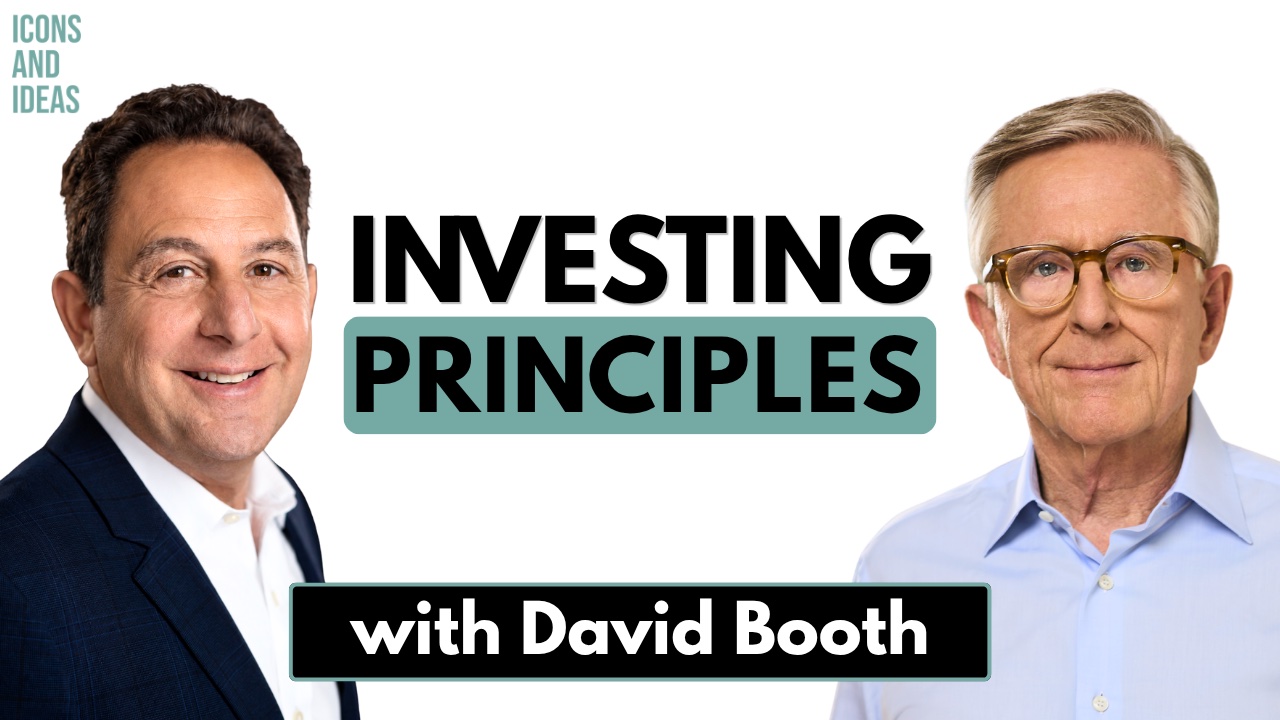 Ep · 16
Dimensional Founder David Booth: Investing, Market Uncertainty and True Wealth
David Booth · Dimensional Founder